Showing posts with label 1973. Show all posts

Sunday, March 18, 2018

The Night MASH Almost Ended


"I'll stick with gin. Champagne is just ginger ale that knows somebody."

Hawkeye (Alan Alda)

We know that MASH was one of the most popular TV shows of all time. It lasted 11 seasons, and it was in the Top 10 — if not the Top 5 — most of the time.

But as it was nearing the end of its first season, the future was really in doubt. MASH ended the 1972–73 season ranked No. 46.

The episode that aired on this night in 1973, "Ceasefire," was written when the decision about a second season had not been made — so two scripts were written. If the show was canceled, the script in which the war ended would be used. If it was picked up for a second season, the script in which the ceasefire turned out to be a false alarm would be used.

It isn't necessary, I am sure, to say which one it was. MASH ran until 1983.

Anyway, on to the episode.

Gen. Clayton (Herb Voland) informed Henry (McLean Stevenson) that a ceasefire was imminent — but that was unofficial, he warned Henry.

Nevertheless, Henry couldn't keep news like that to himself, and before long the entire camp was celebrating. Radar (Gary Burghoff) went around the camp to get messages and signatures for a memory book. Klinger (Jamie Farr) proceeded to give away his dresses, figuring he wouldn't need them anymore, now that the war was coming to an end.

But Trapper (Wayne Rogers) didn't believe it. He said this kind of thing always happens in a war, and he bet Hawkeye $50 that the ceasefire would turn out to be a phony.

In the meantime, Hot Lips (Loretta Swit) was putting up a brave front, telling Frank (Larry Linville) that he was not to worry about her, that he was to go back to his old life and pick up where he left off. "I'm not going to make any trouble."

Hot Lips apparently wanted Frank to say something like he would leave his old life behind and stay with her. But he didn't do that. He told Hot Lips he wished she could meet his wife. "You'd like her," he said. That wasn't quite what she wanted to hear.

For the first time, Hawkeye acknowledged that he had a wife — but he did so for a different reason. He did so to avoid having to commit to all the women he had been with at MASH 4077. This caused considerable social difficulties for Hawkeye when word spread through the camp that he was married with five children.

That wasn't true, of course. Hawkeye was a bachelor. He just wanted to avoid complications. It worked beyond his wildest dreams.

While we're on the subject, this wasn't the final episode of the season for MASH, but it was the final appearance by Marcia Strassman. She was mostly considered Hawkeye's girl in that first season, but then she left the show and went on to become Mrs. Kotter on Welcome Back, Kotter a few years later.

Anyway, to celebrate the ceasefire, Gen. Clayton came to the 4077th, where a commemorative slide show was presented in Clayton's honor. It included shots of the general in his private moments — exiting the latrine and cuddling with Hot Lips.

Then the hammer came down. A communique was handed to the general informing him that the ceasefire was off.

Trapper had won his bet — and the show went on for another decade.

Saturday, March 10, 2018

Archie's Adventure in Education


Edith (Jean Stapleton): I'll never forget the first time I made pot roast for your father. Only he wasn't your father then; we was just keeping company. I invited him to my house for dinner, and I made him pot roast. And that was the first time he ever called me "dingbat."

Gloria (Sally Struthers): Well that's awful, even if he didn't like your cooking.

Edith: Oh, no, he loved it.

Michael (Rob Reiner): Then why'd he call you "dingbat?"

Edith: Well in them days, Archie was too shy to call me "sweetheart" or "darling" so he called me his "little dingbat." And you know what? Ever since then, no matter how mad he says "dingbat," I always hear a little "sweetheart" in it.

There have been times when I have taught college–level courses that I have had students who would be classified as nontraditional students — typically people who left school at some point and then returned after several years to pursue their degrees. I have long admired the courage it takes to do something like that. It can't be easy to be in class with colleagues — or even a teacher — young enough to be one's children.

They say one is never too old to learn, though, and Archie Bunker (Carroll O'Connor) proved it 45 years ago tonight on All in the Family — even if he did it for the wrong reasons — in the episode "Archie Learns His Lesson."

Archie was angling for a dispatcher's job, but he had a problem. The job required a high school diploma, and Archie had to drop out of school to help support his family. So Archie went to school at night to earn his GED.

He didn't want Mike (Rob Reiner) and Gloria (Sally Struthers) to know, though, so he swore Edith (Jean Stapleton) to secrecy. And Edith did a pretty good job of keeping the secret until Archie blew his own cover. He told Mike and Gloria that he was going bowling, then left without his bowling ball.

Mike and Gloria were very supportive of Archie when they found out, and Mike and Archie started studying together at the dining room table — leading to some of the series' most entertaining dialogue between the two.

At one memorable point, Mike told Archie, who was studying for an American history test, what manifest destiny meant. That sparked a debate of sorts between the liberal Mike and the conservative Archie, which by itself wasn't especially memorable, although it was hilarious in the context of history and politics. Then Edith helped Archie study by asking him questions.

Before they began, Mike asked if he could listen in because "I love science fiction." Archie wouldn't go for that and shooed Mike away from the table.

But Mike listened from the sofa and finally could take no more when the subject of the American government's treatment of Indians came up. Archie's logic was too much for him.

But Mike's reaction was nothing compared to Gloria's when she found her father writing the answers to the history questions on little pieces of paper.

She observed that they looked like crib notes.

"Bingo!" Archie replied. He said he would keep them in his breast pocket in case he needed them.

"Daddy!" exclaimed a shocked Gloria. "That's cheating!"

Archie explained the difference.

"Cheating is when you're supposed to give something to somebody else, and you don't give it. I'm taking a test. I'm supposed to give 'em the right answers. That's what I'm gonna give 'em!"

"But, Daddy, you're cheating yourself," Gloria insisted.

"No," Archie said. "I get a diploma out of it."

Gloria wouldn't give up. "You're not being honest with yourself."

"I certainly am," Archie replied. "I sat down and I asked myself a question. 'Can you pass this exam without them little pieces of paper?' And I gave myself an honest answer: 'No.'"

That sent Gloria screaming from the table.

Mike, who had been upstairs, came into the room as Gloria was screaming. "Been talking to your father?" he asked.

Gloria's point was rendered moot, though, when it turned out that Edith had glued Archie's notes to a board so he could study them on the subway. She was pleased with herself, but Archie was sure he was going to fail.

As it turned out, though, Archie did just fine. He was notified by mail that he had passed his test, and his family congratulated him on his achievement.

But a buddy of Archie's called with news. As Archie explained it to the family, instead of studying history, he should have studied the theory of relativity. The dispatcher's job had gone to the boss' nephew.

"And here I am," Archie said, "stuck with a high school diploma."

Sunday, March 04, 2018

The Pursuit of Perfection


Henry (McLean Stevenson): Pierce, there is a war on!

Hawkeye (Alan Alda): Nothing gets by you, Henry.

Hawkeye (Alan Alda) was a superior surgeon to Frank (Larry Linville), but he was an inferior–grade officer, and that was a source of endless frustration for Frank.

Frank wouldn't concede that Hawkeye was better at anything, but it was easier for him to complain about Hawkeye from the perspective of military discipline. As a surgeon, Hawkeye sometimes had to bail Frank out when his ham–handed techniques made a patient's condition worse, but as a military man, Hawkeye seldom wore a uniform, never saluted superior officers and generally treated the Army with disdain.

In the episode of MASH that first aired on this night in 1973, "Sticky Wicket," Hawkeye's prowess as a surgeon came into question, and Frank clearly loved it, especially since Hawkeye had just told him, "I wouldn't let you operate on me for dandruff."

But then Hawkeye had a patient who continued to have problems after a long session in the O.R.

"What went wrong, Super Surgeon?" Frank asked Hawkeye. "Operating with one hand tied behind your back again?"

Hawkeye tried to silence Frank, but it didn't work.

"Last night I was Mr. Screwup, remember?" Frank persisted.

"Dr. Screwup," Hawkeye replied, "and it still goes."

"Oh, really?" Frank continued. "Well, I haven't killed anybody this week. What about you, big shot?"

The case was really getting under Hawkeye's skin. He was obsessing about it even as life at the 4077th went on as usual.

For example, in The Swamp, Trapper (Wayne Rogers) and Radar (Gary Burghoff) were involved in a poker game. Radar bluffed Trapper out of a pot, and the two exchanged words.

Hawkeye, who had been quietly contemplating the situation with his patient, became annoyed.

"Can't you guys do that somewhere else?" Hawkeye demanded.

"Why don't you do what you're doing somewhere else?" Trapper replied.

"I'm not doing anything," Hawkeye said.

"Well, you can do that anywhere, can't you?" Trapper asked.

So Hawkeye moved from The Swamp, and everyone came by for one reason or another — including Henry (McLean Stevenson), who told Hawkeye he was losing his perspective "because one patient has gone sour. In an outfit like this, that's bad."

He told Hawkeye to put off posturing as Dr. Perfect until he went home where he could be more selective about the patients he treated.

As Hawkeye reflected on things, though, an answer came to him. He operated on the patient in the dead of night and found what was causing the problem.

"Anybody could have missed that," said Frank, who had been observing the operation.

And the rift between them was patched up — until the next time Frank screwed up.

Thursday, March 01, 2018

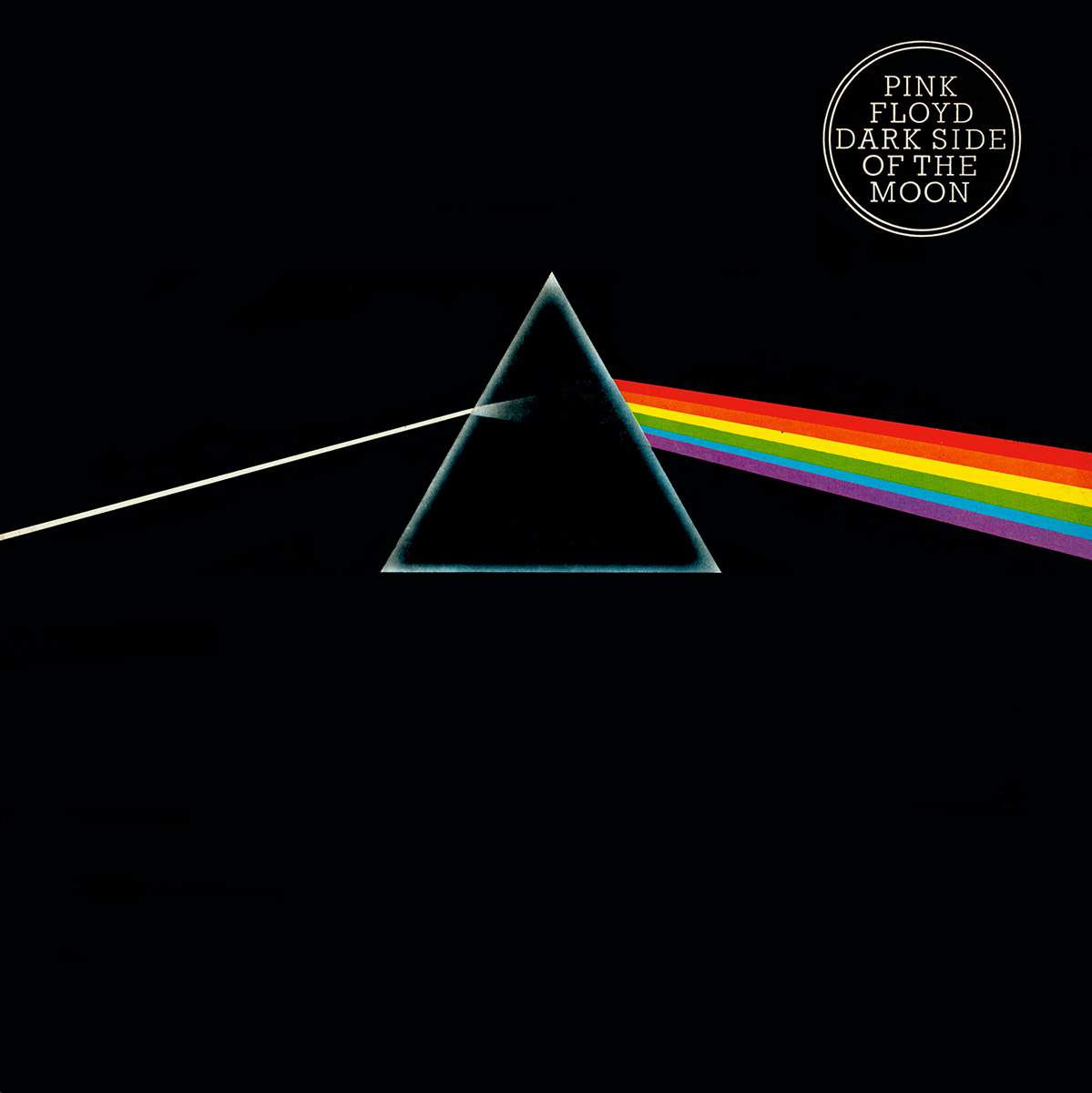
Pink Floyd's Pièce de Résistance


It is appropriate, I suppose, that Pink Floyd's "Dark Side of the Moon" marks its 45th anniversary today, just a couple of weeks after the school shooting in Florida — an event that is already leaving its mark on the culture.

"Dark Side of the Moon" didn't address gun violence, but it explored similarly dark themes — conflict, greed, the passage of time and mental illness. Certainly, the latter played a role in the shooting, and it may well have been fed by conflict and greed. I would rule out the influence of the passage of time — although the debate that was sparked by the shooting includes the age limit for purchasing a firearm.

Pink Floyd's musical style was always hard to pin down, but that may never have been truer than it was in "Dark Side of the Moon," which embraced jazz fusion and blues/rock in a lush tapestry of the human condition.

Some people will argue that "Dark Side of the Moon," which arrived in music stores on this day in 1973, is the greatest album ever made, and I could live with that.

Rolling Stone ranked it #43 on its list of the top 500 albums of all time. I could live with that, too. As long as it's on the list.

Every time I listen to it, I am reminded of my days on the night shift of a metropolitan newspaper. When we finished the next day's edition around midnight or so, I would drive home and put "Dark Side of the Moon" on my stereo. It was amazingly soothing, perfect for late at night when it seemed everyone else was asleep.

For obvious reasons, I particularly enjoyed the line from "Breathe" that went "Home again ... I like to be here when I can."

"Dark Side of the Moon" was a groundbreaking achievement in an era of groundbreaking achievements. There is no question that the album was — and continues to be — a hit. It was on Billboard's chart for 15 years, from 1973 to 1988, and has sold 45 million copies.

Think about that for a minute. One–third of the album's existence has been spent on Billboard's Top 200. That wouldn't be much of an accomplishment if you were talking about an album that has been available for a year or two. But "Dark Side of the Moon" has been available for 4½ decades.

Sure, part of the album's popularity was due to two singles, "Money" and "Us and Them." Of the two, I suppose I prefer the song "Us and Them." I hear it less frequently on the radio so I am not burned out on it the way I am "Money," even though the latter is probably more familiar to casual listeners.

But if I am going to be pressed on my preferences from "Dark Side of the Moon" — and I am currently on my third copy of it (my first copy was a cassette, my second was a vinyl album, and the copy in my collection today is a CD) — I would probably pick "Breathe" or "The Great Gig in the Sky."

Frankly, though, it cheapens the album to try to narrow it down to a song or two. That lumps Pink Floyd with everyone else and "Dark Side of the Moon" with every other album. That isn't fair. It isn't right. "Dark Side of the Moon" was about themes, not individual compositions, and deserves to be recognized for that.

The album took shape over a period of several months before recording sessions began in the late spring of 1972. It evolved in live performances, and the band experimented with recording methods that were new at the time, such as tape loops and multitrack recording. Pink Floyd also used synthesizers, which were not in wide use at the time but became quite popular in the years ahead.

But things were mostly piecemeal until the band put everything together at London's Abbey Road Studios.

"Dark Side of the Moon" is an experience, the culmination of all the things that combined to make it what it is. Its messages are still relevant to the human condition 45 years after it was released.

Pink Floyd released a double–CD of live music in the mid–1990s, part of which was a live performance of the "Dark Side of the Moon" album from start to finish. I liked it, but the band had rehearsed the songs so particular passages would be synchronized with the images on the screen behind them. It lacked the spontaneity of most live recordings, but the same could be said of all the other songs on the CD, not just the ones from "Dark Side of the Moon."

Having attended a couple of Pink Floyd concerts, I can say that the visuals played a big role in the band's performances, and it didn't surprise me to learn that the band rehearsed the music so tightly for its concert tour. Perhaps a videotape that completely documented the experience of a Pink Floyd concert was sold at the same time as the CD, but I honestly don't recall one. It would have been a good idea. Separated from the visuals, it almost sounded as if crowd noises had been added to the original studio recordings for the live CD.

That was a problem, really, for all of the tracks on that double CD, but it was particularly disappointing with the performance of "Dark Side of the Moon."

The surviving members of Pink Floyd are unlikely ever to release another CD or videotape, but it would be great to see and hear the band jamming and improvising on the songs from "Dark Side of the Moon," if such footage exists.

Sunday, February 25, 2018

Bombing Out


Frank (Larry Linville): There's an unexploded shell out there.

Hawkeye (Alan Alda): We know, Frank, we know.

Frank: We've got to evacuate immediately!

Hawkeye: I think I did.

If there is anything a sports fan truly loves, it is a rivalry. Nothing can get a sports fan's blood racing quite like a rivalry.

It can be an individual rivalry, like the Ali–Frazier fights. Or it can be a team rivalry, like Oklahoma and Texas or North Carolina and Duke.

And there is no rivalry that can compare to the Army–Navy rivalry.

The first game was played long before my time, of course, but I have always known that the Army–Navy football game is one of sports' most enduring rivalries. American presidents have attended the game. Instant replay was first used during an Army–Navy broadcast.

There was a time when the Army–Navy game drew national attention — and it still takes the spotlight at the tail end of the regular season although it rarely has national implications anymore (but that isn't for lack of trying. A website tries to ramp up interest by telling you exactly how much time remains until the next Army–Navy game!)

Army–Navy had national implications during World War II, and I guess it still did during the Korean War because the episode of MASH that first aired on this night in 1973, "The Army–Navy Game," used the rivalry as the backdrop of the story.

Everyone at the 4077th was following the game, even Father Mulcahy (William Christopher), although he lost interest when he realized Notre Dame wasn't playing. Henry (McLean Stevenson) located the broadcast on the radio, which reported that it was the 53rd meeting between the schools. In the timeline of the series, that would be the game that was played in 1952, which Navy won 7–0.

That wasn't the outcome in this episode, though. Well, it was the same winner, but it was a different score. Much different. The score that was reported in this episode was Navy 42, Army 36. I have looked through the scores in the series, and no Army–Navy game has ever ended with that score.

Also, since the Korean War ended in 1953, the 53rd clash between the schools would have been played less than a year before the MASH folks went home. Yet the series went on for another 10 years and underwent several cast changes.

Oh, well. Details, details.

Henry, as I say, managed to locate the game on the radio, and the teams were getting things started when the 4077th found itself under attack. After the initial explosion rocked the compound, Hawkeye (Alan Alda) remarked, "That guy can really kick the ball!"

And in the middle of everything a big bomb landed in the middle of the compound — and didn't go off.

This bomb became Priority #1 for the 4077th, which tried to contact folks in the Army and Navy who could help them defuse it.

But they were all obsessed with the game. One agreed to look into the markings that had been observed on the bomb, but he told the people at the 4077th not to call him back until halftime.

So then it became a waiting game.

While they were waiting, Henry told Radar (Gary Burghoff) a story from his college days at Illinois — when, as team manager, Henry had run out on the field to tape the injured ankle of a star player before the pivotal play in the final seconds of the football game. It turned out that Henry had taped the wrong ankle. The player fell to the ground, screaming in pain, long before he could get near the end zone.

And Illinois lost the game.

The best part of the story, though, is often cut for syndication; if you want to see it (and you should), it may be necessary to watch the episode on DVD. Radar thought the player had been tackled short of the goal line, but that, of course, was not correct. Henry confided that the star player still came to Henry's house once a year to shoot out the front porch light. Apparently he had not forgotten Henry's error, and he wanted to be sure Henry didn't forget, either.

"And he's a judge now," Henry lamented.

Eventually, it was determined that the CIA probably was behind the bomb — but the CIA wouldn't tell anyone its business so that couldn't be confirmed. So Hawkeye and Trapper (Wayne Rogers) were dispatched to defuse it. Henry would give them the best instructions they had available via megaphone — but Henry messed up the directions, and Hawkeye and Trapper tried to get away from the bomb before it went off.

They only got a few feet.

The explosion, though, was not the expected kind. It turned out to be a propaganda bomb that showered sheets of paper with "Give up. You can't win. — Douglas MacArthur" written on them.

In the best tradition of the times, MASH ridiculed both war and government in the same episode. That would be the norm in the years to come, but it was still new in 1973.

Saturday, February 24, 2018

The Never-Ending War With Evil


"No more talk. You can't talk to bullets."

Paul (Gregory Sierra)

It is probably difficult for modern audiences to appreciate, but All in the Family really was a groundbreaking TV series. Probably more than any other — certainly more than any series that preceded it and almost as certainly more than any series since.

The program made viewers uncomfortable by forcing them to think about things many probably preferred to ignore. But after targeting subjects — like racial inequality and women's rights — that can seem obvious from the perspective of four decades after the fact, the series' writers turned their attention to other, lesser–known battles being waged with evil — and, in the process, opened many eyes.

Such was the case with the episode that first aired 45 years ago tonight, "Archie Is Branded."

Early one Sunday morning, Archie (Carroll O'Connor) found a swastika painted on the front door. His first instinct was to blame it on juvenile pranksters in the neighborhood — but then the family found a note on the front porch that suggested that whoever had painted the swastika was not a juvenile from the neighborhood and intended to return.

Swastikas certainly aren't unknown today, and they were recognized even more widely 45 years ago when the World War II generation probably outnumbered any other. Swastikas were symbols of hatred and death, and Archie's generation knew it. Archie had participated in the war with the Nazis. Mike (Rob Reiner) and Gloria (Sally Struthers) had studied the war and the Nazis in school. The Bunkers knew swastikas meant nothing good, and their imaginations began to run wild.

A special–delivery package came, and the Bunkers believed they heard a ticking sound coming from it so they put it in the kitchen sink, started the water and then ran from the house. When they returned, they still heard the ticking sound. Turned out it was coming from a pocket of the apron Edith (Jean Stapleton) wore. She had been timing a cake she was baking.

Archie then looked at the package, which was submerged in water in the sink. The package was from Edith's Cousin Amelia. Her husband was giving up smoking, and he was sending his cigars to Archie.

Archie looked forlornly at the soggy package.

About that time a fellow named Paul (Gregory Sierra) came knocking at the door.

Paul was a member of an organization called the Hebrew Defense Association (inspired by the Jewish Defense League), which was dedicated to fighting anti–Semitism. It turned out that the Bunkers had been targeted by a neo–Nazi group that believed Archie was a Jewish activist who lived nearby.

But while Archie and Paul knew that the swastika had been intended for someone else, the neo–Nazis still believed Archie was the target so Paul stayed with the Bunkers to protect them from what might come, and as they waited they talked about the war that was being waged around the world — openly in most places but seemingly with little attention being paid to it in the United States.

The episode was uncharacteristically dramatic for the series, and the ending pulled no punches as Paul died when his car exploded in the street in front of the Bunkers' house. Viewers didn't see it, but they heard it.

It was a jarring moment for TV viewers. In the years ahead, they would grow accustomed to sitcom episodes that turned serious — MASH, for one, was good at that — but it was new to viewers in 1973.

Even though the story was fictional, it was a real eye–opener for Americans who thought Nazism had been dispensed with when World War II ended. One such American clearly was Archie, who tried to cover the swastika until the police could get there by hanging an American flag over it.

If that had worked, Archie could have put the matter completely out of his mind until the police arrived. "This put the kibosh on the Nazis once before," Archie said as he unfurled the flag. "It's gonna do it again."

But Archie hung the flag incorrectly, and a Boy Scout — played by Stapleton's 11–year–old son — offered to hang it correctly. In the process of doing so, the swastika was revealed.

It is not that easy to deal with evil.

To be sure, some Americans kept an eye on developments beyond America's borders, and they knew there was religious persecution everywhere. American Jews, many of whom had escaped the concentration camps, knew Nazis weren't gone, just in hiding.

But those Americans were the exceptions in the early 1970s. Most Americans lived in blissful ignorance in 1973, aware of little beyond the country's borders except the war in Vietnam that consumed so much blood and treasure.

What they saw on their TV screens on this night in 1973 shocked them.

Some viewers no doubt sided with Archie. He liked the charismatic Paul and his extreme methods, but Mike the pacifist was alarmed, and many viewers certainly sided with him.

This episode was sure to ignite many debates at the time, forcing viewers to acknowledge beliefs — and fears — they may not have known they held.

But that was what All in the Family did best.

When It Rains, It Pours


Mary (Mary Tyler Moore): Rhoda, did you ever have one of those days?

Rhoda (Valerie Harper): Yeah, mostly!

Everyone has a bad day now and then.

It's the most predictable fact of human existence. High hopes and expectations may be rare and will take a beating and go unfulfilled, but bad days are universal for nearly all of us — and occur with a depressing regularity.

There is a small portion of the population that never seems to endure a bad day, but appearances can be deceptive. When those folks do have a bad day, the rest of us take a kind of perverse pleasure in the assurance that no one is immune.

Mary Richards (Mary Tyler Moore) was having three of those days (in her own words) in a single day when the episode of the Mary Tyler Moore Show that first aired on this night in 1973, "Put On a Happy Face," began.

Actually, it all started with something small. When the episode began, Mary was drinking coffee and some of it dribbled onto her new sweater. Her date for an upcoming broadcasting awards banquet encountered some difficulties — and ultimately fell through. Then Mr. Grant (Ed Asner) informed her that, instead of disposing of the obsolete file as requested, she had thrown out the file of obituaries that news outlets keep so they will be ready in case someone famous dies.

Make that when someone famous dies.

Because, as Mr. Grant explained to Mary, "There is no 'if.' They're gonna die. We're not gonna have one thing to say except maybe 'So long.'"

(Personal note here: I have never worked in broadcasting, but I have worked for newspapers and a trade magazine, and we had certain files that we kept for future events, like obituaries and such. It was good to have them handy. You never knew when someone prominent was going to die, but, as Mr. Grant observed, you knew they would die one day.

(We didn't have to keep advance obituaries for presidents or anyone else who was nationally prominent. We knew that kind of obituary would be readily available from the wire services. A good example of that is the death a few days ago of Billy Graham. The wire services undoubtedly had his obituary ready for many years — he was, after all, 99 when he died.

(But we needed to be ready when folks who were known locally — like mayors or community activists — passed away.

(I don't remember any files that were specifically designated as "obsolete" in the newsrooms where I have worked — but I suppose there could be such a file that serves as a temporary placeholder for such files. That would be a decision for the management of an individual news outlet to make.

(And, apparently, the folks at WJM had made that decision. Perhaps the responsibility for disposing of obsolete files fell to a different person periodically — that wasn't mentioned — but, in this episode, which is the only time I can recall an obsolete file being mentioned, it was Mary's responsibility.)

Then when she got home that night, her phone was ringing as she came through the door. She made a mad dash for the phone only to find that the person on the other end had hung up. In the dash for the phone, her bag spilled and her groceries were scattered on the floor.

Rhoda (Valerie Harper) came in, took one look and said, "It looks like somebody mugged Betty Crocker."

But the really big misfortune came when Mary slipped at work and sprained her ankle. To help her ankle when she was back in her apartment, Mary soaked it — which gave her a cold. That made it hard for her to talk on the phone when she was trying to find a date for the banquet.

(That wasn't her only obstacle, though. She had been out of touch with the men she contacted — long enough for one of them to have gotten married in the interim.)

Frustrated, Mary finally gave in and agreed to go out with a guy that Ted (Ted Knight) had been recommending — only to find out that Ted had been speaking of himself.

That was bad enough, but then the dry cleaner ruined the dress she had planned to wear, and she had to turn to Rhoda to get something to wear. Rhoda urged her not to go to the banquet, but Mary insisted that she was nominated for an award and had to go. She didn't expect to win, but it would be bad form not to attend.

So she and Ted went to the banquet. Bad luck continued to follow her. It was raining, which couldn't do much to her hair since her hair dryer gave out on her earlier, but she did step in a puddle, which made her squish when she walked. Then at the banquet one of her false eyelashes came off, and she tried to put it back on while the awards were being handed out.

It was at that very minute that she was announced as the winner of the award for which she had been nominated.

The first words out of her mouth in her acceptance speech — after a rather loud sneeze — were "I usually look so much better than this."

I guess we all know people who seem to be perfect all the time — and it can be a source of, as I said before, perverse pleasure when such people have to go through the trials and tribulations the rest of us must face.

But Mary was such a pleasant person that it was hard to take any satisfaction from her misfortune.

It was still funny, though, and it remains funny today. Call it a guilty pleasure.

Oh, and by the way, there was a neat little twist at the end that Mary Tyler Moore fans will appreciate.

The usual ending for a Mary Tyler Moore Show episode showed a kitten in the same pose as the old MGM lion.

But 45 years ago tonight, Mary's face appeared in place of the kitten — and, instead of meowing, Mary stammered "That's all, folks!" like Porky Pig.

Sunday, February 18, 2018

Taking the Longjohn Way Home


Trapper (Wayne Rogers): Full house. Ha ha!

Radar (Gary Burghoff): I guess that beats two pair, right?

Trapper: It sure does! What were they?

Radar: Tens.

Trapper: Yeah? Tens and what?

Radar: That's it. Two pairs of tens.

As the viewers of the 2018 Winter Olympics have been reminded, the winters in Korea are notorious for their severity, and the folks at Quartermaster Corps were forever sending the wrong things to the 4077th.

By "wrong," of course, I mean inappropriate.

In the latest round of harsh winter weather, the 4077th received a shipment of mosquito netting and summer underwear — items that would be useful in about six months when the rugged Korean summer set in. What everyone needed — and only one person had in the episode of MASH that aired on this night in 1973, "The Longjohn Flap" — was long underwear.

Hawkeye (Alan Alda) was that solitary individual. He had received some longjohns from home.

But he was an old softie at heart, and he gave his long underwear to Trapper (Wayne Rogers) when Trapper started sneezing.

That was only the beginning. Before the episode was over the longjohns had made their way around the camp and had, seemingly, been in everyone's possession — however briefly — at one time or another.

Trapper, in an attempt to make back what he had lost in poker, bet the long underwear against Radar (Gary Burghoff) — and lost. Radar, in turn, used the longjohns to score some points with a pretty nurse but changed his mind and swapped the longjohns to the cook for a leg of lamb and mint jelly.

That was when Frank (Larry Linville) entered the picture. Frank was giving the cook a hard time about the cleanliness of his kitchen and threatened to bust him a rank. That was when the cook decided to bribe Frank with the longjohns.

Frank ended up giving the longjohns to Hot Lips (Loretta Swit) to prove his love for her (after he declined, once again, to divorce his wife), but Klinger (Jamie Farr) stole the longjohns from Hot Lips when she wasn't looking.

Overcome with guilt, Klinger confessed his sin to Father Mulcahy (William Christopher) and left the longjohns with him. The priest took them to Henry (McLean Stevenson), who promised to stay close to them until he had spoken to everyone in camp in an effort to find the rightful owner.

"Look, I'm planning on conducting a very thorough investigation," Henry said. "It might take a couple of months."

Henry never got a chance to conduct a tent–to–tent search, though. Hawkeye and Trapper had to rush him onto the operating table before his appendix burst. They were successful, which was reported to the camp by way of the P.A. system. The announcement drew mild applause. Then it was announced that the longjohns had been saved. By the raucous celebration, one would assume peace had just been declared.

In gratitude, Henry returned the longjohns to Hawkeye.

It was a format that would be revisited about a year later when Hawkeye, in need of a new pair of boots, struck deals with everyone in the compound. The house of cards ultimately collapsed, and Hawkeye wound up on the losing end in that episode.

But in the episode that aired tonight, he was the winner — even though Trapper started sneezing again.

Saturday, February 17, 2018

A Hot Timepiece


Archie (Carroll O'Connor): This here tells me that it's morning in China. So right at this moment, 800 million Chinks are sitting down to breakfast.

Mike (Rob Reiner): Archie, in the first place they are called Chinese.

Archie: That's what I said, Chinks.

Everyone likes a bargain, and Archie Bunker (Carroll O'Connor) was no exception.

And he rarely asked questions, especially if he was getting a really good bargain, such as the one he thought he was getting in the episode of All in the Family that first aired on this night in 1973, "The Hot Watch."

In that episode, Archie bought a watch from an acquaintance. The watch supposedly was worth $300, but Archie's acquaintance sold it to him for $25.

If Archie ever got a top–of–the–line commodity for a fraction of its price, Mike (Rob Reiner) became suspicious, and he was suspicious this time. He wouldn't accept Archie's suggestion that he had been at the right place at the right time — particularly when he learned that the person with whom Archie had made the transaction was a fellow from the docks, New York's "notorious grab bag" where valuable items disappeared only to reappear on the black market.

His suspicion grew deeper when Archie told him that the fellow who sold him the watch had been in jail once (and claimed to have been framed).

What Archie had, Mike told him, was a stolen watch.

To say Archie was skeptical would be an understatement, but seeds of doubt took root, especially when his watch started making a funny noise and then stopped working altogether when Archie did nothing more than hit the bottom of a ketchup bottle.

Archie decided to take the watch to a jeweler to be repaired, but he was dissuaded from doing that when Mike pointed out that the jeweler would compare the serial number on the watch to the list of serial numbers from stolen watches. If the number was on the list, Archie could be facing prison time.

So Archie needed to find someone who would fix watches "with no questions asked."

While he was trying to find such a person, Edith (Jean Stapleton) went ahead and took it to a neighborhood jeweler. Archie wasn't convinced that this jeweler would be as cooperative as Archie needed him to be, but he was reassured when the jeweler came by and told him the watch could be fixed for $21. He said nothing about it being stolen.

That was because no one would want to steal it. It was a fake. Archie thought it was an expensive Omega watch, but it was actually an Onega — with an N. The jeweler said it was only worth $8.

In one of the most entertaining exchanges of the series, Archie complained that being the victim of a racket cost him the equivalent of two weeks' take–home pay.

Mike pointed out that he was only out $17. He had spent $25 on an $8 watch.

But Archie was adamant that he had lost the equivalent of $300. He insisted that he was right.

"You want to be right?" Mike asked. "I'll show you how you can be right. You spend the $21 and get the watch fixed. You've already spent $25 so for a $46 investment, you've got your $300 watch back."

And that made sense to mathematically challenged Archie — at first. But then Edith reminded Archie that the watch was only worth $8.

Saturday, February 10, 2018

Truly in the Eyes of the Beholder


Forty–five years ago All in the Family was in the midst of its second straight season as the top–ranked TV series in the United States. It would remain on top of the ratings for three more years.

The episode that aired on this night 45 years ago, "Class Reunion," was the first in a string of episodes that may well have played significant roles in cementing the show's standing.

After initially declining, Edith (Jean Stapleton) was making plans to attend her 30th high school reunion. Her cousin Amelia (Rae Allen) persuaded her with the news that the class heartthrob, Buck Evans (Bernie Kuby), was going to be there. Archie (Carroll O'Connor) had no interest in the reunion — until he heard Edith and Amelia reminiscing about Buck. He had been a track star, and all the girls had been wild about his physique and his golden hair waving in the breeze.

I guess there is at least one of those in every class — there certainly was one in mine — and the viewers learned that Edith had been one of Buck's admirers in school.

Curiosity — and a touch of jealousy — got the better of Archie, who was suddenly concerned about letting his wife go out alone after dark, and he gallantly offered to escort her to the reunion.

Buck hadn't arrived yet when the Bunkers made their appearance, leaving Archie to mingle with the other attendees. Obviously no one knew who Archie was — but everyone knew who Buck Evans was.

Funny thing was, though, that no one recognized Buck when he got there, probably because he no longer had a svelte figure, and he was bald.

Archie couldn't believe his eyes when he met Buck. He bore no resemblance to the stories Archie had heard, and Archie demanded to know the reason for the radical change.

Now, anyone who has ever attended a 30–year high school reunion can tell you that people change. The only reunion I have ever attended was my fifth–year reunion, and there were already changes in my classmates at that time.

But change is not always radical. In Buck's case, it was. He was not athletic. It was hard to picture him running on a track.

Buck confessed to Archie that he had married a gourmet cook. "Looks like she's in there with you," Archie replied.

Archie went to get Edith, who had been leading her classmates in some old cheers, and told her there was someone she would be happy to see — but he mentioned no names. He was anticipating her disappointment when she saw Buck again.

But it was Archie who was disappointed. Edith knew precisely who it was and broke into a big Edith grin.

Buck asked the question that was surely on Archie's mind as well. "How'd you recognize me?"

Edith said it was his eyes. "I'd know them anywhere."

There was never a more sincere soul on television than Edith Bunker.

Wednesday, February 07, 2018

An American in Paris


Bernardo Bertolucci's "Last Tango in Paris," a French–Italian movie that premiered across the United States on this day in 1973, caused quite a stir — such a stir that Premiere Magazine included it in its "100 Movies That Shook the World" list.

It received an X rating, which has come to be associated with pornography but was initially given to legitimate feature films (1969's "Midnight Cowboy," for example) that had content deemed too extreme for children. That applied not only to sexual content but to violent content as well.

Film critic Roger Ebert gushed about "Last Tango in Paris" after its New York premiere in late 1972: It was "one of the great emotional experiences of our time," he wrote. "It's a movie that exists so resolutely on the level of emotion, indeed, that possibly only Marlon Brando, of all living actors, could have played its lead. Who else can act so brutally and imply such vulnerability and need?"

And need, Ebert wrote, was what the movie was really about. It had some explicit nudity and not–quite–as–explicit sex, which got all the headlines — and that was used as the promotional hook to lure audiences to theaters — but I think Ebert was on to something when he said the movie was about need.

"There is a lot of sex in this film," Ebert wrote, "more, probably, than in any other legitimate feature film ever made — but the sex isn't the point, it's only the medium of exchange."

Brando's character, a middle–aged American widower living in Paris, certainly had needs. And Ebert was right about his vulnerability. When the movie began, Brando's wife was already dead, a suicide victim, so the viewers never saw anything of the marriage other than what was said about it on the screen, and the reason for the suicide was never revealed so the viewers never really knew why she did it. Still there were some ominous clues scattered about the story.

That isn't the best way to judge a marriage, obviously, but the union clearly left a lot to be desired — and the vulnerability of Brando's character had deep roots in that. That was clear when Brando ranted while standing at his wife's coffin at her wake.

Brando's character had been abused, and it had been a lifelong story of abuse. It started with his alcoholic parents, and it continued from there into a marriage that was abusive, if not physically then certainly emotionally.

The role had its flaws, but I thought the character suffered from arrested development from his youth that carried into his adult years. That was why Ebert observed that Brando's character was "a man whose whole existence has been reduced to a cry for help — and who has been so damaged by life that he can only express that cry in acts of crude sexuality."

The nudity and the sexuality amounted to no more than stage props for the story. "Last Tango in Paris" wasn't about those things.

Well, let me amend that.

It was about sex in the sense that some people use sex as a haven and a weapon, not as an expression of love for another person, and the lovers in "Last Tango in Paris" were like that.

The relationship between Brando and a young French woman (Maria Schneider), though, was mostly physical. At Brando's character's insistence, they knew nothing of each other, not even each other's names. But that didn't mean they didn't use sex as a haven and a weapon as well, even as a physical release — but never as an expression of genuine affection.

I have heard people call it Brando's greatest performance, and I have my issues with that. It was a nuanced performance, I will concede that, but I am far more likely to align myself with Ebert, who wrote that he didn't know if it was Brando's greatest performance, but the movie "certainly contains his most emotionally overwhelming scene" — his rant next to his wife's coffin. Ebert wrote that Brando delivered "one of the most moving speeches of love I can imagine."

In that scene, Ebert wrote, Brando "makes it absolutely clear why he is the best film actor of all time. He may be a bore, he may be a creep, he may act childish about the Academy Awards — but there is no one else who could have played that scene flat–out, no holds barred, the way he did, and make it work triumphantly."

Brando was rewarded with an Oscar nomination for Best Actor (which he lost to Jack Lemmon). Bertolucci was nominated for Best Director (and lost to George Roy Hill).

Schneider, who later said she felt raped by the experience, received no Oscar consideration.

Sunday, February 04, 2018

The Naked Truth


On this night in 1973, MASH revisited a theme it first explored in the Christmas season of 1972 — a letter from Hawkeye to his father updating him on the activities at the 4077th.

"Dear Dad ... Again" followed the same format as its predecessor, but it did it a little better the second time around.

Take Hawkeye's update on Klinger (Jamie Farr), for example. Klinger had taken to wearing a white wedding dress.

Hawkeye was complimentary. "It's easy to go overboard with one of those things," he told Klinger, "but that's tasteful without being gaudy."

He did have some constructive criticism for Klinger, though.

"You must wear a slip! With the sun behind you, I can see clear through to your shorts."

Hawkeye began working on a letter to his father out of sheer boredom, and he claimed he wasn't the only one in camp who was bored and complacent. He made a bet with Trapper (Wayne Rogers) that he could walk into the mess hall naked, and no one would notice.

He lost that bet, and as he was leaving, he encountered Klinger, who said, "Now that's tasteful without being gaudy!"

Frank (Larry Linville) and Hot Lips (Loretta Swit) had a falling out, and a despondent Frank returned to the Swamp with a rare request. He wanted a drink from Hawkeye and Trapper's still. Then, while under the influence, he confessed to them that his brother had called him Ferret Face when they were younger.

Late arrivals to the MASH series probably heard folks at the 4077th calling him Ferret Face in subsequent seasons, but they most likely thought it originated in the camp — unless they saw the first–season episode in syndicated reruns.

Radar (Gary Burghoff) became a high school graduate via a correspondence course. He had to verify his final grades before receiving his diploma so he tried to sneak them past Henry (McLean Stevenson) along with other documents Henry had to sign. It didn't work; Henry insisted that the grades that were reported had to be legitimate.

Sometimes Henry's conversations with Radar were worth the price of admission. In this episode, they were pure gold. When Henry asked Radar about the document, Radar told him the contents were restricted.

"You can tell me," Henry replied. "It's got my name on it."

The primary story centered on a Capt. Casey (Alex Henteloff), a new member of the medical staff who was a superb surgeon. Everyone was wowed by the things he did in the O.R. — until Hawkeye learned through Radar that Capt. Casey wasn't really a surgeon. He was an impostor.

Casey told Hawkeye he had done other things — such as practicing law and working as an engineer — that required specialized training, but he had never had the patience to do things by the numbers. Hawkeye promised to report him to the authorities if he ever caught Casey practicing medicine without the proper credentials — and insisted that Casey (whose real name turned out to be Schwartz) look him up the minute he got those credentials. "You're a damn fine surgeon," he said.

What most people probably did not know at the time the episode was first broadcast — and what most people probably still do not know — is that the character was based on a real impostor from the Korean War era — a fellow named Ferdinand Waldo Demara.

Demara pretended to be many things — among them an engineer, a prison warden, a monk, a teacher, a cancer researcher. He also masqueraded as a Canadian war ship's surgeon and operated on 16 people during the Korean War.

The character in the MASH episode was based on Demara, but it wasn't the first time his life story was fictionalized like that. In 1960 the movie "The Great Impostor" was based on Demara's exploits and starred Tony Curtis in the title role.

Sunday, January 28, 2018

Life Isn't a Movie


"There are certain rules about a war, and Rule No. 1 is young men die. Rule No. 2 is doctors can't change Rule No. 1."

Henry (McLean Stevenson)

In its early years, MASH was primarily — but not exclusively — slapstick comedy.

By the time it ended its run in 1983, MASH enjoyed a reputation as a unique sitcom that routinely — and successfully — blended humor and drama — but even though those early episodes leaned heavily toward comedy, viewers got some glimpses of the future in the series' first season (1972–73).

One such glimpse occurred 45 years ago tonight when the episode "Sometimes You Hear the Bullet" first aired. For the first time — but not the last — viewers would see a patient at the 4077th die.

This patient was one of Hawkeye's friends.

Even before MASH introduced a heavy dose of drama to its episodes, the theme of the show was senseless death, and episodes like "Sometimes You Hear the Bullet" wove several related stories together to drive home that point.

While the episode maintained the series' satirical slant, it had a more somber tone than most of the episodes in that first season.

The story was primarily about Hawkeye's childhood friend Tommy (James Callahan), a writer by training and a former war correspondent who was writing a book about war from a soldier's perspective and dropped by the 4077th. The title of his book was to be "You Never Hear the Bullet," which was a rejection of all the scenes in war movies in which a soldier was fatally shot, and everyone heard the bullet. In reality, Tommy said, you don't hear the bullet.

Tommy was at the 4077th for a breather before resuming his work, and his reunion with Hawkeye (Alan Alda) told the viewers the friendship had existed for a long time. According to Hawkeye, it went back to grade school.

Earlier in the episode Frank (Larry Linville) had injured his back while with Hot Lips (Loretta Swit). Frank insisted that Henry (McLean Stevenson) should nominate him for a Purple Heart.

Frank, of course, did not mention the real circumstances surrounding his injury.

"According to your accident report," Henry said to Frank, "you tripped in the mud on the way to the shower."

When Frank confirmed that, Henry asked, "Is that the way you want it announced at the award ceremony? Tripped in the mud on the way to the shower?"

Hot Lips brought attention to a technicality. "This injury was sustained at a front–line unit," she said. "Technically that makes it battle connected."

"On that basis," Hawkeye said, "we'll be handing out medals for social diseases."

And then, after Tommy had come and gone, Ron Howard (in one of his TV appearances between his runs as Opie on the Andy Griffith Show and Richie on Happy Days) played a very young Marine whose appendix had burst and had been brought to the 4077th for treatment.

Initially, Hawkeye was willing to stay quiet when he learned that the young Marine was actually 15 years old and had used a fake ID to enlist — all to impress a girl.

Tommy unexpectedly returned to the 4077th with a mortal wound and died on the operating table, where he confessed that he heard the bullet. Hawkeye, all set to operate on his friend, told him he would change the title to "Sometimes You Hear the Bullet."

But he didn't live that long.

A grieving Hawkeye decided to spill the beans on Howard's character — motivated by the loss of his friend to prolong the boy's life.

Howard's character, in the defiance that is characteristic of youth, swore never to forgive Hawkeye for what he had done.

"Let's hope it's a long and healthy hate," Hawkeye replied.

Seldom have I been as impressed by TV writing.

Saturday, January 20, 2018

Hello, Denial, My Old Friend


No one likes getting older, and most of us cling to denial and try to resist the inevitable as long as we can.

It is a losing proposition, of course.

I suppose there are some who shrug and accept the incessant march of time. They are probably the happiest of people, the ones who are more contented with the way things are than those who strive (or appear) to be forever young.

The latter takes a lot more effort. Besides, it is a fight that, ultimately, no one can win.

They say ignorance is bliss, and maybe that is true. In the long run, though, it really doesn't matter how one approaches aging. Time will always have its way. The sooner you reconcile yourself to that fact, the happier you will be.

That may have been at the heart of Archie's problem in the episode of All in the Family that aired on this night in 1973, "Oh Say Can You See." Archie (Carroll O'Connor) was resisting that aging thing. He clearly needed glasses, and his memory wasn't what it once was.

When Archie tried to read the paper and kept holding it farther and farther away, Mike (Rob Reiner) came up from behind and said, "Gettin' to be 'bout time to have your arms lengthened, huh, Arch?"

The conversation around the Bunker dinner table that evening wasn't settling too well with Archie. It was all about the aging issues he was trying to avoid so he made a beeline for the neighborhood bar — where he bumped into an old classmate (Larry Storch).

This classmate looked a lot younger. In fact, the bartender observed that Archie looked at least 10 years older. Maybe 15.

The whole age discussion led to some delightful dialogue exchanges — and not just at the neighborhood bar, either.

For example, when Mike talked about Madison Avenue selling people on a "phony youth culture," Gloria (Sally Struthers) observed that women were having all parts of their bodies lifted surgically to maintain their youthful appearances.

"Just last week in the paper," Gloria remarked, "a woman had her bottom lifted."

An incredulous Edith (Jean Stapleton) asked, "Wouldn't that make her too tall to sit down?"

Kudos to the writers — and now, back to the bar.

Archie bumped into his old friend again; this time he was meeting a young lady named Tina (Arlene Golonka) at the bar, and when Archie wanted to know his friend's secret for staying young, he told Archie that it was all about thinking young. That included acting young — pursuing much younger women.

Archie said he had heard that his friend was married, and his friend acknowledged that he was still married. He also contended that his extramarital flings were a favor to his wife because they kept him young for her. He found that incredibly amusing. Archie did not. But his friend did say some things that Archie found valuable.

He told Archie that he should be called Brad when Tina arrived. His real name was Bill, but Brad sounded younger. "Bill ain't got no pizzazz," he explained. "When people call you Brad, you feel like a Brad."

When Tina arrived and Archie's friend started to introduce them, Archie told Tina that his name was Greg.

Archie seemed impressed by — and a bit jealous of — Bill's success with young ladies until he had the opportunity to speak with Tina one on one, and he learned that the rendezvous was a business arrangement. Tina was a call girl. In those days I guess the popular term was escort.

"You ought to be ashamed of yourself! Does your mother know what you're doing?" Archie asked Tina.

"Yes, she does," Tina replied. "Does your mother know what you're doing?"

It was a real eye opener for Archie, and it made him appreciate what he had.

Sunday, January 14, 2018

Which Is Stranger, Truth or Fiction?


"We can all be comforted by the thought that he's not really gone; there's a little Tuttle left in all of us. In fact you might say that all of us together made up Tuttle."

Hawkeye (Alan Alda)

At some point, I suppose, just about everyone has an imaginary friend, usually in childhood; in the episode of MASH that first aired on this night in 1973, "Tuttle," the viewers learned that Hawkeye (Alan Alda) had an imaginary friend he had never outgrown.

It formed the basis for what may have been the most bizarre episode of MASH's 11–year run.

When Hawkeye was growing up, Tuttle took the blame for anything Hawkeye did that he shouldn't have done. As you may have gathered, when Hawkeye was drafted, Tuttle accompanied Hawkeye to Korea — where, when Hawkeye and Trapper (Wayne Rogers) diverted supplies to a local orphanage, he continued to take the blame — or the responsibility, whichever way you prefer to look at it.

As the episode progressed, the full depth of Tuttle's character became known through a variety of means — most notably a personnel file that Hawkeye made up.

The creation of the personnel file, with Trapper and Radar (Gary Burghoff) watching over Hawkeye's shoulder, was hilarious and featured some of my favorite lines.

For example, when the form called for religious affiliation, Hawkeye said Tuttle was a Druid. "They worship trees," he told Radar. "Ah, a tree surgeon," Radar replied.

"Druid — reformed," Hawkeye continued. "They're allowed to pray at bushes."

As the personnel file grew, Trapper told Hawkeye, "You should write fiction."

"You should read my file," Hawkeye replied.

Hawkeye added physical characteristics that he knew would appeal to Hot Lips (Loretta Swit), who was sure to look at the file — which she did.

The more layers Hawkeye added to the character, the more people in the compound claimed to have seen him, met him, even had meals with him. Eventually, though, the whole thing collapsed when it became necessary for Capt. Tuttle to make a personal appearance.

Those demands were manageable at first, but ultimately it reached a point where something had to be done.

Hawkeye couldn't create a Tuttle out of thin air so he did what may have been the next best thing — he killed off his creation.

Before the staff of the 4077th, which had been assembled to witness a commendation being given to Tuttle for donating his salary to the orphanage, Hawkeye stepped forward to inform everyone that there was no Tuttle.

Then he told them that Tuttle had gone out to do some field surgery that morning and had jumped from a helicopter with everything he needed — except a parachute.

At that point Hawkeye delivered a eulogy that must be heard to be appreciated, but Trapper told Hawkeye afterward that "there wasn't a dry eye in the whole camp."

"Tuttle always brought out the best in me," Hawkeye replied.

Saturday, January 13, 2018

Matchmaker, Matchmaker


Rhoda (Valerie Harper): Ben and I aren't getting married — he's not my type.

Phyllis (Cloris Leachman): What do you mean he's not your type? He's witty, he's attractive, he's successful, he's single ...

Rhoda: He's gay!

Phyllis (Cloris Leachman), the snobby manager of Mary Tyler Moore's building on the Mary Tyler Moore Show, was eagerly anticipating the visit of her adored and musically talented brother (Robert Moore) in the episode that aired on this night in 1973, "My Brother's Keeper." She saw it as an opportunity for him to meet and become interested in Mary.

And when Phyllis saw them together, she became even more convinced that they were meant for each other. They were sophisticated and stylish, just the way she imagined herself to be.

To her great chagrin, though, her brother appeared to be interested in Rhoda (Valerie Harper), whom Phyllis regarded as uncouth and beneath her. These days, I guess Phyllis and Rhoda would be considered frenemies — friendly enemies. But since that portmanteau wasn't in use in those days, I don't know how their status was labeled.

Whatever else it may have been, though, it wasn't a friendly relationship, and Phyllis was shaken by the belief that her brother might hook up with Rhoda. She was so despondent about that prospect that she drove away guests at Mary's party — and Mary's parties already had a reputation for being disasters.

Mary begged Phyllis not to make a scene, and, by Phyllis' standards, she didn't — but her demeanor betrayed her. She was morose and become even gloomier the more she drank.

Anyway, Phyllis confronted Rhoda about the situation, telling her that she had come to terms with the idea that Ben and Rhoda would end up together, and received a shock.

Her brother was gay.

Now, keep in mind that this was 45 years ago. Homosexuality was rarely mentioned on TV, and when it was, it certainly wasn't treated the way it is today. It was a decade of social change on TV, but gay rights was not on the front burner.

And it was largely because of that fact that the episode sort of limped to its conclusion without making any special point or taking sides. That was understandable. It would take awhile, but the gay community's time to be the topic of national debate would come.

As I understand it, the introduction of homosexuality into the story was not intended to make a political statement or further some kind of agenda.

Actually, as I have heard it told, the gay angle was introduced as a means of preventing Rhoda and Phyllis' brother from becoming a couple. It was also one of the first times that the word gay was used to on TV describe homosexuals.

That would become more commonplace, but at the time it mostly seemed to complicate things because how one defined gay largely depended on the generation of the speaker. Today, if you look up gay in your dictionary, the first definition is likely to be about homosexuality. Half a century ago, a definition of "bright or cheery" most likely was the first.

I don't know if "My Brother's Keeper" influenced that or not.

But, like a steady rain will gradually erode solid surfaces, usually without drawing too much attention, episodes such as the one of the Mary Tyler Moore Show that aired 45 years ago tonight helped pave the way for the emerging gay rights movement.

Sunday, January 07, 2018

The Course of True Love ...


In the episode of MASH that first aired on this night in 1973, "Love Story," Radar (Gary Burghoff) was a real mess.

He couldn't eat — oh, he would fill his plate with food, but then he would mysteriously decide that he wasn't hungry. And he couldn't sleep. Well, not normally. One day Henry (McLean Stevenson) came into his office and found Radar on top of the file cabinet — in the fetal position.

That was strange, even for Radar.

The doctors at the 4077th decided to give Radar a complete physical in an attempt to find out what was wrong. But all the tests indicated that he was in good physical health.

So Hawkeye (Alan Alda) and Trapper (Wayne Rogers) sat him down and asked him to 'fess up.

"What's turning you into a fruitcake?" Trapper asked.

Wordlessly Radar handed a 45 RPM record to Trapper, who put it on the record player in the tent. It was a recording from Radar's girlfriend back home — a "Dear John" recording informing Radar that she had decided not to wait for him and was going to marry someone else.

When the recording was over, Trapper and Hawkeye turned to give Radar some supportive advice — only to find that he was sleeping in the fetal position on one of the cots.

Thus began an effort to find a new love interest for Radar, but Hawkeye and Trapper could find no takers among the ladies of the camp.

Then arrived a pretty lieutenant (Kelly Jean Peters) and Radar was infatuated.

Hawkeye volunteered to help the new arrival unpack so he could learn about her musical and literary preferences, and he reported back to Radar with bad news — she was a fan of the classics in both categories. She carried recordings of Bach, Tchaikovsky and Shostakovich with her as well as volumes of classical literature and poetry. Carrying on a conversation with her was going to be a challenge for someone like Radar, a naive farm boy who was probably more at home with a Spike Jones record and a Captain Marvel comic book.

But Hawkeye was ready with tips for Radar, and he coached him in diversionary responses.

If the lieutenant spoke about Tchaikovsky or Shostakovich, for example, Hawkeye said Radar should simply look bored. But if she mentioned Bach, Hawkeye recommended a nod, a knowing smile and an "Ahhh, Bach."

Either response was sure to cut short that discussion.

And, as a matter of fact, she did mention Bach when the four were having a meal in the mess tent. And Radar followed Hawkeye's advice.

But she threw him a curve. She asked him what that meant. He replied with something else Hawkeye told him to say — "That's highly significant."

You might say Radar jumped the conversational gun on that one.

"I haven't said anything yet," she replied.

"That's OK," Radar ad–libbed. "I have confidence in you, Lieutenant."

Somehow Radar managed to start a blossoming relationship that Hot Lips (Loretta Swit) and Frank (Larry Linville) were determined to nip in the bud.

The relationship was counter to regulations, and Frank and Hot Lips were sticklers for regulations — conveniently overlooking the fact that their romance wasn't exactly in line with regulations, either.

Part of Hot Lips' strategy included sending letters of complaint to the unit's commander, General Clayton.

Hawkeye and Trapper were just as determined to stop them and dipped into their extensive bag of tricks to do so.

Well, as Shakespeare wrote in "A Midsummer Night's Dream," the course of true love never did run smooth.