Showing posts with label prison. Show all posts

Wednesday, November 01, 2017

The Return of the Anti-Hero


"What we have here is failure to communicate."

Captain (Strother Martin)

It is often said — and justifiably, too — that 1939 was the greatest year for movies.

And it was.

But the runnerup on that list has to be 1967. It produced "Bonnie and Clyde," "The Graduate," "Guess Who's Coming to Dinner," "In Cold Blood," "In the Heat of the Night" and so many others — and then, on this day, two months before the end of the year, the hits just kept on coming.

On this day in 1967 America first watched "Cool Hand Luke" on its movie screens.

And, while it is hard to single out one performance from all the performances in his career, Paul Newman's work as the nonconformist Luke may well have been his best.

Luke was a cool customer, all right, just like the tagline for the movie said — "He was a cool customer ... until the law made it hot for him!"

He was a member of a Southern chain gang who absolutely would not give in to authority. It was a trait he paid for, frequently.

His fellow prisoners admired that quality.

"You're an original," George Kennedy, who won Best Supporting Actor, told him at one point. "That's what you are!"

The audience learned fairly early just how much of a nonconformist Luke was. In the service he had been awarded a bronze star and became a sergeant — but was a private when he was discharged.

The men all seemed drawn to Luke. They looked up to him. He was a hero to them. He wasn't comfortable in that role, though. It wasn't one he sought. After all, it required him to live up to others' expectations, and he was still trying to find his own way.

The prison staff took every opportunity to break Luke, even putting him in solitary after his mother had died.

The guard who put him in solitary tried to justify it by saying, "Sorry, Luke. Just doin' my job. You gotta appreciate that."

Defiant as ever, Luke replied, "Callin' it your job don't make it right, Boss."

The prisoners called everyone on the staff boss, but I guess the only true boss was Strother Martin, who played the Captain — and uttered the line that everyone always remembers from that movie: "What we have here is failure to communicate."

And the scene everyone always remembers — well, all the guys for sure — is the one in which actress Joy Harmon, known only as The Girl (Kennedy's character called her Lucille), washed a car in full view of the spellbound prisoners.

There was a void left in the cinematic role of anti–hero when James Dean died. Newman, who was nominated for Best Actor (and would have been a better choice than the winner, Rod Steiger), stepped forward to fill that void along with Warren Beatty and Steve McQueen.

A persuasive case can be made that each man proved himself worthy of being Dean's heir as the anti–hero, but Newman's body of work was the most convincing.

And "Cool Hand Luke" was his best work, signaling the true return of the anti–hero.

Friday, September 15, 2017

The Movie Myth of the Benevolent Birdman


"You best go find out who you are. Come on. Now what's wrong with you, you old buzzard? Come on. Don't be afraid. Out there you can kick up the dust. You can dance to fiddle music. Watch the alfalfa bloom. If you like, you can see gold teeth. Taste sweet whisky and red–eyed gravy. The air breathes easy, nights move faster, and you tell time by the clock. Now you don't wanna be a jailbird all your life, do ya? You're a highballin' sparrow. So you fly high, old cock. Go out there and bite the stars — for me. Find yourself a fat mama and make a family. You hear? Beat it."

Robert Stroud (Burt Lancaster)

If you've been reading this blog for awhile, you know of my love of history — and how I feel about the standards for movies that attempt to re–create historic events or tell the life stories of noteworthy people.

But the 55th anniversary of the premiere of director John Frankenheimer's "Birdman of Alcatraz" is an appropriate time to revisit that.

Simply put, I believe that a movie that proposes to tell the story of an actual event or life should be faithful to the facts. Well, most of the facts. I can overlook minor details.

"Birdman of Alcatraz" took some liberties with the truth. For openers, the title implies that Robert Stroud, the convict about whom the movie was made, kept birds at Alcatraz. In fact, he kept his birds at Leavenworth. When he was transferred to Alcatraz, he wasn't allowed to keep pets.

But I suppose you could get around that by saying that Stroud had already established himself as the Birdman before he went to Alcatraz so the title was a reference to his past, not his present, activity.

OK, I guess I can let that one slide.

The thing I find it harder to overlook, though, is the apparently considerable liberty the filmmakers took with Stroud himself. The movie did portray him as a bitter individual given to violent outbursts, but the clear implication was that he mellowed as he aged.

Former inmates have said the portrayal was inaccurate, that Stroud was not the amiable fellow of the movie but a "vicious killer" and troublemaker — and, indeed, the movie was candid about the events that led to his incarceration — but Burt Lancaster's Stroud could be a sympathetic character whereas the real one apparently was not.

Having said that, though, "Birdman of Alcatraz" had its inspiring moments — and a remarkable cast — in spite of its inaccuracies. Besides, the makers of "Birdman of Alcatraz" freely acknowledged, as did the makers of "A Beautiful Mind," that it was not a literal presentation of a life story, merely based on it.

If the movie did take liberties with the truth, though, it didn't gloss over the fact that Stroud was a hothead in his youth.

But Stroud also became an authority on sparrow diseases — all because he found some injured sparrows in the prison yard one day and began raising them.

So, to borrow a Huckleberry Finn observation from Mark Twain's classic novel, the makers of the movie "told the truth — mainly."

The movie received four Oscar nominations and lost all four.

Lancaster was nominated for Best Actor. He was nominated four times in his career — and even won once — but lost this time to Gregory Peck in "To Kill a Mockingbird."

Thelma Ritter was nominated for Best Supporting Actress for her performance as Stroud's overbearing mother. She lost as well — to Anne Bancroft's magnificent performance in "The Miracle Worker," but I thought the role of Elizabeth Stroud was every bit as demanding as the role of Anne Sullivan.

Telly Savalas was nominated for Best Supporting Actor. He lost to Ed Begley in "Sweet Bird of Youth." I'm not sure if Savalas' character was real. Perhaps it was a combination of several inmates who interacted with Stroud in some way — although Stroud spent almost his entire incarceration period in solitary confinement so he couldn't have interacted with other inmates much. Besides he would have been as likely to get into a fight with a fellow inmate as to make friends with him.

The fourth nomination was for cinematography, and "Birdman" lost that one to "The Longest Day."

Karl Malden received no nomination — although I have long believed he deserved one as Stroud's first warden. Maybe it is because his character was entirely fictional whereas most, if not all, of the other primary characters were real, but aspects of their lives were fictionalized.

Was "Birdman of Alcatraz" Lancaster's best? That is really hard to say. He was always good. Some people will cite "From Here to Eternity." Others will say "Elmer Gantry" or "Atlantic City." I would say "Judgment at Nuremberg" or "Seven Days in May." But that's me.

Friday, June 30, 2017

The Irresistible Force vs. the Immovable Object


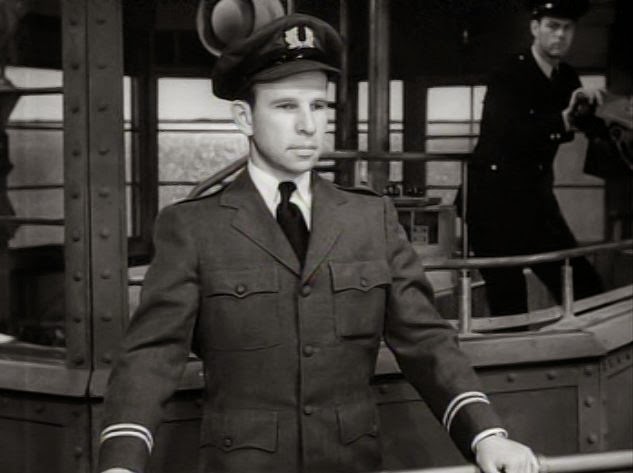
Upon first glance, Hume Cronyn seemed miscast as the ruthless prison guard in "Brute Force," which premiered on this day in 1947.

Physically unimposing as he was, though, Cronyn was the perfect choice. His performance effectively demonstrated how an apparently meek — but nevertheless narcissistic — individual can abuse even a dollop of power — and Cronyn's character had considerably more than a dollop of power. He was not above using anyone and anything to achieve his objectives, either.

I honestly felt that the character, with his sadistic personality, should have made the American Film Institute's list of the Top 50 movie villains. But it didn't.

Now, let me be clear. I don't have any issues with AFI's actual choices for its lists of villains and heroes. But the role was so unusual for Cronyn and he played it so well that I thought the performance at least deserved an honorable mention (although I don't think such a designation was available).

Anyway.

The story was essentially a retelling of the fabled irresistible force colliding with the immovable object. Burt Lancaster played an inmate who hated Cronyn and came up with an escape plan after having served a stretch in solitary confinement. It built up to a bloody finish, a riot when the escape plan didn't go very well.

It was good, but I'll be the first to say the movie had its weaknesses.

There were times when the story seemed a bit forced — like when the movie told the stories of the other inmates through flashbacks. To me, it seemed like a rather obvious tactic to introduce women into what was otherwise an all–male cast. And not just any women, either. These women were femme fatales, the ones who (directly or indirectly) were responsible for those men being on the inside while the women remained on the outside.

Clearly there were times when the movie was awash in stereotypes — at least those that existed in the '40s — and the references to World War II do make the story seem dated.

But for a movie that is 70 years old today, I think it has held up rather well.

"Brute Force" provides an unflinching, albeit melodramatic, glimpse into prison conditions for viewers today, but as I say, it is not without its shortcomings.

It really didn't have much to say that was new, even when it was in theaters. Prison movies weren't new when "Brute Force" was made, nor was the idea that conditions behind bars weren't good.

But it may have made that point better than any movie that preceded it.

Sunday, October 02, 2016

A Mid-20th Century Scarlet Letter


"Supposing is good, but finding out is better."

Mark Twain

Haven't we all known people who were a bit too quick to jump to conclusions?

And, if we are truly being honest, aren't we just a bit prone to that ourselves?

"The Mark," which was in U.S. theaters on this day in 1961 (it debuted in West Germany a few months earlier), is an example of that. And, while I prefer to keep my politically oriented writing on another blog, I couldn't help observing, when I saw it again on TV recently, that the idea behind the story actually supports both Hillary Clinton and Donald Trump on the issues of bias and profiling.

I think Clinton is right when she observes that there is an element of bias in every human heart. It is human nature to be suspicious of anyone who is different, and I believe that is true of even the most liberal among us. It doesn't mean one is a hater, to use the label that modern progressives seem to favor for dismissing those who disagree with them. I think it is a self–defense mechanism that has probably been in man's DNA all along.

At the same time, I realize what a difficult job enforcing law and ensuring order is. I have known some police officers in my life, and I covered the police beat when I was a reporter. Profiling is a (typically) nonviolent method for narrowing down the general pool of potential suspects in a given population. It prevents police from, say, wasting time by scrutinizing all the men in a given area when investigating a crime — even though witnesses reported seeing a man in a particular age range wearing specific clothing who was leaving the scene of a crime.

At the very least such a person is a person of interest with whom the police would want to have a conversation.

Profiling isn't exclusively about race, as some would have you believe. Now, it isn't perfect. Nothing is, but it saves time — and don't we all try to do that in all sorts of ways in our daily lives? If, for example, you work in human resources, and your company advertises an open position that draws a couple hundred applications, you're going to look for ways to quickly whittle the pool of applicants down. After all, you have other things that must be done, other deadlines that must be met. Your methods may not be entirely fair. You might even miss someone who would be perfect for the job. But it seems more efficient than painstakingly reading through every resume.

Profiling is a tool — but like most tools, it must be used with other tools to do the job.

Stuart Whitman played a convicted sex offender whose crime had been intent to commit child molestation, not the actual crime itself (maybe that was too hot to handle in 1961). I don't even recall that the crime was committed — and if it wasn't it seems to me that intent would be difficult to prove. Perhaps attempt was meant — but there are laws on the books that deal with attempts to commit crimes. Intent would be a similar but hardly interchangeable term.

Actually "The Mark" addressed so many things about modern culture that are still true more than half a century later. It told a tale of so many things that are good and bad about people in the 21st century — their choices, their fears, their loves, their hates, their prejudices. And the ultimate point of the story, I have concluded, is that people so often reach conclusions to condemn and label without knowing the facts.

Anyway.

He had served his sentence. After he was released from prison, he tried to build a new life for himself and seemed to be doing a good job of it. With some assistance from the prison psychiatrist (Rod Steiger), he landed a job and was excelling at it. He started a relationship with the company's secretary (Maria Schell), a widow with a young daughter.

Then he came under suspicion for molesting and beating a child.

At first there was no real problem. The police picked him up for questioning — as they routinely do when a crime has been committed. Being questioned does not mean that one is a suspect, only that police feel the individual may be able to provide some useful information.

Whitman's character had an alibi and was released, but a reporter who covered his earlier trial recognized him and wrote articles about his activities — disclosing the fact that he had been alone with his girlfriend's daughter.

As a journalist that is something with which I have a problem. I was always taught never to report rumors as fact and not to write about a suspect's past unless the suspect was in custody, on trial or had been convicted.

When I watched "The Mark," I put the blame squarely for what happened on the reporter. When the story of Whitman's character's past was published, he lost both his job and his girlfriend.

Most modern viewers probably won't recognize Whitman. Mostly a supporting actor in the years leading up to "The Mark," he had both leading and supporting roles in the projects that followed. He received his only Oscar nomination for his performance in "The Mark."

Monday, July 21, 2014

A Good, Not Great, Gangster Movie


"I don't love life much, but I don't hate it enough to stick my head in front of a screw's bullet."

Frank (James Cagney)

Although they did other things in their movie careers — and did them well — James Cagney and George Raft are remembered mostly for their gangster movies.

I'm not talking about film noir movies, those upscale crime movies that were more melodrama than anything else and usually featured a private investigator (but might feature almost any kind of character) as the main figure in the story.

Gangster movies were in a genre of their own — a subgenre, really, of the general crime film genre. Typically, they dealt with organized crime, and they were frequently set in prisons.

And many were like "Each Dawn I Die," which premiered 75 years ago tomorrow. They were about innocent men who had been wrongfully imprisoned. That was a very familiar theme.

Anyway, given the reputations Cagney and Raft enjoyed, it was surprising to me when I discovered that "Each Dawn I Die" was the only movie they made together.

Well, not quite. Seven years earlier, Raft made a brief, uncredited appearance in one of Cagney's movies. Raft was also in another Cagney movie, this one about boxing, around the same time, but his appearance in that one also was very short.

So, in reality, "Each Dawn I Die" was the only movie ever made that featured both Cagney and Raft in what amounted to co–leading roles.

Cagney played a reporter trying to expose a corrupt district attorney who was running for governor. He got framed for vehicular manslaughter and was sent to prison.

In prison, Cagney met Raft, a gangster doing a life sentence. They worked together, and Raft became indebted to Cagney after Cagney saved his life.

At first, Cagney's character tried to keep his distance from the other inmates, but, thanks to the use of nearly every gangster movie cliche imaginable, he got worn down to the point where he was just another sour prisoner.

That was due, in no small part, to the refusal of his plea to the parole board, which was led by the man who was responsible for Cagney's conviction — and he had been appointed by the man Cagney had tried to expose — now the governor of the state.

It seemed all the cards were stacked against Cagney so he enlisted Raft's help in getting his name cleared.

OK, it was a routine gangster story. It certainly wasn't original. But, while we may recognize it today for what it was, at the time it was a big hit — and Warner Bros. offered Raft a long–term contract.

For folks who didn't mind a cliche–ridden, shoot–'em–up gangster movie, especially one with Cagney, it was an entertaining experience.

Director William Keighley deserved a lot of the credit. He was a studio team player, capable of doing good work no matter the topic, and he produced a good, if not great, gangster movie in "Each Dawn I Die."

Saturday, April 05, 2014

Art Imitates Life


I have admired Goldie Hawn and Steven Spielberg for so long that I can't recall a time when I did not admire them.

My admiration for Spielberg probably began 40 years ago shortly after he released his first theatrical feature, "The Sugarland Express," which starred Hawn and was based on a true story. It made its theatrical debut on this day in 1974.

It was perhaps a year later when I saw it — not long before "Jaws" premiered.

As Roger Ebert wrote, though, "[L]ike so many things in Texas, it seems like a fantasy anyway."

That's true enough. I've lived in Texas for the last 18 years, nearly 22 years of the last 26, and I visited here for a long time before that. Both sets of grandparents lived here so my family spent many holidays here.

Even though I did not grow up here, I feel I have a pretty good understanding of how things are here. And there is a surreal quality to some things that happen here, like the case of the woman in Houston who was charged with trying to hire someone to kill the mother of her daughter's cheerleading rival.

Or the time the Texas Seven escaped from prison and remained on the loose during the Christmas holidays.

Whenever something like that happens in Texas, you can't help but shake your head and wonder what they were thinking. How in the world did they think they could get away with what they were trying to do?

Many years ago, I recall, there was a television commercial that sought to boost Texas tourism. Its catchphrase was "The rules are different here."

Sometimes you've got to wonder if there are any rules.

I guess that is how it was for the original couple in the story.

I've heard nothing that indicates the atmosphere in the police car occupied by the couple and the patrolman was genial. I don't know if everything in the movie was literally what happened — I do happen to know that some liberties were taken; more on that later — but I get the feeling that it wasn't all that far from the truth.

"The actual event took place in 1969," wrote Ebert, "and the young couple involved got a lot of sympathy from the folks along their route. Spielberg uses the story to comment on the ways Americans have of turning events into happenings."

That much certainly hasn't changed.

Remember when O.J. Simpson was the prime suspect in his wife's murder but had not been charged yet? Remember the low–speed car chase involving the Bronco in which Simpson was a passenger and perhaps two dozen police cars that were following it?

I thought of "The Sugarland Express" when I saw that — because "The Sugarland Express" has an ongoing chase that is very similar. As in the movie, folks lined the highway to see Simpson go by. I don't remember exactly, but there were probably some people who held up signs encouraging him — just like in the movie.

But I'm quite sure that the movie chase involved more than two dozen police cars.

The chase wound through all sorts of small towns along the way, and the hijacked police car went through slowly, giving the couple a chance to bond with the locals and even get a few creature comforts.

At one point, the option of bypassing a community was discussed, but Hawn wouldn't hear of it. She wanted to see the people, and she wanted the people to see her.

(I mentioned earlier my admiration for Hawn. I must confess that I wasn't so much an admirer of her acting as I was an admirer of her anatomy. What can I say? I was a young boy when I first saw her on Laugh–In, and I've always had something of a crush on her, I suppose. I don't think she is a great actress, but her performance in "The Sugarland Express" was exceptionally good.)

The line of police cars was led by a captain played by Ben Johnson. His character claimed never to have killed anyone in 18 years of service, and he wanted to keep that record intact. He was a straight shooter in his dealings with the fugitive couple, and I can only hope the real–life couple had someone like him with whom to negotiate.

In the movie, Hawn's character helps her husband (William Atherton) break out of pre–release prison farm so they can go retrieve their 2–year–old son from the foster home where he has been placed. Her husband only had four months left on his sentence, but Hawn's sense of urgency and threat to leave him convinced him to go along with her plan.

They hijacked a police car (and the patrolman in it), and they were off on their trek across south Texas.

Before that, they also hijacked an elderly couple's car in one of the best scenes in the movie.

But they ended up in that police car after they crashed the old folks' vehicle. I don't know if that really happened or not.

But back to the liberties that I know were taken ...

Probably the greatest one was the fact that the wife in the real story didn't spring her husband from jail the way Hawn did in the movie. He was already out.

But that part of the story wouldn't have made "The Sugarland Express" what it was.

Actually, "The Sugarland Express" wasn't very successful financially. It made a profit of less than $10 million over its budget. I'm guessing that came as a surprise to Spielberg, given the fact that movie audiences who flocked to see "Bonnie and Clyde" and "Easy Rider" only a few years earlier no longer seemed to have much of a taste for movies with sad endings.

Seldom has Spielberg been accused of misreading the popular mood, but, when he has, he usually comes back even stronger the next time out.

Perhaps that image got its start 40 years ago. Spielberg's next project (for the same producers) was "Jaws," which made more than $470 million.

Sunday, October 06, 2013

Taking the Midnight Express


My memory is that there were a lot of gritty movies coming out in 1978.

"The Deer Hunter" came out that year; so did "Coming Home," each in its own way an indictment of the Vietnam experience.

And "Midnight Express" was released in 1978. It had to be one of the grittiest of them all.

"Midnight Express" wasn't about Vietnam. It was about a young American (Brad Davis) who was caught trying to smuggle hashish out of Turkey on this day in 1970 and ended up doing hard time in a Turkish prison.

The movie got its name from the prison slang expression for an escape attempt.

And there was plenty from which an inmate might want to escape — disease, sadistic prison guards, a justice system that was biased against Americans and allowed prosecutors to appeal acquittals or what they saw as insufficient sentences.

It was a nightmare, and director Alan Parker did a great job of painting a grim picture for the audience.

There were moments in "Midnight Express" that would make anyone cringe. It was a brilliant examination of human frailties and shortcomings and how they were exploited and abused by those in power.

Those on the receiving end often snapped, and Davis' character did snap a couple of times.

On one such occasion, his girlfriend (Irene Miracle) — with whom he was traveling when he was busted in the movie — came to see him a few years after his incarceration, and she was shocked by what she saw.

She brought a photo album with her. Money was inside the photo album, and, for the benefit of anyone who might be listening to their conversation, she told him there were pictures inside of his old friend "Mr. Franklin from the bank," and she encouraged him to escape as soon as possible, whenever he saw an opportunity.

And he did.

The story seemed entirely plausible — and parts of it were legitimate — but it exaggerated some things to achieve a desired effect.

Big–screen audiences may have had their first real look at Davis in "Midnight Express," but I knew him from a couple of earlier TV productions — the TV movie "Sybil" and the smash hit mini–series "Roots."

I have always felt that Davis' life was a tragic one, more tragic even than many of the roles he played, and the role of Billy Hayes in "Midnight Express" was a tragic one in many ways.

He was diagnosed with AIDS in the mid–1980s and died of assisted suicide in 1991.