Showing posts with label Hume Cronyn. Show all posts

Friday, June 30, 2017

The Irresistible Force vs. the Immovable Object


Upon first glance, Hume Cronyn seemed miscast as the ruthless prison guard in "Brute Force," which premiered on this day in 1947.

Physically unimposing as he was, though, Cronyn was the perfect choice. His performance effectively demonstrated how an apparently meek — but nevertheless narcissistic — individual can abuse even a dollop of power — and Cronyn's character had considerably more than a dollop of power. He was not above using anyone and anything to achieve his objectives, either.

I honestly felt that the character, with his sadistic personality, should have made the American Film Institute's list of the Top 50 movie villains. But it didn't.

Now, let me be clear. I don't have any issues with AFI's actual choices for its lists of villains and heroes. But the role was so unusual for Cronyn and he played it so well that I thought the performance at least deserved an honorable mention (although I don't think such a designation was available).

Anyway.
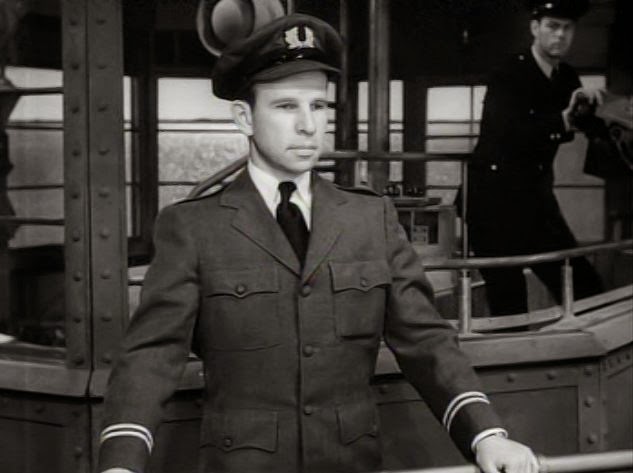
The story was essentially a retelling of the fabled irresistible force colliding with the immovable object. Burt Lancaster played an inmate who hated Cronyn and came up with an escape plan after having served a stretch in solitary confinement. It built up to a bloody finish, a riot when the escape plan didn't go very well.

It was good, but I'll be the first to say the movie had its weaknesses.

There were times when the story seemed a bit forced — like when the movie told the stories of the other inmates through flashbacks. To me, it seemed like a rather obvious tactic to introduce women into what was otherwise an all–male cast. And not just any women, either. These women were femme fatales, the ones who (directly or indirectly) were responsible for those men being on the inside while the women remained on the outside.

Clearly there were times when the movie was awash in stereotypes — at least those that existed in the '40s — and the references to World War II do make the story seem dated.

But for a movie that is 70 years old today, I think it has held up rather well.

"Brute Force" provides an unflinching, albeit melodramatic, glimpse into prison conditions for viewers today, but as I say, it is not without its shortcomings.

It really didn't have much to say that was new, even when it was in theaters. Prison movies weren't new when "Brute Force" was made, nor was the idea that conditions behind bars weren't good.

But it may have made that point better than any movie that preceded it.

Saturday, January 11, 2014

Survival in the North Atlantic


It would be quite a challenge for a modern movie director to make a film like "Lifeboat," the Alfred Hitchcock drama that made its debut 70 years ago today.

It isn't that disaster movies are so rare. They aren't. But disaster movies like "Lifeboat" — which require a good story and great acting in the absence of splashy special effects — are quite rare, if not nonexistent, today.

Hitchcock had been playing it safe, I suppose, in the years before "Lifeboat." He had made some of his best movies in the preceding years, but they were mostly melodramas, not quite as thrilling as the thrillers he produced later in his career. In fact, many of his projects could be described as routine.

Apparently, he decided to stretch his creative wings with "Lifeboat."

"Lifeboat" was a real challenge for Hitchcock. It was really his first movie to be set entirely in a confined space. He revisited that style in a couple of movies a decade later — "Rear Window" and "Dial M For Murder."

In "Lifeboat," a diverse group of people found themselves together in a lifeboat in the North Atlantic after their ship and a U–boat sank each other, and they were forced to work with each other to achieve a mutual objective — survival.

The group included mostly British and Americans, but there was one German survivor who was pulled into the boat. That led to some remarkable discussions ...

For example, at one point, it was suggested that the German should be thrown overboard and allowed to die. But, after a spirited argument, the German (who was later revealed to have been the captain of the U–boat), was allowed to stay on the boat.

One could hardly imagine a more diverse cross–section of passengers in a cramped lifeboat — but Hitchcock's exploration of the characters made for a gripping story.

Hitchcock was known for his cameo appearances in his films. Usually he appeared briefly and casually as a very minor character, but a movie like "Lifeboat" presented him with some unusual problems.

Given the fact that "Lifeboat" was set at sea, Hitchcock couldn't exactly walk by as he did in other films. But he could be seen as the before and after photos in a newspaper ad for a weight–reduction project.

Hitchcock's greatest influence in the film could be seen in the performances he drew from his cast. Tallulah Bankhead gave what may have been her best performance as a cynical columnist, but she didn't outshine her co–stars, like William Bendix and Hume Cronyn.

If you've never seen "Lifeboat," you should — and you will have your opportunity a week from today. Turner Classic Movies will be showing it next Saturday at 7 p.m. (Central).
