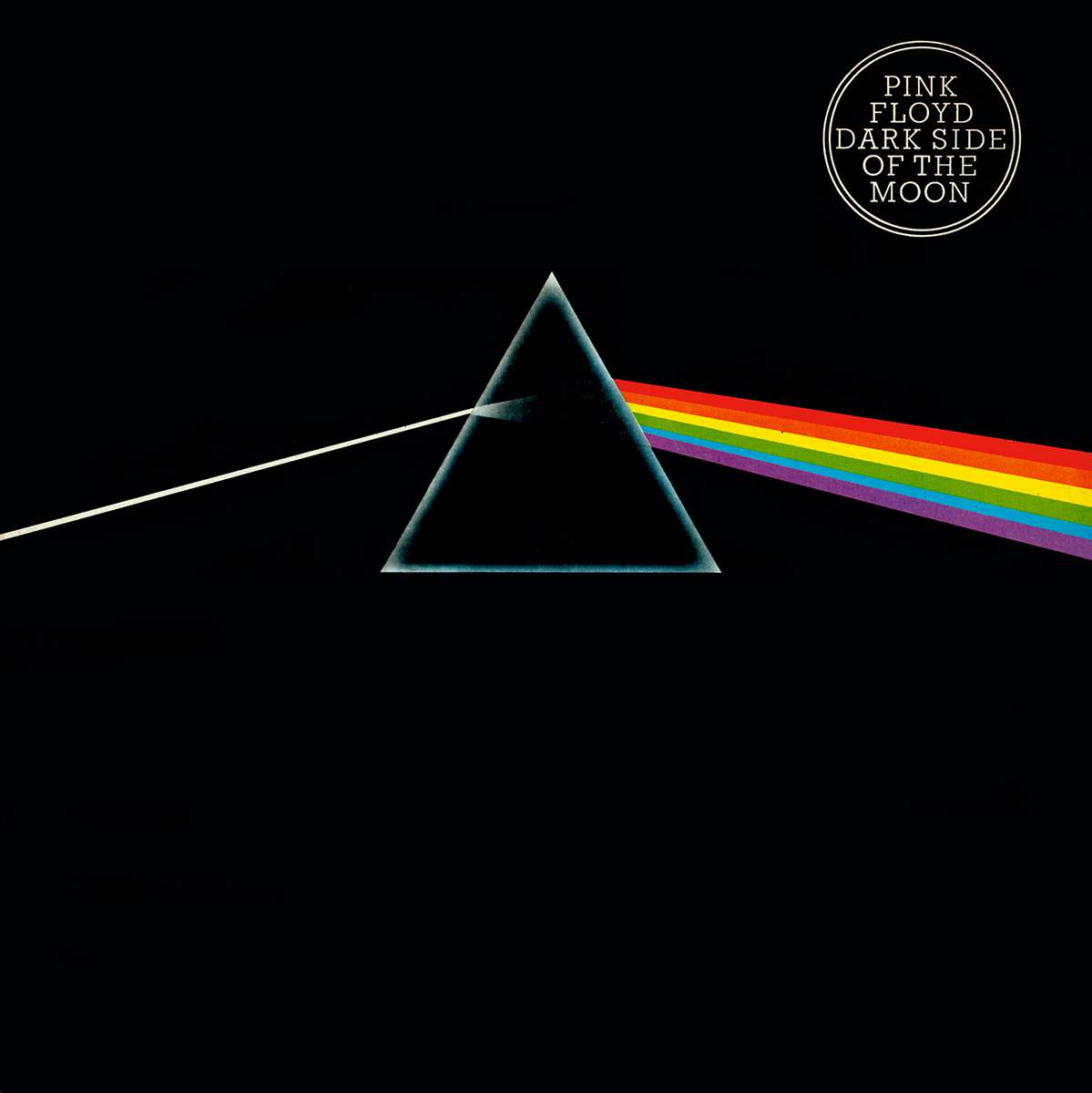
It is appropriate, I suppose, that Pink Floyd's "Dark Side of the Moon" marks its 45th anniversary today, just a couple of weeks after the school shooting in Florida — an event that is already leaving its mark on the culture.
"Dark Side of the Moon" didn't address gun violence, but it explored similarly dark themes — conflict, greed, the passage of time and mental illness. Certainly, the latter played a role in the shooting, and it may well have been fed by conflict and greed. I would rule out the influence of the passage of time — although the debate that was sparked by the shooting includes the age limit for purchasing a firearm.
Pink Floyd's musical style was always hard to pin down, but that may never have been truer than it was in "Dark Side of the Moon," which embraced jazz fusion and blues/rock in a lush tapestry of the human condition.
Some people will argue that "Dark Side of the Moon," which arrived in music stores on this day in 1973, is the greatest album ever made, and I could live with that.
Rolling Stone ranked it #43 on its list of the top 500 albums of all time. I could live with that, too. As long as it's on the list.
Every time I listen to it, I am reminded of my days on the night shift of a metropolitan newspaper. When we finished the next day's edition around midnight or so, I would drive home and put "Dark Side of the Moon" on my stereo. It was amazingly soothing, perfect for late at night when it seemed everyone else was asleep.
For obvious reasons, I particularly enjoyed the line from "Breathe" that went "Home again ... I like to be here when I can."
"Dark Side of the Moon" was a groundbreaking achievement in an era of groundbreaking achievements. There is no question that the album was — and continues to be — a hit. It was on Billboard's chart for 15 years, from 1973 to 1988, and has sold 45 million copies.
Think about that for a minute. One–third of the album's existence has been spent on Billboard's Top 200. That wouldn't be much of an accomplishment if you were talking about an album that has been available for a year or two. But "Dark Side of the Moon" has been available for 4½ decades.
Sure, part of the album's popularity was due to two singles, "Money" and "Us and Them." Of the two, I suppose I prefer the song "Us and Them." I hear it less frequently on the radio so I am not burned out on it the way I am "Money," even though the latter is probably more familiar to casual listeners.
But if I am going to be pressed on my preferences from "Dark Side of the Moon" — and I am currently on my third copy of it (my first copy was a cassette, my second was a vinyl album, and the copy in my collection today is a CD) — I would probably pick "Breathe" or "The Great Gig in the Sky."
Frankly, though, it cheapens the album to try to narrow it down to a song or two. That lumps Pink Floyd with everyone else and "Dark Side of the Moon" with every other album. That isn't fair. It isn't right. "Dark Side of the Moon" was about themes, not individual compositions, and deserves to be recognized for that.
The album took shape over a period of several months before recording sessions began in the late spring of 1972. It evolved in live performances, and the band experimented with recording methods that were new at the time, such as tape loops and multitrack recording. Pink Floyd also used synthesizers, which were not in wide use at the time but became quite popular in the years ahead.
But things were mostly piecemeal until the band put everything together at London's Abbey Road Studios.
"Dark Side of the Moon" is an experience, the culmination of all the things that combined to make it what it is. Its messages are still relevant to the human condition 45 years after it was released.
Pink Floyd released a double–CD of live music in the mid–1990s, part of which was a live performance of the "Dark Side of the Moon" album from start to finish. I liked it, but the band had rehearsed the songs so particular passages would be synchronized with the images on the screen behind them. It lacked the spontaneity of most live recordings, but the same could be said of all the other songs on the CD, not just the ones from "Dark Side of the Moon."
Having attended a couple of Pink Floyd concerts, I can say that the visuals played a big role in the band's performances, and it didn't surprise me to learn that the band rehearsed the music so tightly for its concert tour. Perhaps a videotape that completely documented the experience of a Pink Floyd concert was sold at the same time as the CD, but I honestly don't recall one. It would have been a good idea. Separated from the visuals, it almost sounded as if crowd noises had been added to the original studio recordings for the live CD.
That was a problem, really, for all of the tracks on that double CD, but it was particularly disappointing with the performance of "Dark Side of the Moon."
The surviving members of Pink Floyd are unlikely ever to release another CD or videotape, but it would be great to see and hear the band jamming and improvising on the songs from "Dark Side of the Moon," if such footage exists.





