Arthur Penn's movie about Bonnie and Clyde had been showing on America's movie screens since August of the previous year when Merle Haggard's album "The Legend of Bonnie & Clyde" arrived in music stores 50 years ago today.
Haggard was on a real hot streak in the 1960s, and "The Legend of Bonnie & Clyde" just added to it.
Other than being inspired by the movie, though, there was no real link between the two. Haggard collaborated with Bonnie Owens on the title track, but they are better known for another composition of theirs from the same album — "I Started Loving You Again."
The title track went on to become a No. 1 hit, but the flip side, "I Started Loving You Again" (with "Today" added to the title later) went on to become a standard — and may well be Haggard's most covered song.
Reportedly, the song's title originated at a time when Haggard, who had married Owens a few years earlier, believed he had fallen out of love with her. Then, when they were walking through an airport, Haggard looked at Owens and told her, "You know what? I think I started lovin' you again today."
At Owens' suggestion, today was moved from the end of the original sentence to the beginning of the song title.
The A side of the single, as I mentioned, was the LP's title track. Ironically, while "I Started Loving You Again" never charted as a single ("The Legend of Bonnie & Clyde" was Haggard's fourth No. 1 single), it was one of Haggard's most popular songs.
The album was not, as Stephen Thomas Erlewine of Allmusic.com observed, a concept album, no matter what its title might imply. It was mostly an album in which Haggard covered songs written by others. In addition to the two compositions he penned with Owens, Haggard was credited with writing two other songs on the album, leaving seven that were written by other songwriters.
It was noteworthy that Glen Campbell, who had already enjoyed chart–topping success with "Gentle on My Mind" and was about to do so again with "By the Time I Get to Phoenix," played guitar and banjo on the album.
Willie Nelson's "Stardust" album, which hit music stores in April 1978, seemed to catch a lot of people by surprise.
After all, he was practically unknown to noncountry music fans until three years earlier, when he released the wildly popular "Red Headed Stranger" album, which included the No. 1 hit "Blue Eyes Crying in the Rain."
But he had been around for awhile, mostly writing songs but recording some, too.
He released another country album the following year, collaborating with Waylon Jennings, Jessi Colter and Tompall Glaser, but then he chose to do something different.
For "Stardust," he recorded covers of 10 pop standards — songs that many people already knew. And he proved that he was more than a country singer/songwriter. He was versatile enough to cover songs from other genres and make them his own, like "Georgia on My Mind."
"Georgia on My Mind" was written nearly half a century earlier by Hoagy Carmichael and was most closely associated with Ray Charles — until Nelson recorded it. Nelson won a Grammy for his rendition of the song.
Carmichael had another composition on the album — the title track "Stardust," which was written more than half a century before.
The album also included songs written by Irving Berlin, Duke Ellington and the Gershwins, but Carmichael was the only songwriter who had more than one song on it.
A recording of the song was used to wake up the crew of the Space Shuttle in 2000.
Nelson put his own distinctive spin on the songs but perhaps none as much as his version of "Moonlight in Vermont," which was probably one of the newer songs on the album, having been written in 1944 by John Blackburn and Karl Suessdorf.
As with all the other songs on the album, it has been covered many times by many artists, but Nelson's version was truly unique.
Nelson asked his friend producer Booker T. Jones to arrange the song for him, which Jones did.
"Stardust" was certified quintuple platinum in 2002 and later inducted in the Grammy Hall of Fame.
I have never been too keen on Little Feat's studio albums. Little Feat was a live band, and the two–record live album that was released this month in 1978, "Waiting for Columbus," proved that beyond the shadow of a doubt.
There is also no doubt that, as Stephen Thomas Erlewine of Allmusic.com observed, "the group had entered its decline" when the album was recorded — but "Little Feat in its decline was still pretty great."
Even if Little Feat was in its decline, as Erlewine wrote, "Waiting for Columbus" was still the best live album of its era.
Little Feat's studio albums never had the energy that their live performances had. Until I heard "Waiting for Columbus," I had never experienced Little Feat live completely, only in bits and pieces. "Waiting for Columbus," to put it bluntly, knocked my socks off.
It has been one of my favorite albums for a long time.
I was hooked from the first track, "Fat Man in the Bathtub."
That was one of the band's early songs, and years of playing it live really came through on the recording. It had a polish that most of the other songs lacked.
I guess an enduring favorite from Little Feat's repertoire was always "Dixie Chicken," and the live recording of that song was truly filled with energy.
But I always favored "Spanish Moon" and the contributions of the Tower of Power horn section.
I have never grown tired of "Waiting for Columbus," but the CD, which was expanded to include 10 previously unreleased tracks, was a new experience.
Those unreleased tracks were the initial attraction for me; the first time I heard them, I could understand why they were left off the original album, but the additional space afforded by the CD format meant there was no reason not to release them. They were good, just not up to the same standards as the ones included on the original album.
Of the 10, my preference was "Cold, Cold, Cold," which was one of the band's early songs. I didn't think it had the polish that "Fat Man in the Bathtub" had, but it could have been included on the original release of "Waiting for Columbus."
It was a little late in the game for Little Feat to be releasing a live album, though. Leader and founding member Lowell George, the band's heart and soul, died a little over a year later of a heart attack brought on by an accidental cocaine overdose.
Roger Waters was a co–founder of Pink Floyd, but his last album with the band, "The Final Cut," arrived in music stores on this day in 1983.
Pink Floyd went on to release three more studio albums and a double–disc live album, but Waters' days with Pink Floyd ended with "The Final Cut."
Seen from that perspective, perhaps it was appropriate that "The Final Cut" was the only Pink Floyd album in which Waters received all the songwriting credit.
"The Final Cut" was also the only Pink Floyd album that didn't include keyboardist Richard Wright.
The album was originally intended to be a soundtrack for "Pink Floyd — The Wall," but plans changed with the outbreak of war in the Falkland Islands in 1982 after Argentine forces occupied the British–held islands temporarily.
By any yardstick you may choose, "The Final Cut" was Waters' album. Not only did he write all the songs, he sang lead on all but one track — guitarist David Gilmour provided lead vocals on the other one.
And it was his statement on war, inspired primarily by the experience of losing his father in World War II but also by more contemporary factors. Waters thought British Prime Minister Margaret Thatcher's reaction in the Falklands had been unnecessary and aggressive. The album, originally named "Requiem for a Post–War Dream," included a track that bore a variation on that — "The Post–War Dream."
The post–war dream was what Waters believed was the reason for the sacrifices made by his father and others — sacrifices that had been betrayed.
The war theme was also reflected in the cover art. The front cover showed a Remembrance poppy and four World War II medal ribbons. Additional photographs could be found when the gatefold was opened. The album art was reproduced — on a significantly smaller scale — for the CD version of the album.
And, of course, anyone who downloads the album today is deprived of that experience altogether. It wasn't true in all cases, but album art definitely added to an album's experience — and perhaps never as much as it did on a Pink Floyd album.
Pink Floyd's cover art was always memorable, and the band enjoyed considerable success with its album sales, but it had comparatively few hit singles — mostly, I suppose, because the band's tracks didn't usually lend themselves to radio airplay.
The commercially released single from "The Final Cut" could probably be described that way. "Not Now John" managed to make it to the Top 30 in the U.K. — in a censored version. In the album track, the chorus was "Fuck all that," but in the single it was changed to the more ambiguous "Stuff all that."
I have always favored a third track from the album "The Fletcher Memorial Home." It always summarized Waters' thoughts about the world's leadership of that time better than the rest.
The song got its name from Waters' father.
It probably doesn't hold up well for modern listeners, though, many of whom would not recognize the names mentioned. I guess that hopelessly dates the song, which is too bad because it is probably my favorite track.
"This is more like a novel than a record," wrote Stephen Thomas Erlewine for AllMusic.com, "requiring total concentration since shifts in dynamics, orchestration and instrumentation are used as effect."
In many ways, it lacks a true Pink Floyd sound. The music might have benefited from more input from Gilmour.
Erlewine observed that "[t]his means that while this has the texture of classic Pink Floyd, somewhere between the brooding sections of The Wall and the monolithic menace of Animals, there are no songs or hooks to make these radio favorites. The even bent of the arrangements, where the music is used as texture, not music, means that The Final Cut purposely alienates all but the dedicated listener."
Sting has been around for more than four decades, going back to his days with The Police, and he has been a solo act for more than three, but many people still don't know his real name. (It is Gordon Sumner.)
Likewise, many people are, sadly, unfamiliar with Geoffrey Chaucer's "The Canterbury Tales," a collection of stories told by a group of 14th–century pilgrims traveling from London to Canterbury to visit St. Thomas Becket's shrine at Canterbury Cathedral. One of those pilgrims was called The Summoner.
The title of Sting's album that was released 25 years ago today, "Ten Summoner's Tales," was a somewhat strained pun on both Sting's surname and the name of that character from "The Canterbury Tales."
The music was a nice change of pace for Sting, whose previous efforts had been largely influenced by the deaths of his parents. "Ten Summoner's Tales" was more upbeat. Of course, it wouldn't have taken much, given how somber those other albums had been.
The title of the album also made it clear that it was made with no concept in mind — and, after hearing it, the listener had no choice but to concede that point — with the exception of the fact that the songs tended to affirm love and morality.
Of the six singles that were released from the album, my favorite has long been "If I Ever Lose My Faith in You," but I have never spoken of the reason for that until now.
I had heard singles from the album on the radio, but I didn't really listen to the album until two years after it hit the record stores — the summer after my mother died in a flash flood. My father was disabled in that flood. It was a devastating time for the entire family.
My mother's childhood friend, Jane, checked in on my family on a regular basis that summer, making sure we were all functioning, still putting one foot in front of the other and not forgetting to breathe, and I remember buying the CD one day, mostly on a whim.
I put it in the CD player in my car and started listening to it as I drove home. "If I Ever Lose My Faith in You" was the first song that played. I had heard it before, but on that occasion all I could think of was how lost my family would have been without Jane that summer.
I suppose I will always think of her whenever I hear "If I Ever Lose My Faith in You." The song spoke the truth. If I ever lost my faith in Jane, there really would be nothing left for me to do.
The other single from the CD that I like is "Fields of Gold." While "If I Ever Lose My Faith in You" is a pop song, "Fields of Gold" is really more of a ballad.
Both songs were written by Sting and deserve to be designated as classics on an album that really didn't have many classic songs, but it was more than the sum of its parts.
It had classic contributors — most notably Eric Clapton, who didn't perform on the album but co–wrote "It's Probaby Me" with Sting.
It was the first single to be released from the album, but it was overshadowed by those other two songs.
Today is the 340th birthday of one of my favorite composers, Antonio Vivaldi.
Vivaldi is best known for his composition "The Four Seasons," which paid homage to the seasons of the year and inspired one of my favorite movies from the '80s.
My very favorite composer is Mozart. I also like Beethoven, Grieg and Bach.
But Vivaldi is regarded as one of the greatest Baroque composers. Of those others I mentioned, I suppose Bach is the only one from the Baroque period, and while he is also regarded by many as the greatest composer of all time, much of his work was for keyboards. Vivaldi's primary emphasis was on strings.
Both were great, of course. This isn't a competition, and both gave us soothing music that has survived for centuries.
In fact, Vivaldi's compositions have fared better than he did. Vivaldi died in poverty.
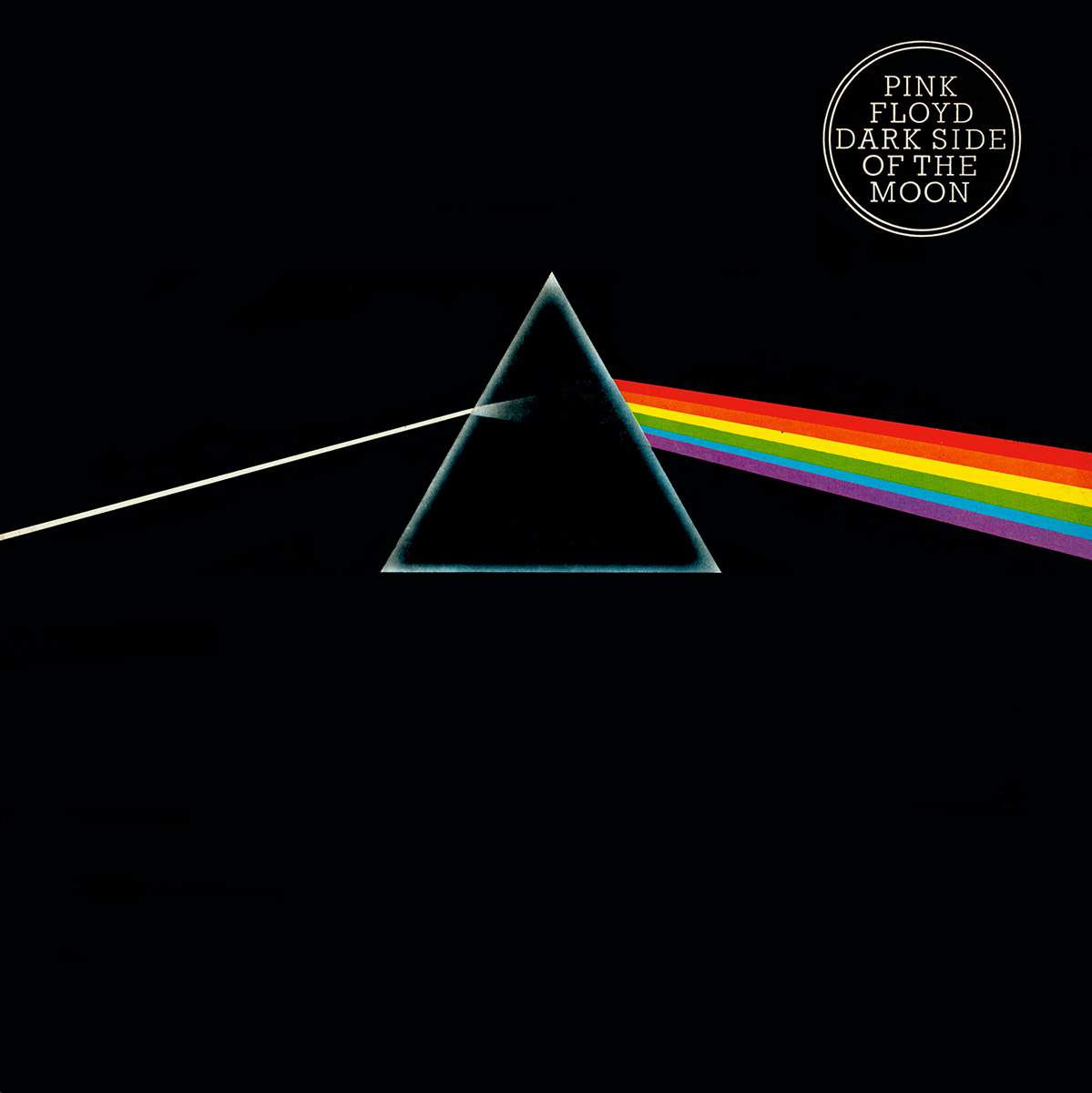
It is appropriate, I suppose, that Pink Floyd's "Dark Side of the Moon" marks its 45th anniversary today, just a couple of weeks after the school shooting in Florida — an event that is already leaving its mark on the culture.
"Dark Side of the Moon" didn't address gun violence, but it explored similarly dark themes — conflict, greed, the passage of time and mental illness. Certainly, the latter played a role in the shooting, and it may well have been fed by conflict and greed. I would rule out the influence of the passage of time — although the debate that was sparked by the shooting includes the age limit for purchasing a firearm.
Pink Floyd's musical style was always hard to pin down, but that may never have been truer than it was in "Dark Side of the Moon," which embraced jazz fusion and blues/rock in a lush tapestry of the human condition.
Some people will argue that "Dark Side of the Moon," which arrived in music stores on this day in 1973, is the greatest album ever made, and I could live with that.
Rolling Stone ranked it #43 on its list of the top 500 albums of all time. I could live with that, too. As long as it's on the list.
Every time I listen to it, I am reminded of my days on the night shift of a metropolitan newspaper. When we finished the next day's edition around midnight or so, I would drive home and put "Dark Side of the Moon" on my stereo. It was amazingly soothing, perfect for late at night when it seemed everyone else was asleep.
For obvious reasons, I particularly enjoyed the line from "Breathe" that went "Home again ... I like to be here when I can."
"Dark Side of the Moon" was a groundbreaking achievement in an era of groundbreaking achievements. There is no question that the album was — and continues to be — a hit. It was on Billboard's chart for 15 years, from 1973 to 1988, and has sold 45 million copies.
Think about that for a minute. One–third of the album's existence has been spent on Billboard's Top 200. That wouldn't be much of an accomplishment if you were talking about an album that has been available for a year or two. But "Dark Side of the Moon" has been available for 4½ decades.
Sure, part of the album's popularity was due to two singles, "Money" and "Us and Them." Of the two, I suppose I prefer the song "Us and Them." I hear it less frequently on the radio so I am not burned out on it the way I am "Money," even though the latter is probably more familiar to casual listeners.
But if I am going to be pressed on my preferences from "Dark Side of the Moon" — and I am currently on my third copy of it (my first copy was a cassette, my second was a vinyl album, and the copy in my collection today is a CD) — I would probably pick "Breathe" or "The Great Gig in the Sky."
Frankly, though, it cheapens the album to try to narrow it down to a song or two. That lumps Pink Floyd with everyone else and "Dark Side of the Moon" with every other album. That isn't fair. It isn't right. "Dark Side of the Moon" was about themes, not individual compositions, and deserves to be recognized for that.
The album took shape over a period of several months before recording sessions began in the late spring of 1972. It evolved in live performances, and the band experimented with recording methods that were new at the time, such as tape loops and multitrack recording. Pink Floyd also used synthesizers, which were not in wide use at the time but became quite popular in the years ahead.
But things were mostly piecemeal until the band put everything together at London's Abbey Road Studios.
"Dark Side of the Moon" is an experience, the culmination of all the things that combined to make it what it is. Its messages are still relevant to the human condition 45 years after it was released.
Pink Floyd released a double–CD of live music in the mid–1990s, part of which was a live performance of the "Dark Side of the Moon" album from start to finish. I liked it, but the band had rehearsed the songs so particular passages would be synchronized with the images on the screen behind them. It lacked the spontaneity of most live recordings, but the same could be said of all the other songs on the CD, not just the ones from "Dark Side of the Moon."
Having attended a couple of Pink Floyd concerts, I can say that the visuals played a big role in the band's performances, and it didn't surprise me to learn that the band rehearsed the music so tightly for its concert tour. Perhaps a videotape that completely documented the experience of a Pink Floyd concert was sold at the same time as the CD, but I honestly don't recall one. It would have been a good idea. Separated from the visuals, it almost sounded as if crowd noises had been added to the original studio recordings for the live CD.
That was a problem, really, for all of the tracks on that double CD, but it was particularly disappointing with the performance of "Dark Side of the Moon."
The surviving members of Pink Floyd are unlikely ever to release another CD or videotape, but it would be great to see and hear the band jamming and improvising on the songs from "Dark Side of the Moon," if such footage exists.
"Sgt. Pepper's Lonely Hearts Club Band" hit the music stores six months earlier, and it was still making headlines on this day in 1967 when "Magical Mystery Tour" was released.
But so were other songs the Beatles had written and recorded but had not yet released on an album — like "All You Need Is Love" and "Baby You're a Rich Man," which were released as the two sides of a single six weeks after the "Sgt. Pepper" album.
The Beatles were constantly experimenting with sounds and recording techniques. They rose to prominence with no real long–term expectations and therefore felt free to go wherever their interests took them. I saw an interview with Ringo Starr from around the time the Beatles made their first appearance on The Ed Sullivan Show, and he said he hoped the group would be successful enough that he could use his earnings to invest in a beauty shop in London. Neither he nor the other Beatles would have believed it if they had been told their recordings would still be influencing popular music half a century later.
Anyway, following the completion of "Sgt. Pepper," Paul McCartney had a brainstorm. He wanted to create an extemporaneous film about the Beatles and their music. "Ordinary" people (including the Beatles) would travel on a bus and have magical adventures.
The project yielded a 52–minute movie that was aired on the BBC the day after Christmas and was so savaged by the critics that it has been seldom seen since.
It also produced six new Beatles songs — not enough by themselves to make an entire album. Capitol Records rounded out the album by including five previously non–album singles.
As always, the music was good. In fact, for many observers, it was the music that salvaged the entire project. The film had no script and no real direction.
Still in the context of what had come before — and what was yet to come — "Magical Mystery Tour" was exactly what it seemed to be, a hodge–podge of songs consisting of a brief soundtrack and a group of songs that had been released as singles within the previous year.
As I say, though, the music was good. George Harrison was bursting with creativity that would reach full flower a few years later when he released his triple–album solo effort "All Things Must Pass." In 1967, though, he was still a member of the Beatles and getting a handful of spots on albums that were largely dominated by Lennon–McCartney compositions.
Nevertheless, Harrison contributed "Blue Jay Way" and shared credit with John Lennon, McCartney and Starr on the instrumental "Flying."
Yes, the music was good, but the album and film were disjointed. It wasn't surprising that both got mixed reviews.
It richly deserves its place in the Beatles discography. But it doesn't flow seamlessly in the Beatles' musical timeline.
Forty–five years ago this month, the concept of fusion wasn't new, but Steely Dan was.
Fusion has evolved, I suppose, from earlier uses in science and medicine to computing, and somewhere along the way it came to describe the result of the combinations of two musical genres. Like restaurants that try to join two kinds of food, it hasn't always been successful. I mean, some things work when they are combined with other things. Some things don't.
Steely Dan, which released its debut album, "Can't Buy a Thrill," in November 1972, was a unique fusion of jazz and rock.
Oh, that wasn't exactly new in 1972, either, and as Henry David Thoreau once observed, when a person is familiar with the truth of a concept or principle, that person loses interest in its many applications. Fusion wasn't a hot topic in 1972. There had already been decades of talk of nuclear fusion.
In fact, if time travel was possible and you could go back to November 1972, you most likely would find that the primary topics of conversation were President Nixon's landslide victory over George McGovern or Secretary of State Henry Kissinger's declaration that peace was "at hand" in Vietnam. Sports fans would probably talk about the undefeated Miami Dolphins.
But "Can't Buy a Thrill" was a musical triumph in late 1972, spawning a huge hit in "Reelin' in the Years," which reached No. 11 on the charts. Elliott Randall's guitar solo was named by Led Zeppelin guitarist Jimmy Page as his favorite solo of all time.
One of the things I remember from my childhood was how "Reelin' in the Years" was the favorite of a friend of mine who was probably a year or so older than I was. He was an aspiring guitarist, and he learned to play that song. He was pretty good, too.
But the bigger hit on the album was always my favorite — "Do It Again," which climbed to No. 6 on the charts.
Steely Dan's style leaned strongly to soft rock. That worked better with other styles, mostly jazz sprinkled with a little blues and some R&B.
Steely Dan never really seemed comfortable with anything stronger, as if fusing hard rock with jazz wouldn't work because jazz is too fragile.
I suppose that's in the way you look at it, but Steely Dan's fusion seemed new and fresh, even if it really wasn't.
We can do 'The Innuendo'
We can dance and sing
When it's said and done we haven't told you a thing
We all know that crap is king
Give us dirty laundry!
It is easy these days for people whose lives have not been involved in journalism the way mine has to believe that sensationalism and yellow journalism in the media are new.
But I could have told you back when I was an undergraduate studying journalism that neither is new.
On this day in 1982, Don Henley (initially of Eagles fame) released a solo single called "Dirty Laundry" that criticized the media of that time. If you listen to the lyrics, you must conclude that little has changed.
(Actually, the song was from an album titled "I Can't Stand Still," which had been released two months earlier.)
I studied print journalism in college, then practiced it in the real world. And it was an article of faith in every newsroom I was ever in that broadcasters weren't really serious journalists — that, in the words of the lyrics from the song, they only had to look good (while they read what someone else had written for them, either from the hard copy or from a teleprompter). Being "clear" was not required.
I don't know if the song fits in the modern–day debate over "fake news," but if fake news exists it is merely an outgrowth of the kind of journalism Henley criticized in the song.
I liked the song because, even though I hadn't been in the business long when "Dirty Laundry" was still being played on the radio, I knew enough about it to know that bad news will happen on its own. It doesn't need any help from journalists, whether they are legitimate journalists or not, and I have always despised those who try to stir things up needlessly.
And I also enjoyed a little tidbit that only journalists would know. There's a line in the song that goes "Is the head dead yet?" The song, as I understand it, was largely inspired by the media coverage of the deaths of John Belushi and Natalie Wood — but that particular line has a real role in newspaper history. It asks whether the major headline story (or head) is ready to go. If a head is dead, it means it is all set and is being printed — and it is too late to make a change.
I suppose that yellow journalism is the same thing as fake news. It depends on the label you want to slap on journalism that uses little, if any, research or facts and is presented in the most sensational, eye–grabbing way possible.
And that kind of thing has been going on in America since at least the 19th century and the days of Pulitzer and Hearst.
If it preceded that time — and I am sure it did — journalism historian Frank Luther Mott probably could have told us. He wrote the textbook on American newspapers from 1690 to 1940 that was used in most college journalism history courses for many years — and, for all I know, may still be in use in some classrooms today.
But Mott died in 1964. Not that he would be likely to still be around today. After all, he'd be over 130. Still, it would be good to hear his insights about modern journalism. No doubt he would be able to compare this time in journalism history to another period, whether it qualified as yellow journalism or required a different label.
And Mott, who led journalism departments at the University of Iowa and University of Missouri, was good at naming things. For example, he was responsible for the term "photojournalism."
He didn't coin the term "yellow journalism," but he did define it so I am sure he would have some thoughts to share on fake news — or whatever it is.
Absent Mott, though, you can listen to "Dirty Laundry" and get an idea what broadcast journalism was like 35 years ago.
And, as I said earlier, you will realize that things really haven't changed that much.
"To my mind, Yes may be the single most important of all the progressive rock bands."
Geddy Lee of Rush
I was a late arrival to the Yes party, I suppose.
The band's "Fragile" album had been in the music stores for a long time before I acquired a copy, but it was brand–new to me, and I was hooked by the other–worldly music I heard.
I may have been just discovering Yes, but that was far from the band's most current release. Among the Yes albums that were released after "Fragile" (but, again, before I got a copy of it) was "Close to the Edge," which hit music stores on this day in 1972 and marked a bit of a turning point — for the band and for me.
With my first purchase of a Yes album, I entered the world of progressive rock, where I would find the likes of Pink Floyd, Emerson Lake and Palmer and Jethro Tull — and others. And, while I listen to other things, too, I've never left that world.
When I bought the "Fragile" album on cassette long after its successor, "Close to the Edge," was released, I had just persuaded my parents to let me have a portable cassette recorder, and "Fragile" was one of the first cassettes I bought. I can't remember now why I bought it. I hadn't heard any of the tracks — and it didn't take long for me to figure out why. In those days radio stations seldom gave much airplay to songs that were longer than about four or five minutes — and many of Yes' recordings were nearly twice as long — even longer on "Close to the Edge."
Needless to say Yes wasn't getting much air time. And if it wasn't played on the radio in those days, chances were good I hadn't heard it.
I must have heard about Yes from someone, but I can't think of who that might have been. I wish I knew because that person was responsible for introducing me to one of my favorite musical experiences, and I would like to express my sincere gratitude.
But the experiences of listening to "Fragile" and "Close to the Edge" were very different.
While many of the tracks on "Fragile" were lengthy, they weren't as long as the tracks on "Close to the Edge," which was like a Yes symphony in three tracks/movements.
For nearly 50 years, Yes has had a distinctive style, but it was never really the same after "Close to the Edge." That was the last album that included drummer Bill Bruford, who joined King Crimson. Bruford was as distinctive in his own way as The Who's Keith Moon; others could take his place after he left, but they could never duplicate his sound.
Not surprisingly, I suppose, Yes has never again reached the creative heights it reached with "Close to the Edge." After 45 years, it holds up where other Yes albums do not — and remains fresh and new even upon repeated listenings.
When one thinks of any of the greatest people in any walk of life, it can seem — in hindsight — that they had a sort of historical inevitability. But such people seldom, if ever, achieve their success with no help from anyone.
Sadly, many of the people who are most responsible for others' successes are not recognized for what they accomplished.
It's hard to imagine, for example, where the Beatles would have been without Brian Epstein, who never performed with the Beatles and was probably largely unknown, even by the Beatles' fans at the height of Beatlemania.
They might well have reached the heights they reached, anyway. But it almost certainly would have taken longer to get there — much longer — if he hadn't been around to manage them. And there are those who believe that if the Beatles' implosion as a band was inevitable, it was hastened by Epstein's absence.
In the early '60s it was Epstein's faith in the Beatles and what he believed they could be that led to a contract with producer George Martin in May 1962 — and the hits started coming in bunches. "Please Please Me." "Love Me Do." "P.S. I Love You."
And that was just in 1962. There were many more hit songs to come.
And many hit albums, too, including "Sgt. Pepper's Lonely Hearts Club Band," arguably the greatest album ever recorded. It had been in music stores only three months when Epstein was found dead in his bedroom in London on this day in 1967.
There is a pretty good case to be made that Epstein left enormous footprints on the world's cultural landscape. He first saw the Beatles at the now–legendary Cavern Club in November 1961 and became their manager shortly thereafter. With his experience in sales and promotions Epstein took the Beatles in hand and made them presentable by the standards of the day, and they became major hits in the U.K.
The time would come when the Beatles would rewrite those standards, but by heeding Epstein's initial counsel of conformity they were able to get their feet in the door. From that point, their success positioned them to have that kind of influence.
It is often said that Ed Sullivan gave the Beatles to the world. But that isn't entirely true. Sullivan gave the Beatles to America, launching the British invasion, which could be seen as the same thing as giving them to the world. Then, as now, America was the ground zero of global communication, and anything that was a hit here was sure to have ripple effects all over the planet.
But the invasion might never have happened if Epstein hadn't taken over as their manager.
And yet today, 50 years after Epstein's accidental death, caused by a combination of alcohol and an overdose of sleeping pills, he is forgotten by most — a real Nowhere Man.
But perhaps not entirely. He finally received a spot in the Rock and Roll Hall of Fame in Cleveland in 2014, more than a quarter of a century after the band he discovered was inducted and at least 10 years since each Beatle (with the exception of Ringo Starr) was inducted as an individual performer.
This is a milestone anniversary in the annals of 20th century music.
For it was on this day in 1957 that John Lennon and Paul McCartney, perhaps the most successful songwriting team in history, met for the first time.
Three years before forming the Beatles, Lennon and his band, the Quarrymen, were performing for the second time. They were providing the music at a church festival. McCartney was there.
Lennon asked McCartney to join the band, and he did — even though his father and aunt didn't approve of Lennon. They considered him to be beneath them — although McCartney's father allowed the band to practice in his home.
It was through McCartney that Geoerge Harrison joined the band. McCartney recommended him to play lead guitar, but Lennon thought he was too young (14 at the time). Harrison won him over by playing "Raunchy" on the top deck of a bus in Liverpool.
Ringo Starr joined the band later.
It was 60 years ago today, though, that the nucleus of the band that would dominate popular music for a decade and beyond was born.
Ever since I heard yesterday of the death of Gregg Allman, I have been listening to my CDs of his music — at home, in my car, wherever I am, whatever I'm doing.
Thoughts of Gregg Allman bring back many fond memories for me. The Allman Brothers Band may have been my favorite band when I was in my teens, and I still enjoy listening to those recordings today.
There is some music I listened to in my teens that makes me cringe when I hear it today. "What was I thinking?" I want to ask myself even though the answer is obvious. I was a teenager, and you know how teenagers are.
But the Allman Brothers music never affects me that way.
It is drizzly and overcast this morning in Dallas, Texas, and I have been listening to the Allmans and remembering those days in my life. It has always seemed to me that Southern blues/rock music was made for a day like today, which makes it an appropriate time to mourn Allman's passing.
The Allman Brothers were responsible for bringing that genre to us. There have been many Southern rock bands over the years, but Gregg Allman and the Allman Brothers Band were the pioneers. They made sure we got the music, then passed the baton to others. Some handled it well; others did not.
But none ever matched what they achieved.
I feel a personal link between Dallas and the Allman Brothers. My grandparents lived here, and my family came here to visit frequently when I was growing up. I can remember buying cassettes of Gregg Allman and the Allman Brothers during our visits — Dallas always had far better music stores than central Arkansas did, as far as I was concerned — and listening to them on my portable cassette player on my grandmother's porch.
Frequently, as I recall, it was raining when I listened to those tapes.
"I've been imitated so well I've heard people copy my mistakes."
Jimi Hendrix
In the history of recorded music, there may have been a debut album that was more influential and more dazzling than Jimi Hendrix's "Are You Experienced" — but I don't know what it was.
And from that relatively limited subset, fewer still could be said to have altered the popular music landscape, but "Are You Experienced" did.
"Are You Experienced" hit music stores 50 years ago today. Its most recognizable track, by far, has to be "Purple Haze," which Rolling Stone said possessed "one of the unforgettable opening riffs in rock: a ferocious, stomping guitar march, scarred with fuzz and built around the dissonant 'devil's interval' of the tritone. And it launched not one but two revolutions: late–'60s psychedelia and the unprecedented genius of Jimi Hendrix."
But the influence of "Are You Experienced" went far beyond a single song and continues today. In addition to "Purple Haze," three other songs from the album — "Foxey Lady," "Hey Joe" and "The Wind Cries Mary" — made Rolling Stone's list of the top 500 songs of all time.
In rating "Are You Experienced" No. 15 in its Top 500 albums of all time, Rolling Stone wrote that "Hendrix made soul music for inner space."
"Are You Experienced" was one of the earliest albums in my collection, and I still listen to it from time to time. Lately, in anticipation of this milestone anniversary, I've been listening to it a lot more, and a question keeps popping into my head:
How can an album that is now half a century old still sound as cutting edge, as visionary as "Are You Experienced" does?
I guess that was the special genius of Jimi Hendrix.
And by the way, unlike some modern artists (i.e., Kanye West) Hendrix never would have called himself a genius.
"I don't consider myself to be the best," he said, "and I don't like compliments. They distract me."
When people die, you can generally count on hearing one of two things said.
Either the recently deceased died before his time — or he lived a long, full life.
You never hear that someone died at the right time, that he didn't live so much as a minute more or a minute less than he should have.
Jim Croce was one of those rare individuals about whom both things could have been said.
He was young when he died — only 30 — and he only made five studio albums in his too–brief career. His breakthrough album was his third, "You Don't Mess Around With Jim," which hit the music stores in April of 1972.
As young as he was, though, he really did live a full – if not long — life. And the success "You Don't Mess Around With Jim" brought him was well deserved if short lived.
Well, the success wasn't short lived. The album contained three songs that got significant airplay, including one that went to No. 1 on the charts after Croce's death in a 1973 airplane crash.
In hindsight, he was like a comet. He had made two previous albums that never made much of a splash so, for most folks, his career was limited to two years — 1972 and 1973.
"You Don't Mess Around With Jim" was the first exposure most people probably had to Jim Croce. It didn't contain his biggest hit. That would probably be "Bad, Bad Leroy Brown," which was at the top of the charts a few months before Croce's death. After his death, "Time in a Bottle" was revived from "You Don't Mess Around With Jim" and became Croce's final No. 1 hit.
It also made "You Don't Mess Around With Jim" a No. 1 album — nearly two years after it first hit the music stores.
Listen to "You Don't Mess Around With Jim" today, and you can get an idea of what could have been.
I guess everyone has a favorite from that album. The title track got a lot of airplay, and it is that kind of song — at least, it was the kind of song that was right at home on the radio at a time when Don McLean's "American Pie" was topping the charts.
My favorite has always been "Rapid Roy (The Stock Car Boy)."
It's a lot like the title track, but that wasn't the only kind of song Croce could do. As many people belatedly discovered after his death, he could do love songs, too. "Photographs and Memories" was on this album, and it is one of the best love songs you will ever hear — a song about lost love.
"Operator (That's Not the Way It Feels)" is a similar love song — also about loss.
I don't think Croce wrote many songs about how one feels when in the grip of puppy love. His songs were more about the end of a relationship.
Perhaps, if he had been given more time, he would have explored other phases of love affairs in his music. But Croce's Comet disappeared too soon.
I have several Bob Dylan albums on CD today, but when I was a teenager the first vinyl Dylan recording I ever owned was his first greatest hits collection, which hit the music stores 50 years ago today.
It had been in stores for many years by the time I added it to my collection, but I knew I would like it before I ever played it. I was familiar with every song on it.
Lots of folks must have felt the same way. Dylan has released more than three dozen albums in his remarkable career. The greatest hits collection that arrived in music stores on this day in 1967 is his top–selling album.
Perhaps it set a standard in my impressionable mind for all greatest hits albums to come — a standard that no other greatest hits album could hope to match, although I will admit that one or two have come close.
Even today I will look at that CD and think to myself that it is the perfect collection of Dylan's early music. (Two other volumes of his greatest hits have been released, but even three volumes — and one was a double album — weren't comprehensive accounts of Dylan's career.)
I mentioned that once to my friend Brady, who is probably Dylan's greatest admirer among my friends, and he seemed kind of amused by that. Maybe he could think of a song or two that he felt should have been included — he didn't say — but I can't. I still think it is a perfect collection of Dylan's best from the '60s — and I say that knowing that "John Wesley Harding" and "Nasvhille Skyline" had not yet been released.
Apparently, I am not the only person who feels that way about this album. Stephen Thomas Erlewine of Allmusic.com wrote that "[a]t just 10 songs, it's a little brief" — if you're familiar with recordings from the '60s, you know that was probably unavoidable since most songs tended to be two, three, at most four minutes long most of the time. Yes, it is a little brief by modern standards — just under 40 minutes.
"[B]ut that's actually not a bad thing," Erlewine wrote, "since this provides a nice sampler for the curious and casual listener."
Indeed it does. If I was going to introduce someone to Dylan, the "Greatest Hits" album would be the first album I would recommend. I would tell my friend that he/she should listen to individual Dylan albums, not just a greatest hits package, but the greatest hits album would be a good starting point.
Chances are that, like me, that person already would be familiar with every song on the album. It wasn't just a document of the early years of Dylan's career — although it certainly was that. It was a time capsule, a collection of the most socially relevant songs of probably the most socially explosive time in our history (which was still unfolding when the album first arrived in music stores). Songs like "Blowin' in the Wind," "The Times They Are A–Changin'," "Mr. Tambourine Man" and "Just Like a Woman" punctuate the album. They form the soundtrack of their time.
The soundtrack of the '60s.
Oh, sure, you could throw in some other songs by other artists to get a true soundtrack for the '60s — but you can find a lot of it on this one album. The selections are like next–generation versions of "This Land Is Your Land."
My favorites from the album are probably "Like A Rolling Stone" and "Subterranean Homesick Blues."
That reminds me of a story.
From time to time in my life, I have taught journalism to students in four–year and two–year colleges. A few years ago, I was in the classroom a few minutes before the start of a class, and some of my students were there as well. One of them asked me what my favorite rap song was. I kid you not.
I told him that the closest thing to rap in my collection was Dylan singing "Subterranean Homesick Blues."
A girl in the class piped up. "That's the original rap song!"
I was impressed that she knew the song, considering that it was recorded about 30 years before she was born.
"You get an A!" I told her. Then I looked at the other students. "See how easy it is?" I asked.
In fact, that girl did receive an A in that class. But it wasn't because of what she said that day. She was a good student and deserved the grade she got.
Judy (Barbra Streisand):I know I'm different, but from now on I'm going to try and be the same.
Howard (Ryan O'Neal):The same as what?
Judy:The same as people who aren't different.
Peter Bogdanovich's "What's Up, Doc?" which premiered on this day in 1972, was inspired lunacy. It was a screwball comedy in the proud tradition of screwball comedies.
I will always remember the first time I saw it. I saw it on the big screen with my parents and my brother.
When I was growing up, I could always tell when something truly amused my father. If he was only mildly amused — or if he wasn't really amused but wanted to be polite — he would chuckle lightly. But if something really struck him as funny, he would laugh a full–throated, no–holds–barred laugh.
The latter was the way he laughed when we saw "What's Up, Doc?"
Oh, sure, it was pure silliness. But it was the kind of silliness that is seen less and less these days.
At some point along film's evolution, the humor in slapstick grew to rely on bathroom jokes and what used to be called four–letter words; obviously there is some overlap of the two. Not so with "What's Up, Doc?"
Granted, I think most, if not all, of this shift came along after "What's Up, Doc?" was showing in movie theaters, and that might have been why there was so little of either in that movie.
I recall few four–letter words in the dialogue, and the only bathroom humor occurred when Streisand was caught taking a bath in O'Neal's bathroom.
It had a rapid–fire script with one–liners that you could easily miss if you were laughing. That meant that you had to see it a second time — and perhaps a third or fourth time and keep the urge to laugh in check — to get the full benefit of the writing.
I have seen it many times since that first viewing. I never get tired of the snappy dialogue or the acting. The last time I saw it, it seemed to me that the dialogue was still as fresh and funny as it was 45 years ago.
As it always is in truly good screwball comedies, the premise was simple. A musicologist (Ryan O'Neal) and his fiancee (Madeline Kahn) were in San Francisco where O'Neal's character was to receive a grant. This grant was intended to help him study his theory of ancient man's use of rocks in making music.
O'Neal had a plaid overnight bag in which he carried his collection of prehistoric rocks that he used in his studies. The story centered around that bag and three others that looked just like it. One belonged to Barbra Streisand, who played what appeared to be a bit of a drifter. Her bag seemed to contain nothing but underwear. One belonged to a wealthy hotel guest who carried her jewels in it — and, consequently, had attracted the attention of a thief — and the fourth belonged to an apparent whistle blower who had top–secret documents in his bag — and someone was trying to take the papers from him.
All four wound up at the same hotel in San Francisco.
From there, it was probably best for the viewer to simply watch things unfold and not dwell on the details. Things moved too fast to ponder details for too long.
It's that rapid pace that made "What's Up, Doc?" such a pleasure to watch. As critic Roger Ebert observed, "[Y]ou can't direct comedy at a snail's pace. It has to move and crackle."
And Bogdanovich certainly didn't direct at a snail's pace. Ostensibly his intent was to pay homage to Howard Hawks and the screwball comedies of his day. In that regard, he certainly succeeded. But Bogdanovich had studied the form well and had his own ideas so the movie was a delightful blend of familiar screwball devices and new ones.
My favorite scene has always been when O'Neal's hotel room had been destroyed in screwball comedyesque fashion, and he was visited the next morning by the manager of the hotel (the always droll John Hillerman), who introduced himself to O'Neal as "the manager of what's left of the hotel."
He told O'Neal he had a message for him from the staff of the hotel. What is it? O'Neal wanted to know.
"Goodbye," the manager replied.
"That's the entire message?" O'Neal asked.
"Yes," Hillerman replied. "We would appreciate it if you would check out."
"When?" O'Neal asked.
"Yesterday."
Kahn made her first feature–film appearance in "What's Up, Doc?" and gave audiences a taste of her considerable talent and the many great performances to come. Sadly her life and career were cut short by ovarian cancer in 1999.
Kahn's character was, in Ebert's word, "spinsterish," and she played it very well, considering she was only about 30 at the time. And she really stood out when she was on the screen, but I don't recall her being much of a factor in the climactic sequence of the film.
I guess no screwball comedy would be complete without some kind of chase (typically car, I suppose), and "What's Up, Doc?" had one with all the characters from the various subplots racing in various types of automobiles through the streets of San Francisco and nearly all ending up in San Francisco Bay.
Car chases are fairly traditional movie elements, but again, Bogdanovich put his own spin on things. For awhile, Streisand and O'Neal were on a delivery boy's bicycle that wound up, somehow, inside a Chinese dragon. You need to watch the movie to see how that was accomplished.
Some of the more delightful elements of "What's Up, Doc?" do require some explanation because only a select group of people will get them otherwise.
Most of these elements were musical. "What's Up, Doc?" was not a musical, but it had a lot of musical references — which was appropriate since it was centered on a musicologists' convention.
The most obvious was the use of the Cole Porter song "You're the Top" in the opening and closing sequences. Less obvious to most would be the other Porter songs that could be heard in the hotel lobby.
In the chase scene, remember when I mentioned the Chinese dragon? Well, in that scene, the Chinese marching band played "La Cucaracha" on German glockenspiels.
Screwy, huh?
And then there were Bogdanovich's nods to the movie industry. The best ones came at the end. While looking for Streisand (whose name in the movie was Judy), O'Neal said, "Judy? Judy? Judy?" a nod to a phrase that is often associated with Cary Grant, the star of "Bringing Up Baby," a classic screwball comedy.
Grant never said the line. But Humphrey Bogart did say, "Of all the gin joints in all the towns in all the world, she walks into mine." In "What's Up, Doc?" Streisand did, too, substituting "he" for "she" but using an acceptable Bogart voice.
And in the best movie homage, Streisand told O'Neal, "Love means never having to say you're sorry." That, of course, was Ali MacGraw's famous line in "Love Story," the movie that made O'Neal a star. In "What's Up, Doc?" his response was, "That's the dumbest thing I've ever heard."
The buzz that preceded the release 40 years ago today of "Wings Over America," a three–record album of Paul McCartney and Wings performing live on their mid–'70s American tour, was unlike anything I had ever seen before.
It hadn't been all that long, really, since the Beatles broke up, and I guess the withdrawal from the excitement of Beatlemania was too great for many fans. The tour was the first time McCartney had performed in the United States since the Beatles toured North America in the '60s, and there was a great desire to hear what McCartney sounded like in concert.
My sense was that there was general disappointment in the album even though it reached #1 on the Billboard LP chart. That was pretty amazing for a three–record set. I guess you had to be an ex–Beatle to accomplish that feat.
Immediately after their breakup, the Beatles embarked on their individual projects. Initially, the most successful ex–Beatle had to be George Harrison with not one but two extraordinarily well–received triple albums, "Concert for Bangladesh" and "All Things Must Pass." McCartney soon surpassed him, though, with several successful albums — but his triple album did not come along until "Wings Over America" hit the stores 40 years ago today.
"Wings Over America" contained mostly songs from those albums. Today it serves as kind of a nice time capsule, reminding us of what McCartney was doing in those first few years away from the Beatles, but at the time many fans wanted to hear McCartney performing Beatles songs. There was still hope, as I recall, that the Beatles would reunite, and that hope persisted for four more years until the assassination of John Lennon. In the '70s rumors of Beatles reunions were as rampant as Elvis sightings.
McCartney did oblige his fans by including live performances of five Beatles songs — but he provided considerably more than that 14 years later in another live triple album, "Tripping the Live Fantastic."
"Maybe I'm Amazed" was the only single released from the entire album, but it was far from being McCartney's most recent studio recording. It first appeared on his 1970 album, "McCartney," an album that was regarded more at the time as McCartney's attempt to cash in on the week–old breakup of the Beatles.
That album opened some wounds among Beatles fans that fester to this day.
But "Maybe I'm Amazed" found a wider audience as a live recording than it ever did as a studio piece. For those who had been following the four Beatles since their breakup, that may have been the most amazing thing about "Wings Over America."
After all, there were more than two dozen tracks on "Wings Over America." About 80% were from albums McCartney had made in the six years since the Beatles' breakup — and many, but not all, had been hits. There was a live version, for example, of "Live and Let Die," McCartney's musical contribution to the James Bond film series. And there was a live version of "Band on the Run," which may have been McCartney's most successful solo record up to that time.
"Maybe I'm Amazed" would have been the choice of few to be the only single from the album. Yet it was — and it was a big hit.
In hindsight, I guess the only single from that three–record set had to be a song that had been out there for awhile, not a recent release. Of course, that opens the door for an argument that a Beatles song should have been the single. But I suppose that gets us into issues of ownership rights and things like that.
I don't know whose idea it was to make "Maybe I'm Amazed" the only single from the album. But whoever thought of it was spot on.
OK, I know that "Thirty–Three & 1/3," the George Harrison album that was released in the United Kingdom on this day in 1976 (the U.S. release came five days later), wasn't the best he ever made.
Far from it.
But I liked it then, and I like it now, perhaps entirely because it contains one of my favorite songs from Harrison's solo career, "Crackerbox Palace."
I wouldn't underestimate another factor, though.
I didn't get that album the day it came out. I got it a month or so later — after I had been given a stereo for Christmas. This stereo was equipped with an 8–track player so Harrison's album was the first 8–track I ever bought.
My 8–track collection never got to be very large, but as long as I had that stereo, I had the Harrison 8–track, and I played it repeatedly.
Four singles were released from the album. The first was "This Song," which preceded the album by a couple of days.
It was all right, kind of reminiscent of Harrison's commercial style, I thought — at least up to that point.
There was, as one of the lyrics suggested, "nothing tricky about it." It was a spoof of the court case of "My Sweet Lord" and the allegation that it was a copyright infringement of the Chiffons' "He's So Fine."
(A few months before "Thirty–Three & 1/3" was released, Harrison was found guilty by a district court judge of "subconsciously" copying the Chiffons' song and fined more than $1.5 million, which included about three–quarters of the revenue from the single and a significant part of the revenue from the sales of the three–record set "All Things Must Pass" on which it appeared.)
But "Crackerbox Palace," it seemed to me, demonstrated how much Harrison had learned — especially about writing creative lyrics — from working with John Lennon all those years.
And I've always been a Lennon fan.
"Crackerbox Palace" was released as a single a couple of months after the album hit music stores.
The third single was a 20–year–old Cole Porter tune called "True Love," which was introduced to the music–loving world in the movie "High Society." Bing Crosby and Grace Kelly sang it.
Covers have been done by Jane Powell, Richard Chamberlain, Nancy Sinatra and in a duet by Elton John and Kiki Dee. I think even Elvis did a version of it.
But Harrison's was the only one I know that was done in a blues rock fashion.
I got my bachelor's degree in journalism from the University of Arkansas, and I got my master's degree in journalism from the University of North Texas. Most of my adult life has been dedicated to writing and editing in one form or another. Most recently I have taught writing (news and developmental) as an adjunct journalism professor at Richland College, where I advise the student newspaper staff. Go, Thunderducks!