"Every year I go to my family reunion and I answer the same questions: 'No, I'm not married,' 'No, I don't have any kids,' 'Yes, I still have that tattoo,' 'No, you can't see it.'"
Roz (Peri Gilpin)
As the second season of Frasier drew to a close 20 years ago tonight, the emphasis of the final episode was on celebrations — and relationships.
Roz (Peri Gilpin) was despondent because, for the first time in a long time, she had not returned to her native Wisconsin for the family reunion. She tearfully told Frasier that her family always had fun at the reunions.
"Like this one time there was this huge cheese party," she told him, "and one of my uncles started speaking in cheese language. You know, like instead of saying, 'Hello, how are you?' he'd say, 'Hello, Havardy.' Someone else would go, 'Oh, I'm Gouda.' Oh, I don't know. What would come after that?"
Without batting an eye, Frasier (Kelsey Grammer) replied, "If I'd been there, the sound of a gunshot."
Frasier wasn't entirely unsympathetic, though, and he invited Roz to join his family for a birthday celebration for his father (John Mahoney) — who, as it turned out, was quarreling with Daphne (Jane Leeves) over his exercises.
And then Niles (David Hyde Pierce) showed up, and he was angry because one of his patients had called Frasier's radio show complaining about her therapist, and Frasier had recommended that she start seeing a different therapist.
"Two years of my hard work," Niles lamented, "wiped out by one of your two–minute McSessions."
It wasn't exactly the warm, harmonious family atmosphere Frasier thought he had offered to Roz to cheer her up.

Especially after the lights went out.
It was a power outage affecting a portion of the city, and it just happened to occur when Martin was blowing out the candle on his birthday cake. "Well, we know there's nothing wrong with Dad's lungs," Niles remarked on the darkened set.
And, as so often happens in such circumstances, there was some bonding that went on between those who were riding out the storm together. Frasier was the glue that held it all together. After confessing earlier to Roz that he had been looking forward to the weekend, he wound up ministering to each member of his family — and his extended family, as he called Roz and Daphne.
Initially, they bonded over a game Frasier remembered from a party he had attended — "I'm the Dullest Person." Each contestant named something he/she hadn't done and if another contestant had done it, that person had to give the first person a penny. The one who wound up with the most pennies was the winner.
Frasier talked Daphne into getting the ball rolling. She protested that she couldn't think of anything, but Frasier insisted. "Oh, I don't know," she said. "Because I've never made love in a lift or a phone booth or on an aeroplane or a merry–go–round."
"Okay, that's good," Frasier said, "but strategically speaking that's not the best way to get our pennies. You see, it should be something that someone else might have actually ..."
The sound of a penny being tossed into a dish could be heard, and it wasn't long before everyone realized it was Roz who had tossed in the penny. It was followed by three more.
"I was in college," Roz said. "I was trying to find myself!"
"All you needed to do was look under the nearest man," Niles said.
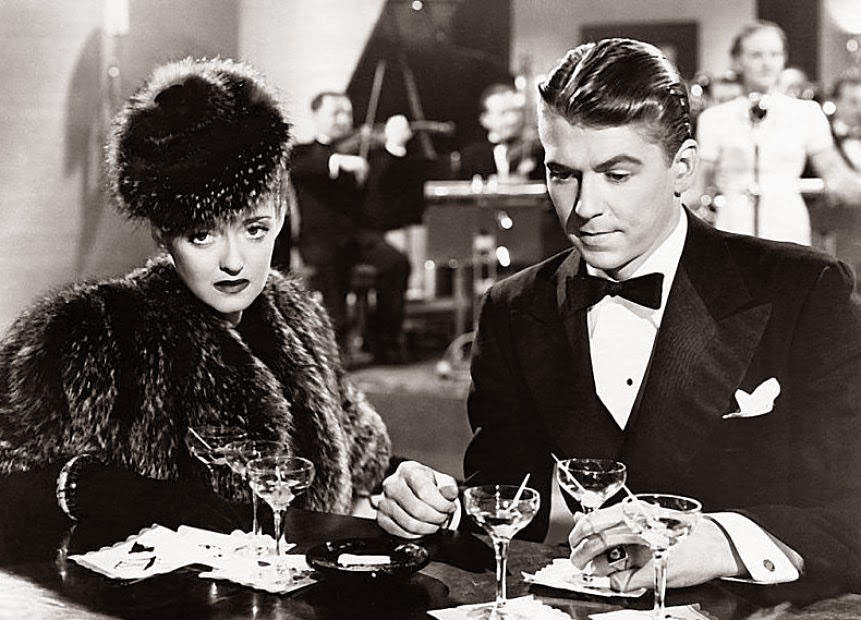
It occurred to me that, as sharp as the writing usually was on Frasier, it was especially good in season premieres and finales. Frasier's season finales especially tended to be rather introspective. This season–ending episode — called "Dark Victory" in a delicious play on the Bette Davis movie of the same name — was particularly good.
And the use of the fireplace in the power outage was inspired. It lent a kind of intimacy to the program that it seldom achieved, even when one considers all the ways it succeeded at other things in its 11–year run.
In fact, if someone was to ask me to recommend an episode as a good overview of the best qualities of the Frasier series to show to someone who had never seen an episode of Frasier before and wanted to know what all the fuss was about, this episode would be on my short list.
It was that good.