Showing posts with label Pink Floyd. Show all posts

Wednesday, March 21, 2018

Roger Waters' Final Cut


Roger Waters was a co–founder of Pink Floyd, but his last album with the band, "The Final Cut," arrived in music stores on this day in 1983.

Pink Floyd went on to release three more studio albums and a double–disc live album, but Waters' days with Pink Floyd ended with "The Final Cut."

Seen from that perspective, perhaps it was appropriate that "The Final Cut" was the only Pink Floyd album in which Waters received all the songwriting credit.

"The Final Cut" was also the only Pink Floyd album that didn't include keyboardist Richard Wright.

The album was originally intended to be a soundtrack for "Pink Floyd — The Wall," but plans changed with the outbreak of war in the Falkland Islands in 1982 after Argentine forces occupied the British–held islands temporarily.

By any yardstick you may choose, "The Final Cut" was Waters' album. Not only did he write all the songs, he sang lead on all but one track — guitarist David Gilmour provided lead vocals on the other one.

And it was his statement on war, inspired primarily by the experience of losing his father in World War II but also by more contemporary factors. Waters thought British Prime Minister Margaret Thatcher's reaction in the Falklands had been unnecessary and aggressive. The album, originally named "Requiem for a Post–War Dream," included a track that bore a variation on that — "The Post–War Dream."

The post–war dream was what Waters believed was the reason for the sacrifices made by his father and others — sacrifices that had been betrayed.

The war theme was also reflected in the cover art. The front cover showed a Remembrance poppy and four World War II medal ribbons. Additional photographs could be found when the gatefold was opened. The album art was reproduced — on a significantly smaller scale — for the CD version of the album.

And, of course, anyone who downloads the album today is deprived of that experience altogether. It wasn't true in all cases, but album art definitely added to an album's experience — and perhaps never as much as it did on a Pink Floyd album.

Pink Floyd's cover art was always memorable, and the band enjoyed considerable success with its album sales, but it had comparatively few hit singles — mostly, I suppose, because the band's tracks didn't usually lend themselves to radio airplay.

The commercially released single from "The Final Cut" could probably be described that way. "Not Now John" managed to make it to the Top 30 in the U.K. — in a censored version. In the album track, the chorus was "Fuck all that," but in the single it was changed to the more ambiguous "Stuff all that."

I have always favored a third track from the album "The Fletcher Memorial Home." It always summarized Waters' thoughts about the world's leadership of that time better than the rest.

The song got its name from Waters' father.

It probably doesn't hold up well for modern listeners, though, many of whom would not recognize the names mentioned. I guess that hopelessly dates the song, which is too bad because it is probably my favorite track.

"This is more like a novel than a record," wrote Stephen Thomas Erlewine for AllMusic.com, "requiring total concentration since shifts in dynamics, orchestration and instrumentation are used as effect."

In many ways, it lacks a true Pink Floyd sound. The music might have benefited from more input from Gilmour.

Erlewine observed that "[t]his means that while this has the texture of classic Pink Floyd, somewhere between the brooding sections of The Wall and the monolithic menace of Animals, there are no songs or hooks to make these radio favorites. The even bent of the arrangements, where the music is used as texture, not music, means that The Final Cut purposely alienates all but the dedicated listener."

Thursday, March 01, 2018

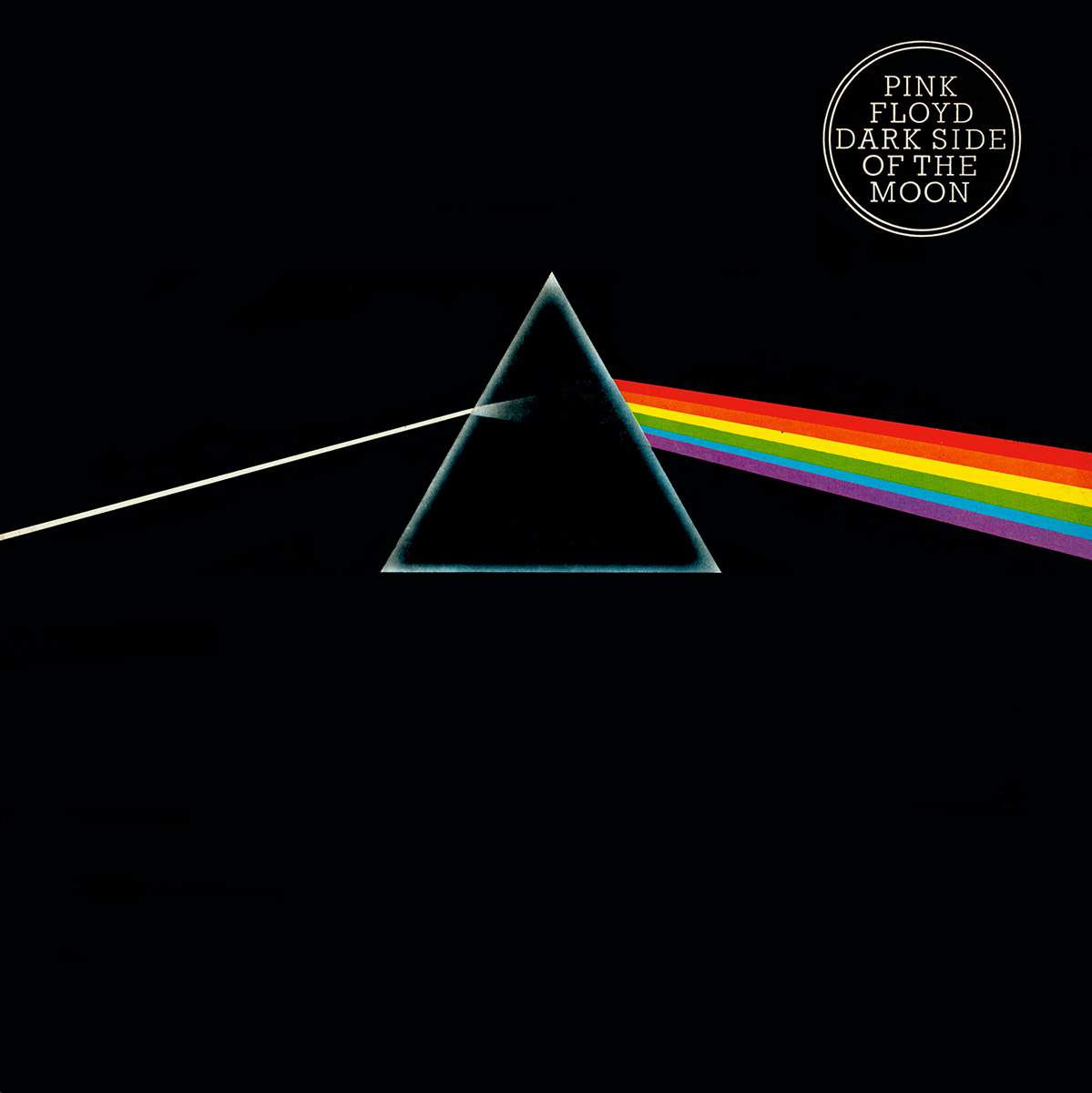
Pink Floyd's Pièce de Résistance


It is appropriate, I suppose, that Pink Floyd's "Dark Side of the Moon" marks its 45th anniversary today, just a couple of weeks after the school shooting in Florida — an event that is already leaving its mark on the culture.

"Dark Side of the Moon" didn't address gun violence, but it explored similarly dark themes — conflict, greed, the passage of time and mental illness. Certainly, the latter played a role in the shooting, and it may well have been fed by conflict and greed. I would rule out the influence of the passage of time — although the debate that was sparked by the shooting includes the age limit for purchasing a firearm.

Pink Floyd's musical style was always hard to pin down, but that may never have been truer than it was in "Dark Side of the Moon," which embraced jazz fusion and blues/rock in a lush tapestry of the human condition.

Some people will argue that "Dark Side of the Moon," which arrived in music stores on this day in 1973, is the greatest album ever made, and I could live with that.

Rolling Stone ranked it #43 on its list of the top 500 albums of all time. I could live with that, too. As long as it's on the list.

Every time I listen to it, I am reminded of my days on the night shift of a metropolitan newspaper. When we finished the next day's edition around midnight or so, I would drive home and put "Dark Side of the Moon" on my stereo. It was amazingly soothing, perfect for late at night when it seemed everyone else was asleep.

For obvious reasons, I particularly enjoyed the line from "Breathe" that went "Home again ... I like to be here when I can."

"Dark Side of the Moon" was a groundbreaking achievement in an era of groundbreaking achievements. There is no question that the album was — and continues to be — a hit. It was on Billboard's chart for 15 years, from 1973 to 1988, and has sold 45 million copies.

Think about that for a minute. One–third of the album's existence has been spent on Billboard's Top 200. That wouldn't be much of an accomplishment if you were talking about an album that has been available for a year or two. But "Dark Side of the Moon" has been available for 4½ decades.

Sure, part of the album's popularity was due to two singles, "Money" and "Us and Them." Of the two, I suppose I prefer the song "Us and Them." I hear it less frequently on the radio so I am not burned out on it the way I am "Money," even though the latter is probably more familiar to casual listeners.

But if I am going to be pressed on my preferences from "Dark Side of the Moon" — and I am currently on my third copy of it (my first copy was a cassette, my second was a vinyl album, and the copy in my collection today is a CD) — I would probably pick "Breathe" or "The Great Gig in the Sky."

Frankly, though, it cheapens the album to try to narrow it down to a song or two. That lumps Pink Floyd with everyone else and "Dark Side of the Moon" with every other album. That isn't fair. It isn't right. "Dark Side of the Moon" was about themes, not individual compositions, and deserves to be recognized for that.

The album took shape over a period of several months before recording sessions began in the late spring of 1972. It evolved in live performances, and the band experimented with recording methods that were new at the time, such as tape loops and multitrack recording. Pink Floyd also used synthesizers, which were not in wide use at the time but became quite popular in the years ahead.

But things were mostly piecemeal until the band put everything together at London's Abbey Road Studios.

"Dark Side of the Moon" is an experience, the culmination of all the things that combined to make it what it is. Its messages are still relevant to the human condition 45 years after it was released.

Pink Floyd released a double–CD of live music in the mid–1990s, part of which was a live performance of the "Dark Side of the Moon" album from start to finish. I liked it, but the band had rehearsed the songs so particular passages would be synchronized with the images on the screen behind them. It lacked the spontaneity of most live recordings, but the same could be said of all the other songs on the CD, not just the ones from "Dark Side of the Moon."

Having attended a couple of Pink Floyd concerts, I can say that the visuals played a big role in the band's performances, and it didn't surprise me to learn that the band rehearsed the music so tightly for its concert tour. Perhaps a videotape that completely documented the experience of a Pink Floyd concert was sold at the same time as the CD, but I honestly don't recall one. It would have been a good idea. Separated from the visuals, it almost sounded as if crowd noises had been added to the original studio recordings for the live CD.

That was a problem, really, for all of the tracks on that double CD, but it was particularly disappointing with the performance of "Dark Side of the Moon."

The surviving members of Pink Floyd are unlikely ever to release another CD or videotape, but it would be great to see and hear the band jamming and improvising on the songs from "Dark Side of the Moon," if such footage exists.

Saturday, September 12, 2015

Which One's Pink?


I honestly don't know what Rolling Stone was thinking when it ranked "Wish You Were Here," the Pink Floyd album that hit the record stores 40 years ago today, #211. I think it deserved to be ranked higher — much higher.

I mean, imagine the challenge. Whatever Pink Floyd did would be the followup to "Dark Side of the Moon." It was probably inevitable that, whatever Pink Floyd did, it wouldn't measure up to "Dark Side of the Moon" with critics or consumers. In some ways, I suppose that is true. It probably doesn't measure up. Some have acclaimed "Dark Side of the Moon" as the greatest album ever recorded, and I would agree that it is one of the greatest albums ever recorded, for there are many that are deserving of that recognition.

Including, I think, "Wish You Were Here." I have long felt it was necessary to have both in my collection.

I have regarded "Have a Cigar" as my favorite track from the album, but it is really hard to beat the title track, "Wish You Were Here," and any Pink Floyd fan will tell you that the 26–minute "Shine On You Crazy Diamond" is a Floyd classic, even if it was divided to bookend three other compositions.

I've always liked the relaxed sensation I get when I listen to this album. It is a pure, honest expression of human emotion, and Allmusic.com's Stephen Thomas Erlewine touched on that when he wrote that "the jazzy textures of 'Shine on You Crazy Diamond' reveal its melodic motif, and in its leisurely pace, the album shows itself to be a warmer record than its predecessor."

Pink Floyd has always been the most cerebral band I have ever heard. No one else even comes close. Listening to Pink Floyd, even listening to an album I have heard many times before, is new and special each time because the music encourages a free association of thought that is entirely dependent upon the state of mind of the listener.

And, in that sense, my favorite line from "Have a Cigar," which lampoons the recording industry — "Oh, by the way, which one's Pink?" — poses an appropriate question. If the experience is different each time, which one is Pink? And the answer, of course, is all of them.

"Shine On You Crazy Diamond" is Pink Floyd's magic carpet ride.

But don't dismiss "Wish You Were Here," Floyd's tribute to Syd Barrett, "the long and probably forever lost guiding light of the original Floyd," wrote Ben Edmonds of Rolling Stone. It shows the melancholy, introspective side of Pink Floyd's music.

Actually, it is not so much Pink Floyd's tribute as it Roger Waters'. The lyrics are his, and they embrace his emerging sense of estrangement. David Gilmour contributed the musical framework and has said that "Wish You Were Here" is his favorite Pink Floyd album. Pink Floyd's late keyboardist Richard Wright reportedly said the same thing.

I've always felt "Wish You Were Here" was a triumph for Pink Floyd — both the album and its title track.

Friday, December 26, 2014

Christopher Cross' Debut Album


In December of 1979, Christopher Cross released his first album. The cover bore only his name and a rather pastoral painting of a flamingo — which, by the way, popped up on his other albums, too. The flamingo became something of a symbol for him.

It was soft rock, as the hits from the album verified, one by one. But, you know, that was OK because Cross never pretended to be doing anything else. As soft rock albums go, this one was darn near flawless, and it was helped by the presence of some of the top talent of the day to back him up — Don Henley of the Eagles provided some vocals as did Nicolette Larson, J.D. Souther and Michael McDonald of the Doobie Brothers.

Those who are eternally possessed of a teenage mentality will recall some of the tracks, like "Never Be The Same," in which the song's narrator laments the end of an affair and repeatedly pledges to live out his days alone.

Looking back, the song reeks of the angst of a teenager mourning the end of his first love affair. Those of us who survived our teen years and our first loves — and that is most of us — will say that, while painful, they aren't as extreme as Cross' music makes them seem.

At the time, though, the song seemed to rejuvenate a sagging radio industry. "Never Be The Same" was Cross' third Top 10 single from the album. It said nothing profound, but one can still imagine millions of broken–hearted teens listening to it endlessly and convincing themselves that the song was written for them.

What rubbish.

The first Top 10 single from the album was "Ride Like the Wind," which got as high as #2 on the charts. It was followed by "Sailing," which became the top–selling single in August of 1980.

"Sailing" went on to be named the Song of the Year at the Grammy Awards and probably was what propelled the album to Album of the Year, beating Pink Floyd's "The Wall." I guess that was where things changed for that album and me. See, at first I thought Cross' album was pleasant enough, and I had no serious objections to it until it aced out Pink Floyd at the Grammys.

When that happened — and for quite awhile thereafter — I would switch off my radio if I happened to be driving around and one of Cross' songs came on. I would rather drive in silence than listen to Christopher Cross after his simplistic music won awards that should have gone to Pink Floyd.

I felt it was a clear case of commercialism triumphing over the obvious best choice — and I went from being able to tolerate songs from the album to not even being able to do that.

I can report that I have overcome my objections, and I can listen to tracks from that album now. I can even appreciate them for what they are/were.

They have their place.

Sunday, November 16, 2014

A Special Treat From Pink Floyd


Earlier this week, Columbia Records released Pink Floyd's "The Endless River," a collection of previously unreleased tracks recorded during the sessions that produced "The Division Bell" 20 years ago.

I didn't get the CD on the first day it was available in the United States (it was actually released a few days earlier in the United Kingdom). I got my copy after it was released, but I've been listening to it whenever I could since then.

I grew up listening to Pink Floyd. Well, from my teen years on, I suppose. As a youngster, I listened to the Beatles a lot. Then, sometime in my teens, I heard "Wish You Were Here" and "Dark Side of the Moon." I've been a Pink Floyd fan ever since.

I still love the Beatles, of course. I like a lot of different kinds of music. In fact, I'll listen to just about anything — except rap. To any of you who may be rap fans, I'm sorry. I just don't consider it music. One of my students once asked me, "What's your favorite rap song?"

And I replied, "The closest thing to rap in my collection is Bob Dylan singing 'Subterranean Homesick Blues.'"

Anyway, I thought I would never hear another new release from either the Beatles or Pink Floyd. I was wrong.

Nearly 20 years ago, the surviving Beatles took recordings John Lennon had made and dubbed in their own vocals and musical instruments to create not one but two songs featuring the Beatles — even though Lennon was dead. They weren't exactly new to me. I had heard Lennon's solo recordings. But it was nice to hear the four of them performing together again. That part was new to me.

And now Pink Floyd has one–upped the Beatles with an entire album. The music is mostly instrumental — with the exception of the final track — but fans will recognize the sound immediately. This isn't a jerry–rigged Pink Floyd with someone brought in to fill in for the late Richard Wright or the long–departed Roger Waters. It's Wright with David Gilmour and Nick Mason.

I have told people that I hear elements of past Floyd albums like "Dark Side of the Moon" and "Wish You Were Here" — and I do, to the extent that I expect the music to go in one direction, even after several hearings, and then it goes in an entirely different direction — but I also hear things you might not expect from Floyd — for example, I hear sounds that remind me of Yes and Rick Wakeman.

Like those "new" Beatles songs that were released nearly 20 years ago, "The Endless River" is a special treat I never thought I would get from an old favorite.

Saturday, May 25, 2013

Gilmour's Solo Debut


If you were a teenager in the 1970s, the odds are pretty good that you heard Pink Floyd at least once — whether you were a casual listener or a devoted fan.

For the casual listener, Pink Floyd probably meant songs like "Money" or "Time."

For people with more exposure to Pink Floyd, there was a lot more to listen to. But, in the late 1970s, there was a lot of movement going on within Pink Floyd. Roger Waters was promoting an idea that eventually became "The Wall," Pink Floyd's double album from 1979, and members of the band were working on individual projects.

David Gilmour, who had been with the band since 1967, was working on a solo project that was first released on this date in 1978. He wasn't leaving the band — he was just stretching his creative wings a bit.

My memory is that the main track from that album, "There's No Way Out Of Here," got a lot of radio air time that summer.

And Gilmour, in addition to being a well–established guitarist, had a voice that was perfect for songs like "There's No Way Out Of Here," which was similar to classic Pink Floyd tracks like "Wish You Were Here."

Frankly, I never understood why his solo debut wasn't more highly regarded. I thought it was a pleasant enough album, easy to listen to, accessible even for non–Floyd fans.

Possibly at times, though, the songs on the album sounded a bit too Floyd–like. "There's No Way Out Of Here," for example, sounded like a Floyd demo that, for whatever reason, was left off a Pink Floyd album and never revived.

Casual Floyd listeners wouldn't have picked up on that, I suppose, but dedicated Floyd fans — and experienced music critics — may have. I certainly saw similarities in songs like "Raise My Rent" and "So Far Away" — but, to be totally honest, the whole album sounded like Pink Floyd outtakes to me.

Reasonably short outtakes, admittedly, but outtakes nonetheless.

At that time in my life, that appealed to me. Pink Floyd's most recent album at that time was "Animals," an album I have grown to appreciate more as I have matured, but, at the time, I found the long tracks to be somewhat tedious. While I always appreciated the unconventional nature of Pink Floyd's music, I was drawn to the more traditional album arrangements of "Wish You Were Here" and "Dark Side of the Moon."

I guess I was more predisposed to like albums with a single track that took up an entire side of a record if that record was made by Yes, which was always more of a symphonic experience for me, anyway.

By the way, technically, "There's No Way Out Of Here" was a cover. It was originally recorded by another band a couple of years earlier.

But few people were aware of it at the time, and fewer still probably are aware of it today.

And for Floyd fans, it is worth noting that "Short and Sweet," a song that was co–written by Gilmour, strongly resembled "Run Like Hell," which would be included on "The Wall" the very next year.

Talk about coming attractions.

Friday, March 01, 2013

Four Decades on the Dark Side of the Moon


On this day in 1973, Pink Floyd released "Dark Side of the Moon," which became one of the best–selling albums in music history.

It spent only a week at the top of the U.S. Billboard's charts, but it remained on Billboard's charts for more than 14 years.

I didn't get it when it first came out. I was still kind of young and still interested in many things that I liked as a child — my list of interests did not include Pink Floyd until several years later.

But I more than made up for it after I discovered Pink Floyd. "Dark Side of the Moon" has been in my music collection for a long time now.

I guess I always knew that the track "Brain Damage" was inspired by the experiences of Syd Barrett, founding member of the band who went into seclusion to battle his demons. It was just one of the themes of the album, along with the passage of time and greed, but the inspiration for that particular song was always clear to me.

Thus, it came as no surprise to me when Roger Waters, also a founding member, confirmed in an interview that "Brain Damage" was inspired by Barrett's tragic tale of drug abuse.

"Brain Damage" was a good song, as were the two hits from the album — "Time" and "Money" — but if I had to pick my absolute favorite, it would probably be "Us and Them."

"Dark Side of the Moon" doesn't necessarily lend itself to the discussion of favorite tracks. To me, each song on the album is a jewel, perfect in its own right.

They are not now and never were in competition with each other.

Saturday, May 07, 2011

True-to-Life Sound


It was at this time 35 years ago that Pink Floyd was in a London recording studio working on the tracks for an album that would be released in January 1977.

The album was called "Animals," and I still remember buying it and bringing it home a few months after it was released. It was the first Pink Floyd album I ever owned — although I had heard others (notably "Dark Side of the Moon" and "Wish You Were Here") — but it was hardly the last.

I suppose I was originally attracted to the album because it had been inspired by George Orwell's "Animal Farm," and I had just read that book in school before the album was released (although the record was a critique of capitalism whereas Orwell's book was about Stalinism).

But later, after I had listened to the album many times, I fell in love with the unique style of the music and lyrics and the creative use of the synthesizers, which were supposed to duplicate the sounds that animals made with uncanny precision.

I didn't realize how precise they actually were until several years later.

1976 was something of a transitional year in popular music, I suppose. I mean, albums were being released by the veterans of the music scene, like Bob Dylan, David Bowie, Paul McCartney, Led Zeppelin, the Rolling Stones and others, but they were also being released by the lesser lights, the disco stars and the one–hit wonders.

In those days, when one switched on the radio, one was as likely to hear K.C. and the Sunshine Band or Blondie as the Who.

And you never heard Pink Floyd — except for the more commercially appealing songs, like "Money" and "Time."

I began my switch to CD technology around 1990 or 1991, I think — and the first CD I purchased was "Animals."

The first time I listened to that CD was truly memorable for me. It was spring, as I recall, and I had my living room window open to permit the gentle breeze of a spring evening to blow through my apartment.

In those days, I had a dog that was part black Lab — and part something else. He was a stray, about 10 weeks old when I took him in. Our vet never could tell me what the other part was. All we knew for certain was that my dog was not a full–blooded black Lab.

Anyway, I had had him for a couple of years when I brought home my first CD player. It seems to me that, in those first two years, I played my LP of "Animals" on a few occasions, and the dog had paid no visible attention to the sounds in it.

But when I played the CD — with its digital re–creation of those synthesizer sounds — the reaction was entirely different.

In the song "Dogs," you hear synthesizer–generated sounds that mimic the sounds of barking dogs, starting around the five–minute mark. When the CD reached that point, my dog jumped up from where he had been dozing and went over to the living room window. It was from that vantage point that he always looked for dogs that he heard (or thought he heard) outside.

But this time, there were no dogs to be seen. He seemed disappointed. A kind of muffled "Woof!" sprang from his mouth, almost involuntarily, and he slowly made his way back to where he had been sleeping.

A few minutes later, though — around the 10–minute mark of the song — the synthesizer mimicked the sound of a dog owner whistling for his dog, and my dog sprang to his feet. He looked at me expectantly, apparently certain that I had been the one who had been whistling.

But I hadn't — a fact that was soon confirmed for him when the whistling sound could be heard again. Even a dog could tell the sound wasn't coming from me.

My dog has been deceased now for more than 17 years. He got loose from me one evening and ran into a street, where he was struck by a vehicle.

I listened to that CD a few more times before he died, and his response was always the same.

He never did figure out where that barking and whistling were coming from.