In its seasonal spin on Charles Dickens' "A Christmas Carol," the episode of Bewitched that first aired on this night in 1967, "Humbug Not to Be Spoken Here," was set on Christmas Eve, and Darrin (Dick York) and Samantha (Elizabeth Montgomery) were preparing for Christmas.
But Darrin was torn. He had to meet with a client, a Scrooge–like sort who insisted on meeting with the folks at the advertising agency even though it was Christmas Eve. In his own words, Christmas was just another day. He was far more concerned with marketing his line of instant soups, and he insisted that Darrin come up with a campaign idea by that night or he would take his business elsewhere.
But Darrin refused so Mr. Mortimer (Charles Lane) made good on his promise.
And Samantha decided that a nocturnal visit, a la the ghosts in Dickens' classic, would be just the thing to convince miserly Mr. Mortimer that Santa Claus existed and that Christmas wasn't humbug but rather something to be celebrated.
So with the help of her witchcraft and her inside connections (she was personally acquainted with Santa Claus), Samantha visited Mr. Mortimer that night and took him to the North Pole, where he met Santa and saw the elves' workshop.
When their journey was over, Mr. Mortimer found himself back in his own bed.
The next morning he paid a visit to Darrin and Samantha. Darrin and Larry (David White) had both tried to play Santa for Tabitha (Erin Murphy) but had not impressed her. Then Mr. Mortimer arrived with a Christmas gift — a case of Mortimer's Instant Soups.
That didn't particularly impress her, either.
But Mr. Mortimer wasn't all business on that Christmas morning. In the spirit of the season, he ate some fruitcake and drank some eggnog.
Lane lived a long life (he was more than 100 years old when he died) and enjoyed a long career as a character actor. Mr. Mortimer wasn't his only miserly character, either. He played many such characters, most notably a mean railroad executive on Petticoat Junction and a character who was hired by Milburn Drysdale on The Beverly Hillbillies to run the hillbillies off from a business suite they had rented in Drysdale's bank building.
The episode wasn't a unique spin on "A Christmas Carol," but its message was still timeless, and Lane may have been just the one to make it work. His characters could have given lessons to Scrooge.
The glee club meets in the mess tent at 0800 hours. The first number on tonight's schedule is, uh, Father Mulcahy's solo, "I'm Confessin' That I Love You."
P.A. announcer
The episode of MASH that first aired on this night in 1972, "Dear Dad," was the series' first to use what became a rather familiar tactic on the show — telling a story in the form of a letter being written to someone back home.
The device would be used with other characters over the years, but in this case it was Hawkeye (Alan Alda) who was writing a letter to his father during the Christmas season. Other episodes utilizing the "Dear Dad" title would focus on Hawkeye's letters to his father, but letters home from Col. Potter, Radar, Klinger, etc., were also used in future episodes.
Thus the narration was in fact the text of the letter that Hawkeye was writing during a lull in the fighting.
The episode also helped to firmly establish the dual themes of the series — the antiwar theme and the comedic theme. "Dear Dad" was only the series' 12th episode, and MASH was still seeking its identity.
As I say the Christmas season had arrived, and Hawkeye used the letter to fill his father in on the news from MASH 4077th.
Radar (Gary Burghoff) was mailing a Jeep back to the States — one piece at a time.
Henry Blake (McLean Stevenson) delivered a sex lecture despite being clearly uncomfortable doing so.
And Hawkeye and Trapper John (Wayne Rogers) sabotaged the tent where Hot Lips (Loretta Swit) and Frank (Larry Linville) were to spend the evening together.
But all those things could have happened at any time of the year. They didn't have to be a week before Christmas.
What really made the episode a Christmas episode was the final segment, in which the 4077th was hosting its annual Christmas party for the local Korean children. Hawkeye was slated to play Santa Claus.
But his plans changed. He was called away to do emergency field surgery on a chest wound.
Still dressed as Santa, he descended by rope from a chopper as the battle raged around him.
A soldier waiting in a foxhole with the wounded man saw Hawkeye's descent and said to his buddy, "And you said there was no Santa Claus."
The concept of using a letter as the narration for an episode was a good idea and worked better in future efforts. It was a case of improving each time it was done.
But "Dear Dad" succeeded pretty well as a first effort — and it is still a pretty good Christmas episode.
Oh, joy. Christmas Eve. By this time tomorrow, millions of Americans, knee deep in tinsel and wrapping paper, will utter those heartfelt words, "Is this all I got?"
Frasier Crane (Kelsey Grammer)
On this night in 1987, Cheers! was in its sixth season — about midway through its run. The characters' quirks had been established even though some of the original characters were gone and some new ones were in the cast.
Rebecca (Kirstie Alley) had replaced Diane (Shelley Long), and Woody (Woody Harrelson) had replaced Coach (Nicholas Colasanto). Frasier (Kelsey Grammer) and Lilith (Bebe Neuwirth) had been added.
On this night in 1987, it was Christmas Eve in the Cheers! universe — and everyone was distracted by things that were sure to exaggerate each character's quirk.
Cliff (John Ratzenberger) was obsessed with a postmen's canned food drive in which the winner would receive a trip to Disney World. He brought a big cardboard box to the bar and encouraged everyone to drop off cans.
Rebecca, the bar's manager for its new corporate owner, told the bar staffers that they had to work Christmas Eve. Carla (Rhea Perlman) had no problem with that. Neither did Woody, who had decided not to visit his family in Indiana during the holidays because he was participating in a Christmas play in Boston (even though he admitted missing his mother's "bone–dry" stuffing).
But Sam (Ted Danson) did. He considered a "holiday eve" a holiday.
Nevertheless all the Cheers! employees worked on Christmas Eve — and found themselves waiting to close the near–empty bar that night while one lone patron sat slowly nursing a drink. As they waited they decided to do their gift exchange — which was when Sam realized he had no gift for Rebecca, and he rushed out into the night hoping against hope he could find a store that was still open.
He couldn't — but he stumbled upon a lovely young lady carrying some shopping bags. When he explained his predicament to her, she offered to let him buy one of the items among her purchases. He picked a pair of earmuffs — and made a date with her for later when he learned that her shopping bags also contained intimate apparel.
Same old Sammy.
Norm was working a part–time gig as a department store Santa. On Christmas Eve he brought all his buddies from Santa School to the bar after the stores closed.
When the staffers exchanged gifts, it turned out that Sam had picked up the wrong package. Instead of earmuffs, he had given Rebecca diamond earrings.
After some initial resistance, Rebecca agreed to accept them, forcing Sam to spend much more than he had anticipated — but he thought it would pay off when Rebecca invited him to her place after work for a late dinner.
Then he learned that it would not be the one–on–one evening he expected. Everyone at Cheers! had been invited!
The episode ended on the same note with which it began — with everyone watching yet another airing of "It's a Wonderful Life" on a local TV station that was apparently showing it all month in the station's "It's a Wonderful Month" promotion.
Even Frasier (Kelsey Grammer), who had a decidedly Scrooge–like attitude, got choked up.
Frasier (Kelsey Grammer):I want my gifts to be remembered and cherished long after the holidays.
Martin (John Mahoney):Well, you know, nothing is cherished quite so much as the gift of laughter.
Frasier:If you want that highway patrol bloopers tape, you'll have to buy it yourself.
It is well known that the holidays, however much we may love them, bring a lot of stress to our lives.
In "Perspectives on Christmas," the episode of Frasier that first aired on this night in 1997, the members of the Crane family — including extended family members Roz (Peri Gilpin) and Daphne (Jane Leeves) — told a masseur about their stressful Christmases.
Mind you, it was the same Christmas, but each one had a unique way of perceiving the events of the previous few days, and it really began with Frasier (Kelsey Grammer) establishing the fact that he wanted his Christmas gifts that year to be memorable. He kept emphasizing that point through the episode.
Martin (John Mahoney) had agreed to participate in a church Christmas pageant and had been struggling with a high note in his rehearsals of "O Holy Night." But he didn't want Daphne to know as she had been inquisitive enough as it was.
Daphne, meanwhile, knew something was up — but she wasn't sure what. She put two and two together — while walking the dog, he had started to go toward the church "like he assumed that was where we were going," and Daphne misinterpreted some things she overheard — and concluded that Martin was dying.
In this case two plus two equaled five, but Daphne still stressed out over what she thought she knew.
Niles (David Hyde Pierce) got stuck on the elevator in Frasier's building with some of the residents, and it fell to him to go through the trapdoor in the ceiling where he would find a lever that would open the elevator door. Except for the occasions when he and Frasier played squash, Niles was hardly a physical person, but he climbed an unadorned Christmas tree to reach the trapdoor. In Niles' definition of the term, that must have qualified as heroic.
Well, that is what he did, but afterward when he looked down through the trapdoor, the other occupants of the elevator were nowhere to be found and nothing was there but the tree. So Niles, clad in a new silk suit that was susceptible to tree sap, tried to climb back down the tree.
It was a rough descent, to be sure. Viewers didn't see much, but they could surmise a lot from what they heard — and what they could see when a disheveled and grimy Niles staggered into Frasier's apartment. Daphne mentioned Niles' entrance to the masseur, but she lacked the context that Niles' story provided.
That rings so true, doesn't it? It seems no one else is ever as aware of someone's trials and tribulations as the person who is directly affected. If for example someone is late to work because of a flat tire, that person's account of the morning is likely to center on that — and perhaps not so much on the complete absence of a co–worker, an absence that could be explained by any one of several much more serious circumstances.
The last tale was introduced by a detail that Niles gave — of Roz coming to the door, snarling "Merry Christmas" to Frasier and throwing a Christmas package on the floor. The sound of shattering glass left little doubt about the package's contents.
It had recently been revealed on the show that Roz was pregnant, but she had not yet informed her mother, who lived in Wisconsin but was coming to Seattle to visit her daughter during the holidays. Roz was stressed out over how to break the news to her mother — and she had been putting on some pregnancy pounds.
Frasier, though, had already spilled the beans. When Frasier and Roz were at the cafe, a call from Roz's mother was forwarded to Frasier's cell phone. She wanted to go over the details of her flight time with Roz. After Roz went to the counter to place her order, Frasier cautioned Roz's mom that Roz had been out of sorts because of picking up some pregnancy pounds. He urged her to be careful what she said to Roz, not realizing that Roz hadn't broken the news to her mother yet.
Roz was still stressing over how to tell her mother that she was pregnant when she and Frasier prepared to be Santa Claus and Mrs. Claus at a charity event. That was when she learned that Frasier had let the cat out of the bag.
And she was furious.
That package she smashed on Frasier's floor contained champagne glasses.
Anyway, when it was obvious that everyone had been through an enormously stressful holiday period, Frasier decided to give them his Christmas presents on Christmas Eve — he intended to take each one aside and tell them all how much they meant to him.
When that was met with an extremely negative response, Frasier quickly offered to have a masseur work on each one — and that was greeted with much more enthusiasm.
And that was where the whole holiday tale was told — on the massage table.
If a TV show makes it to its seventh season, it is likely to be running out of material.
But the writers for All in the Family were still hitting the ball out of the park in the show's seventh season as the Christmas episode that aired on this night in 1976, "The Draft Dodger," clearly demonstrated. It may have been the most poignant episode of that groundbreaking series.
In 1976, America's recently concluded involvement in the Vietnam War was an open wound for many Americans. It had been a divisive war, sparking much social upheaval, and it was no less so once America's participation had ended. My memory is that, more than a year later, people were still being judged by others according to their positions on the war.
On this night 40 years ago, Christmas Night 1976, the Bunkers (Carroll O'Connor and Jean Stapleton) were hosting Christmas dinner for the Stivics (Rob Reiner and Sally Struthers), Teresa (the Bunkers' boarder played by Liz Torres), Archie's buddy Pinky (character actor Eugene Roche) who was a Gold Star father, and David (Renny Temple), a friend of Mike's who, unknown to most of the people at the table on that occasion, fled to Canada to avoid the draft.
David's presence was unexpected. He just showed up on the Bunkers' doorstep. It hadn't been his original destination. He had intended to see his father, but his father wasn't ready to face his son so David went to see his old friend. It was in their conversation that the audience learned he was a draft dodger.
David agreed to join the family for Christmas dinner after being assured by both Mike and Gloria that they would not spill the beans. That was easier said than done when Archie met David and asked him questions about where he lived and why he was spending Christmas with them instead of his own family.
Gloria ran interference for David, but their objective was helped considerably when the doorbell rang, and the audience learned that it was Pinky. Before opening the door, Archie cautioned everyone that if Pinky started talking about Stevie, that was his only son who had been killed in the war.
Pinky was still in shock over that, and Archie told his family that if Pinky started talking about his son, they should steer the conversation in another direction.
During Christmas dinner Archie asked David if he had any Christmas memories to share. David's reply contradicted information Archie had been given earlier, and that led to the revelation that David was a draft dodger.
Archie found that very disturbing, and that sparked an argument between the conservative Archie and the liberal Mike, who asked Archie when he was going to admit that the war had been wrong. Archie replied that he wasn't talking about the war. He was talking about doing one's duty to one's country. That was a position with which many viewers no doubt sympathized in 1976.
Many other people in America sympathized with David. They believed the war was wrong and refused to participate in it. David wasn't the only young American who fled to Canada. There were tens of thousands of others. The conflict created a huge rip in the fabric of America.
Pinky asked Archie if he wanted to know what Pinky thought, and Archie responded enthusiastically, certain that Pinky would take his side.
But Pinky surprised Archie, everyone else at the table and the audience when he observed that both his son and David did what they thought they had to do. The difference, he said, was that his son wasn't alive to share Christmas dinner with them, and David was. If his son could be there, Pinky mused, he would want to sit down to dinner with David.
"And that's what I want to do," he said, turning to David and extending his hand as the audience burst into spontaneous, heartfelt applause. "Merry Christmas, David," Pinky said.
"Merry Christmas, sir," David replied.
Even today the memory of that moment has great emotional power. I have seen reruns of that episode from time to time. I have watched it with people who supported the war and people who opposed it. And what I have seen convinced me that, while they disagree on most things, nearly all Americans prefer peace to conflict, whether it is between nations or between people.
Given the choice and the opportunity to act on that choice, most people prefer whatever promotes healing and harmony, not whatever sows discord.
On this night 40 years ago, All in the Family took a giant step toward healing the wounds of war.
The Major (William Windom):Hey, wait a minute. Wait a minute. Who are you? What are you doing here? Is there a circus around here somewhere?
The Clown (Murray Matheson):A circus? (laughs) Yeah. Yeah, there must be a circus. A clown, a circus. An officer, a war. That's logic, isn't it? But it doesn't figure at all. Not at all.
The Major:Why not?
The Clown:Because there is no circus, and there is no war.
When I was about 15, my brother (who must have been about 12 at the time) was in a play at the college where my father was a religion professor.
It was called "Six Characters in Search of an Author," and it had a couple of children's parts — which the director filled with faculty children. My brother was one of those children. It wasn't a demanding role. He had no lines and only limited action. Mostly he was required to sit on stage — come to think of it, I suppose asking a 12–year–old to sit quietly on stage for a couple of hours is pretty demanding. I don't remember if the girl had any lines.
I saw the play several times, mostly on the campus but once when the play was chosen as a finalist in a national collegiate competition, and I accompanied my mother and brother to Fort Worth, Texas, which was where the competition was being held. My grandmother lived in Dallas, and she went with us to the competition.
The episode of the Twilight Zone that first aired on this night in 1961 drew the inspiration for its title — "Five Characters in Search of an Exit" — from the title of that play, but it bore no other similarity.
Nevertheless I always think of that play when I see that episode, and I remember that competition well. Each college brought its costumes and sets and performed the plays at the competition. I had seen my brother's play several times, as I say, and I almost knew the script by heart. The cast did a good job at the competition, but I found it more interesting to see the plays I hadn't seen before. There was a play each morning, a play each afternoon and a play each evening.
I remember the feeling of seeing people in the audience whom I had watched perform on stage earlier that day or perhaps the day before. Everyone who wasn't performing was in the audience. I guess they all wanted to check out their competition.
My memory is that the competition went on for about three or four days. Then a winner was announced. My brother's play didn't win, but my mother and grandmother sure kicked up a fuss over how good the play had been (it was) and how proud they were of my brother. I was, too.
But I digress.
The Twilight Zone episode starred William Windom. He had no name in the episode. He was only known as The Major.
(Actually, that was something else the Twilight Zone episode borrowed from the play. The characters in the play had no names, either. They were known by what they were, not who they were.)
The Major awoke from a kind of sleep to find himself in some kind of cylindrical room with four companions — a clown, a hobo, a ballerina and a bagpipe player. He did not know who he was or how he got there, but he was determined to escape his confinement; the others, having been there longer, were more resigned to the fact that there was no way out. At least, they had not found one.
The fact that none could remember a time before they found themselves in the cylindrical room bothered them very much. So did the fact that they did not know who they were. Most of us would probably find that troubling as well.
"Perhaps we're the unloved," the Ballerina (Susan Harrison) mused.
They had also grown accustomed to an occasional loud clanging sound that tended to knock them from their feet.
Nevertheless the Major kept trying to find a way out, but he was finally forced to conclude that there was no way out.
And that led him to the conclusion that the five were in hell.
That didn't prevent him from continuing his quest for a way out. He hit upon the idea that they should form a human tower with the person at the top trying to climb over and out of the cylinder. That sounded plausible to the others so they formed such a tower — and it seemed they were about to succeed when that loud clanging sound was heard, and the human tower collapsed.
But they had been so close, and the major was more determined than ever. He fashioned a hook out of pieces of clothing and his sword, then the group re–formed the tower with the major at the top. His plan seemed to work. With the hook, he got to the rim of the cylinder and then tumbled off.
At that point, the viewer could see what had been happening outside the cylinder. A young girl picked up a doll dressed like a major. It was in a snow bank next to a barrel, part of a Christmas toy collection drive for a girls' orphanage.
That clanging sound had been the sound of a bell used by the woman who was overseeing the collection barrel. The girl told her a doll had fallen in the snow. The woman told the girl to put it in the barrel with the rest of the dolls.
Then they lamented how slow the drive had been.
Twilight Zone always did things its way.
And its Christmas episode from this night 55 years ago is a prime example.
By the time I saw it, Twilight Zone was in syndication, and I guess I had seen enough episodes to figure out the ending before I saw it.
But that didn't change the fact that I thought — and still do — that it was one of the most creative Christmas TV episodes I have ever seen. The viewer didn't even know it was a Christmas episode until the final minutes.
"All over the world they celebrate the birth of that baby, and everybody gets time off from work. Now if that ain't proof that he's the son of God, then nothing is."
Archie (Carroll O'Connor)
The episode of All in the Family that first aired on this night in 1971 — "Christmas Day at the Bunkers'" — was a reminder of the true spirit of the season.
Simply put, Archie made a mistake at the plant where he worked. He sent a work order to London, England instead of London, Ontario, and his Christmas bonus was withheld as a fine. Without it, he was unable to spend a lot on Christmas presents, and he was too embarrassed to admit why he didn't have the money.
Mike (Rob Reiner) and Gloria (Sally Struthers) made jokes about Archie's Christmas gift — a box of his and hers handkerchiefs — which did nothing to improve his mood. He just got more irritable as various household service providers, such as the mailman, hinted at wanting a holiday bonus from Archie.
Things didn't improve when the Jeffersons came over for dinner, and Henry Jefferson (Mel Stewart) was dressed as Santa Claus.
A black Santa didn't exactly go over well with Archie. In fact, it reopened an old argument between Archie and Henry. The original argument had been over whether Jesus had been white or black.
"Jesus was white, and so is Santa Claus," Archie told Henry.
"Yeah, well, when I was a kid," Henry said, "the man filling my stocking was black."
It was Edith (Jean Stapleton) whose charitable spirit sought to soothe Archie. She told him she loved her "Hers" handkerchiefs.
"How did you ever get them to split a box?" she asked in complete innocence.
But Edith was not stupid. It was Edith who put two and two together and figured out why Archie didn't get a Christmas bonus. She understood — and it really didn't matter to Edith. She was one of those people who would say that if she was able to spend the holiday with those she loved, that was what mattered.
Sometimes Edith's good nature annoyed Archie — but on this night it was precisely what he needed. It gave him the courage to observe, at the end, that "I guess this ain't such a bad Christmas, after all."
Life does things when it does them. It doesn't consider the timing.
Besides, there are some events in life for which there are no convenient times. They always seem to happen at the most inconvenient times possible, though, don't they?
In the episode of How I Met Your Mother that aired on this night in 2006, Ted (Josh Radnor) had decided that he didn't want to spend the holidays with his mother and her boyfriend or with his father. Instead, he had opted to stay in New York with his "other family."
But the happy holidays ambiance was shattered when, while decorating the apartment, Lily (Alyson Hannigan) came across their old answering machine. She listened to the messages that were still on the machine — including one from Ted to Marshall (Jason Segel) while Marshall and Lily were apart.
In that message, Ted called Lily a "grinch." Well, he used a word that sounded like grinch, but it was really another word. As Ted's older self put it in his role as narrator, "a very, very bad word." The actual word was never specified. Just grinch. You fill in the blank with the word you think is most likely (two words come to mind for me, based on what I know of Ted and his speech patterns and word preferences).
Lily wanted to know why Ted would call her that, and he tried to explain he was being supportive of his friend. That probably is something that is difficult for many women to understand — while this may sound sexist, the truth is that males and females really do perceive and respond to many things differently, and that is simply a statement of fact — but I understand where Ted was coming from. I've been in his shoes — trying to be supportive of a broken–hearted friend — but, fortunately for me, there was no evidence with which the girl could confront me later.
It doesn't take too much imagination to visualize what the discovery of the message did to the Christmas season for the gang. For one thing, Lily packed up all the decorations and carted them away — knowing that Marshall was expecting to see them when he returned from working on the final term paper that he had to turn in before he could conclude his work for the semester.
Marshall was such a sentimentalist. He loved the holidays so much that he went around the apartment with his eyes closed so he wouldn't see even a sliver of the "winter wonderland" that he said would be his reward for finishing his school responsibilities. Lily had to know he would be crushed when he came home to an apartment stripped of its festive appearance.
But things happen when they happen.
And when friends have a falling out like that, they make up (if they do) when they make up. I have known people who let years go by because of an argument they had, and I have known people who made up quickly and didn't let something like that stand in the way of their friendship.
Ted and Lily made up rather quickly — and under rather unexpected circumstances.
We all get busy with other things at this time of the year, don't we? Sometimes to the exclusion of things we really want to do as opposed to those things that we feel we must do or that we feel obligated to do. Funny thing about obligations. People don't always put a priority on the right one.
Well, yesterday (Christmas Eve) was such a day for me. I got busy with other things and entirely neglected to write about something that I have been intending to write about — a special Christmas episode of the Bewitched television series that premiered 45 years ago yesterday.
Better late than never, I suppose.
It was called "Sisters at Heart," and the story was written by some two dozen black high school students in South Los Angeles after they paid a visit to the Bewitched set at the invitation of series star Elizabeth Montgomery and her director and husband William Asher. It dealt with racism and prejudice at a time when that was rarely addressed on television.
It was about a black co–worker of Darrin's (who was played by this time by Dick Sargent) and his family. The co–worker was about to leave on a business trip, and his wife was going with him. They were going to leave their daughter with the Stephenses while they were away, and they brought her over to the Stephens home prior to their departure.
That was terrific as far as Tabitha (Erin Murphy), the Stephenses' daughter, was concerned. The two girls were friends, and Tabitha liked the idea of having a sister, albeit temporarily. Tabitha, as children do, latched on to the idea and started telling people that she and her house guest were sisters. Her friend played along with the game.
Anyway, while the other girl and her parents were in the house, another visitor dropped by. He was the owner of a toy company, and Darrin had been trying to win his advertising account. The visitor's unannounced arrival was deliberate; the goal was to find out if Darrin had any secrets he wanted to conceal.
Samantha was busy with her youngest child when he arrived so he only met the wife of Darrin's colleague, her daughter and Tabitha. Tabitha's friend told the visitor (Parley Baer) that she and Tabitha were sisters. Based on their brief conversation, his assumption was that it was a biracial marriage. It turned out he was a racist, and he wanted Darrin removed from the account.
Tabitha also told a child in the park that she and her friend were sisters, but the child told her they couldn't be sisters because their skin colors were different. Tabitha decided to resolve that and cast a spell on the two, giving them polka dots. When Samantha discovered what Tabitha had done, she insisted that Tabitha reverse the spell, which she tried to do but could not. The reason why was unclear until Samantha deduced that Tabitha didn't really want to reverse the spell because she wanted the two girls to remain sisters.
When Samantha explained to the girls that they didn't have to look alike to be sisters, Tabitha was able to reverse the spell.
The spell, of course, blew the cover on the Stephens family secret about Samantha and Tabitha being witches — but only to Tabitha's friend, not her parents or the owner of the toy company.
At a Christmas party at the Stephens house, Darrin's boss told him that the owner of the toy company wanted him removed from the account. During the party, the owner of the toy company realized his mistake, that it was not a biracial marriage, and he told Darrin's boss (David White) that it was OK for Darrin to work on the account after all.
When Samantha learned why Darrin had been rejected initially, she decided to teach the toy company owner a lesson and cast a spell on him. He saw everyone in the house as black — himself included when he looked in the mirror.
On Christmas Day, he returned to the Stephens home. The black family was visiting, and the toy company owner apologized to them all for his bigotry and expressed remorse for his racism.
His apology was accepted, and he was invited to share Christmas dinner with them. "We're having integrated turkey," Samantha told him, "white and dark meat."
Montgomery said it was her favorite Bewitched episode, and it isn't hard to understand why. Bewitched was about dealing with prejudice — the prejudice of the mortal world against the wiccan one — and Montgomery opened and closed the episode by telling the audience the episode "was created in the true spirit of Christmas ... conceived in the image of innocence and filled with truth."
In Bewitched, witches were a put–down minority. But all minorities are not — pardon the pun — created equally.
I suppose racism and wiccaphobia (if such a word exists) aren't entirely comparable. I mean, one can't easily conceal one's race — the way, for example, one can conceal (although not always easily) one's sexual orientation. Consequently, I guess wiccaphobia has more in common with homophobia than racism — Bewitched often proved as much in the characters' efforts to hide Samantha's wiccan abilities.
But the argument can be made that prejudice is prejudice, whether it is on the basis of things that are seen or things that are unseen (or, perhaps, assumed).
Precisely because prejudice and bigotry were hardly ever addressed on TV before 1971, when All in the Family made its debut and made social relevance a key component of TV, "Sisters at Heart" was almost unique in its approach to its topic. Ironically, in these politically correct times, it would probably be viewed as insensitive if it premiered today because some of the characters appear in blackface.
As it so often is with political correctness, that is a classic case of failing to see the forest for the trees.
In the initial part of the episode of Frasier that first aired on this night in 1995, viewers were treated to a kind of collage of Christmas jokes.
For example, during one of Frasier's radio programs, a caller called in to say he was conflicted. He was supposed to fly to Newark for the holiday, but the next flight over was to Maui. "It's calling to me," the caller (Ray Liotta) told him.
Frasier wanted to know why the caller was hesitant to go home. The caller said it was because the conversation was always the same. It wasn't about hopes or dreams. It was about the turkey.
Frasier assured him it was the same for everyone and said the important thing was to spend time with family. How would he feel, Frasier wondered, if he woke up the next morning 6,000 miles from home? The caller said that really put things in perspective. "I got a plane to catch," he said.
"Mele kaliki maka, Bob," Frasier replied.
A Christmas party was in progress at the radio station, and Bulldog (Dan Butler) had hired a stripper named Candy Cane. He tried to use her to get Frasier discombobulated while he was reading a holiday parable he had composed — but Frasier resisted.
The real story, though, was about Frasier's son Frederick, who was coming from Boston to visit his father in Seattle for Christmas. Frasier's gift order — all mentally stimulating gifts — had been sent to a Crane family in Maine by mistake — and their package, containing Barbie dolls and a cooking set, had been sent to Frasier.
Martin (John Mahoney) tried to tell Frasier that he was always giving people gifts he thought they should want instead of things they actually wanted. Martin said he knew what to give Frederick — a toy called an Outlaw Laser Robo Geek, a hot toy that was being heavily advertised. Frasier insisted that he had to give Frederick educational toys for Christmas so he and Niles (David Hyde Pierce) went to the mall on Christmas Eve (on their way to the airport to meet Frederick) in search of last–minute substitutions.
They weren't very successful — at least until they encountered a shopper who had the kind of things Frasier wanted to give Frederick, but the store where he bought them had been closed for half an hour. The shopper wanted $1,000 for what was maybe a couple of hundred dollars' worth of toys. Frasier started to haggle, but Niles reminded him of the pending arrival of Frederick's plane. So Frasier gave in.
When they got back to the apartment, it turned out Martin had been right. Frederick did want an Outlaw Laser Robo Geek.
Freddie went to bed, eager for Christmas morning to arrive, and Frasier had a heart–to–heart with his father. They agreed that picking the perfect gift is not always an easy thing. Some people are just plain hard to shop for.
A crestfallen Frasier handed a box to his father. It was his gift to him, but he said he knew his father would be disappointed. Martin tried to act pleased, thinking the garment was a robe, but Frasier corrected him — it was a dressing gown.
"Noel Coward would love it," Frasier said.
Martin gave Frasier his gift. When Frasier opened it, he teared up. "Oh, Dad," he said. "How did you know it was just what I wanted? My very own Outlaw Laser Robo Geek!"
Frasier taught its viewers a special lesson about Christmas on this night 20 years ago.
Breast cancer wasn't the sort of thing that was mentioned on television 40 years ago.
But the writers for All in the Family were all about breaking down barriers, and they chose their 1973 Christmas episode to take on the topic of breast cancer.
I guess there has always been a kind of conspiracy of silence concerning certain illnesses, sometimes out of fear, sometimes out of ignorance, sometimes out of a sense that polite people didn't speak of such things. Whatever the reason, it always seemed to rob people of their power as individuals. When I was growing up, my mother told me that knowledge was power. She told me that time and time again, which probably isn't surprising given that both my parents were educators.
Veils of silence impose limits on that power.
Such a veil of silence seemed to exist around breast cancer. I simply don't remember hearing much about it until well into the 1970s if not the 1980s. I might be mistaken about that, but I have no memory of it.
In fact, I remember watching the episode of All in the Family that aired 40 years ago tonight.
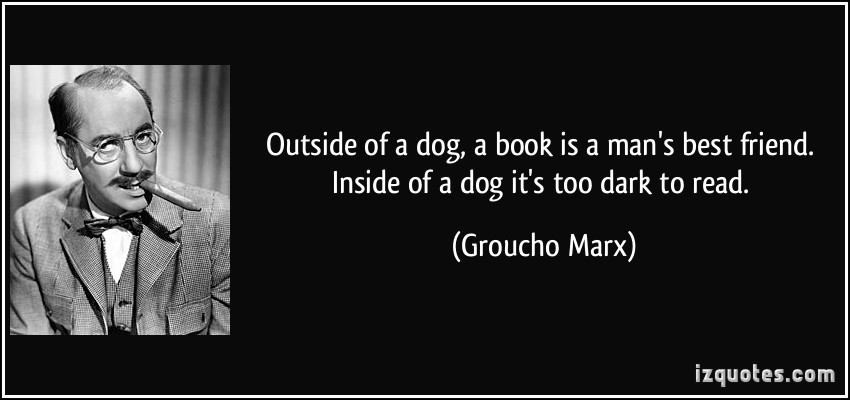
And I remember the lighthearted, disarming approach to the start of the episode, when first Mike (Rob Reiner) and then Archie (Carroll O'Connor) showed up with shopping bags filled with Groucho Marx glasses.
Then Edith arrived (the audience already knew she had gone to what appeared to be a routine doctor's appointment earlier that day), laughed over the Groucho Marx glasses and went to the kitchen, where she lapsed into distraction while doing simple things like filling a saucepan with water.
She confessed to Gloria that she had found a lump on her breast and said that was the "lucky part" of her story. Gloria was confused — as most viewers probably were — until Edith went on to explain that most breast cancers were discovered in self–examinations. Early detection was the key to survival then, and that hasn't changed. Self–examination isn't foolproof, never has been, but it is still the best way that is known to catch breast cancer in its earliest stages.
People just didn't talk about breast cancer 40 years ago. Edith probably educated a lot of people that night.
That wasn't really so unusual. Edith was often dismissed as a simpleton, but she had a lot of wisdom, and she enlightened people in her way.
But she could be enlightened, too, as she was in this episode.
She confessed to her friend Irene (Betty Garrett) her anxiety over how Archie would see her if she had to undergo surgery. Irene assured her that she was worrying about nothing, that Archie loved her and nothing would change that.
"You don't know," Edith said.
"That's just the point, Idoknow," Irene replied, and she went on to tell Edith that having breast surgery several years earlier hadn't affected her marriage at all.
A visibly relieved Edith embraced Irene. "You made me feel so much better!" she told her.
Archie was still in the dark over what was going on with Edith, though. When Edith went in for a test, Archie was under the impression that she had gone Christmas shopping for him.
Irene was the one who let the cat out of the bag. She came over to inquire about Edith, and she and Mike were exchanging hand signals when Archie, seated in his chair and thinking of the fishing rod he believed Edith was purchasing, piped up that he knew where Edith was.
Irene rushed to him and asked if Edith was all right. Then the cat really was out of the bag. The three of them raced to the hospital, where they found Edith in bed.
Archie could be opinionated, racist, sexist and anything else you want to mention — and you would certainly be right. But he had his moments. One of them came when he sat down next to Edith's hospital bed while she slept.
He put his hand on hers, and she stirred, opening her eyes and telling Archie he didn't have to come to the hospital.
"You're my wife," he protested, "no matter what happens."
Edith said she would be home the next day. Archie was confused. "They told me you had cancer," he said.
No, Edith replied. It turned out to be a cyst, and the doctor removed it with no problem.
Looking around, Archie said, "So what are you laying here for?"
Sheepishly, Edith answered, "When they told me everything was all right, I got so excited I jumped off the examining table, and I broke my ankle!" She pulled back the bedcovers to reveal a cast.
In hindsight, the Bunkers probably laughed about that moment, how relieved they both were. But at the time, all Archie could do was say, "Oh, Edith," and give her a hug.
Which is probably what most people would do under the circumstances.
In the last season of the All in the Family series, Archie (Carroll O'Connor) and Edith (Jean Stapleton) visited Mike (Rob Reiner) and Gloria (Sally Struthers) in California for Christmas.
The result was one of the most honest and thought–provoking episodes of the entire run of the series. It aired 35 years ago tonight.
The Bunkers, along with their young charge, Edith's grandniece Stephanie (Danielle Brisebois), made the trip from New York to California for the holidays. They didn't know that Mike and Gloria were separated, and Mike and Gloria were determined to keep it that way. Well, Gloria was. Mike wanted to tell the Bunkers the truth, but Gloria wanted to keep up appearances through Christmas.
So Mike stayed overnight on Christmas Eve to keep up the charade. Apparently, the original plan called for Mike and Gloria to give Archie and Edith their bed and they would sleep on the sofa bed in the living room — presumably, when everyone was asleep, Mike would leave. But Edith double–crossed him, insisting that Mike and Gloria sleep in their own bed.
Gloria, however, did not feel comfortable sharing a bed with Mike, which led to an amusing bit of physical comedy in which Gloria tried unsuccessfully to go to sleep in a piece of bedroom furniture that clearly wasn't made for sleeping. Finally, at 5 a.m. on Christmas morning, Gloria had had enough, and she told Mike she wanted to trade. He refused, and they fought. Gloria fled the bedroom and went, sobbing, to the bathroom. Edith followed her in, and Gloria told her the whole story.
She and Mike had drifted apart since coming to California, Gloria told Edith. Mike had a whole new life with his career, one that kept him busy day and night, and Gloria stayed at home with the child — and ate.
And then she met a man, and she confessed to Edith that she had started a relationship with this man.
Edith returned to the living room, where Archie wanted to know what was going on — so Edith told him, and Archie stormed into the bedroom to confront Mike.
Archie was under the mistaken impression that Mike had been cheating on Gloria and that was what had led to their breakup. But he soon learned that Mike hadn't been unfaithful.
And that led to the dialogue that made this Christmas episode unique among Christmas episodes.
The four adults had a conversation about love and marriage and commitment and infidelity. It's the kind of conversation that could happen — and almost certainly has happened — under different circumstances in different families the world over. It's probably not much of a stretch to say that it probably happens somewhere every day.
The critical moment came when Archie implied that Gloria and her male friend had been sleeping together, and Gloria said she wouldn't say anything because it was none of Archie's business. And Edith sided with her daughter.
"No matter what she's done, it's none of your business," she told Archie.
"What are you talking about?" Archie asked. "It's the world's business."
"No," Edith replied, "it ain't the world's business, neither."
It was so often the case that Edith was the wisest, most insightful member of the family.
Edith wanted to know if Mike and Gloria loved each other. When they admitted they did, she asked if they loved each other enough to save their marriage. Mike said yes; Gloria said she wasn't going to talk about it in front of her father. But Archie and Gloria reconciled, sharing a heartfelt father–daughter embrace and joining the rest of the family in the living room to celebrate Christmas.
That's what Christmas is about — love, forgiveness, acceptance.
As far as I am concerned, the folks who write the Christmas specials and Christmas movies these days forget that and emphasize more of the commercial aspects of the season. But the folks who wrote this hour–long episode — Milt Josefsberg, Phil Sharp, Bob Schiller and Bob Weiskopf — were nominated for a Primetime Emmy for their work, as was director Paul Bogart and deservedly so.
The series was frequently nominated in both categories, and sometimes it won. But it won neither of the nominations it received for this episode.
That's a shame. As all truly good comedies do, All in the Family often balanced humor and poignance — rarely, if ever, better than it did 35 years ago tonight.
Most TV series don't last for a decade, and the few that do usually start to run out of gas long before their 10th seasons.
M*A*S*H was always the exception to the rule.
In its 1981–82 season, the series' 10th, it did have its share of weak episodes, but it also enjoyed some high moments. M*A*S*H probably didn't air any episodes that season that are remembered as being among the series' Top 10, but that would have been hard to do. More than 200 episodes had already been aired — including many that are regarded as classics today.
Nevertheless, M*A*S*H reached its usual level of impeccable quality on this night 30 years ago, and it did so in what may be the most challenging of circumstances for a TV series — a holiday season episode.
The inspiration for the episode came from the traditional practice, in most European countries, of observing Boxing Day on the day after Christmas.
Boxing Day is sort of a second Christmas holiday. There is no consensus on the origin of the name — except that everyone agrees it has nothing to do with the sport of boxing. Based on my understanding of it, Boxing Day was intended to be a legal holiday for workers and to encourage charitable activity.
In the M*A*S*H story, it was explained that the tradition on Boxing Day is for the employer to trade places with the employee for a day — kind of an intriguing twist to ponder in an age rife with allegations of class warfare — and it was decided that medical unit would have its own Boxing Day.
The officers would trade places with the enlisted men — which made for some interesting role reversals:
Klinger traded places with his boss, Col. Potter. For one day, Klinger — who earned his reputation in the series for constantly trying to get out of the Army — was one of the brass.
As one of his first executive decisions, Klinger decided that allowing Hawkeye and B.J. to be together was just begging for trouble so he decided to split them up.
Hawkeye was assigned to be an orderly with Father Mulcahy. B.J. was put to work on KP duty with Hot Lips — who protested that she "didn't go into a kitchen when I was married!"
The actual cooking would be done by the aristocratic Charles, who opposed the Boxing Day idea from the start. Nevertheless, Charles welcomed the opportunity to cook for Sgt. Pernelli (Val Bisoglio) "if only to teach you that soup is not a solid object."
Well, the underlings were enjoying their 24–hour promotions, getting lots of chuckles at the expense of the temporarily deposed officers, when things turned serious.
A patient had to be evacuated, but a blizzard was interfering with everything, including a shipment of much–needed fuel. A temporary reversal of the role reversal was necessary.
The episode wrapped up nicely — with everyone, the enlisted as well as the officers, coming away with a new appreciation for what their colleagues did every day to keep the unit functioning.
Frasier:I ordered from the toy catalog from the special section called Gifts for the Gifted. I got him the junior astronomy set and the geology lab ... oh, and a fabulous thing called the Living Brain. You get to paint each lobe a different color, then you stuff it inside the Living Skull.
Martin:Hey, you know what kids really like? They've been advertising it like crazy on TV. It's great. The Outlaw Laser Robo Geek. Its head lights up and it shoots death rays out of its eyes. (Frasier glares at him) Yeah. A little like that!
I wrote a bit last year about the Christmas episodes of popular TV shows — one Christmas episode in particular.
Some TV series have a Christmas episode — at least one — every year. Given the fickle nature of the viewing audience, I suppose that is the prudent thing to do, especially when a series is new. Most series don't last longer than a year or two, anyway, so if you want the audience to know your characters and you're gonna have a Christmas episode, anyway ...
But all shows are not created equal, and neither are Christmas episodes. Some series, like Christmas episodes, have better acting than others. Some have better writing, better stories. And some are just better all the way around.
Frasier, of course, turned out to be an exception. By the time the show ended its 11–year run, Kelsey Grammer had played Frasier for more than 20 years — first as a supporting character on Cheers, then as the lead character on his own show.
As familiar as Frasier was to TV viewers, it wasn't necessary for him to do Christmas–themed programs except within the context of Frasier's personal story — and, consequently, the series' holiday episodes were opportunities to explore personal issues that went beyond the standard Christmas reminders of love and peace. They certainly weren't necessary as far as ratings were concerned.
In the first season (1993–1994), Frasier's Christmas episode dealt with Frasier's decision to volunteer to work on Christmas when his young son's plans to visit him in Seattle changed.
In the fifth season (1997–1998), the Christmas episode dealt with the different perspectives each member of Frasier's family had of Christmas that year.
The next season's Christmas episode provided an opportunity for Frasier's new Jewish love interest to be introduced to his family and the viewing audience.
The seventh season brought a two–parter that really didn't have to be told at Christmas. The focus of the story was on how Niles' feelings for Daphne were revealed to her. The fact that it happened during the Christmas season was sort of incidental.
During the eighth season, Frasier found himself hosting the annual Christmas parade with Dr. Mary, a former protege.
Two years later, after Niles and Daphne had married, Niles and Frasier argued over who should host the family gathering — an argument that was rendered moot when their father had to work on Christmas.
And, in the final season, Frasier's son, now in his mid–teens, came to visit sporting his new "goth" look while Niles decided to finally do something he never did in his own teens — rebel.
Fifteen years ago this Sunday, the series aired a Christmas episode that probably wasn't its best — but it was better than most. And I always enjoy watching it.
I have found new relevance in it every time I have seen it.
In the episode, Frasier learned an important lesson.
After going to considerable trouble to do so, Frasier had ordered educational toys to give his young son. But, when the package arrived, the wrong shipment had been sent to him — and the truth was that neither that shipment nor the order Frasier had really placed was what his son wanted.
"You're always giving people things you think they should like," Frasier's father told him, "instead of things that they really like."
On Christmas Eve, Frasier's son announced that he was going to bed right away so the next thing he knew it would be Christmas. And he was particularly excited because he knew what Santa would bring — the popular new toy that had been all over the airwaves.
That, of course, wasn't what Frasier had purchased for his son. But then his father unexpectedly came to the rescue.
I enjoyed watching the episode when it first aired, but it has taken on a different meaning, a relevance, for me on subsequent viewings.
When it was first shown, I was only about six months removed from my mother's death. Things were still pretty chaotic in my life, and some of the more subtle messages of the story escaped me at the time.
My father remarried the following year. To put it bluntly, my stepmother and I have never been close. I was aware at the time we met that she was determined to keep me at arm's distance — at least — so I was put on the defensive from the beginning.
For whatever reason, she made assumptions about me that my father has never, to my knowledge, attempted to correct, and that has been a source of, to put it mildly, bitter disappointment for me.
When I was a child, he was my defender. He and my mother repeatedly discouraged me from prejudging people, yet he may have been — either inadvertently or deliberately — the source for my stepmother's assumptions.
What assumptions did my stepmother make? I couldn't say. I only know that she made them, not what they were or why she made them.
What I can say, with absolute certainty, is this: She's never tried to get to know me, to find out what makes me tick — beyond making nominal attempts at holidays, presumably for appearances' sake.
In recent years, she hasn't bothered to pretend that she is interested.
Well, I guess, when I use words like "presumably," I am acknowledging my own assumption. But what choice have I had?
It would be fair to say, I think, that things got off on the wrong foot between my stepmother and me. And no one — myself included — really tried to get them on the right track.
I'll accept my share of the blame for that. I won't be the whipping boy for all of it.
Perhaps I'm being dismissive when I call her familial attempts "nominal" — although I do have other reasons for feeling that way.
But the thing about this Frasier episode that reminds me of my relationship with my stepmother is one Christmas when her gift to me revealed just how much of what she thinks of the people in her world is shaped by assumption and not by fact.
I don't know how much my stepmother really knows about my father's life before they met, but she must know he was a missionary with my mother in Africa in his 20s because they took a trip to Africa together a few years ago. I gather, from what little I have been told of that trip, that it was sort of a journey down Memory Lane for my father, and I'm sure he must have spoken with my stepmother of his earlier experiences.
I presume it was a trip he always expected to take with my mother. If she had lived to retirement, I might have gone with them since I was born while they were in Africa.
My father brought back an African wood carving for me. It depicted a father, a mother and a child, and my guess is that he explained to my stepmother why he was buying it.
Anyway, armed only with this information, my stepmother took it upon herself to give me a CD for Christmas a few years back.
She apparently decided to give me a CD of a black performer even though she had no knowledge of black performers or whether I particularly like them.
(My father later told me, in amused tones, of accompanying her on her trip to a CD store and listening to her inquiries as to who B.B. King was. I can't claim that I witnessed that, but I know for a fact that she never asked me about my musical preferences.)
The truth is, I don't care for some black performers, but not because they are black. And I do like other black performers. Again, their color is not an issue.
If she had bothered to ask me about black singers I like, I could have told her that I like Jimi Hendrix. I also like B.B. King. I like the Temptations. I like Chuck Berry. I like Earth, Wind & Fire. I like John Lee Hooker. I like Wilson Pickett. I like Miles Davis.
But she never asked me. She made an assumption.
What did she give me? A CD of Ray Charles' music.
And, although I never said so out loud, I had to wonder — Where the hell did that come from?
I've never owned a Ray Charles album in my life so I don't see how the seed for that idea could have come from my father. If he ever heard Ray Charles' music coming from my room when I was a teenager, it was being played on the radio.
I have nothing against Ray Charles, but I've just never been one of his fans. I don't care what color he was.
And that, to me, is a real–life illustration of what Frasier's father meant when he said, "You're always giving people things you think they should like instead of things that they really like."
Well, Frasier had an excuse, I guess. He was Frederick's father. He knew something about his son, even if he didn't know what he would really like to have for Christmas.
If you still have some of your Christmas shopping to do, here is some advice: Put the folks on your list and their preferences first. Put yourself and your own preferences last.
If the two happen to be the same, so much the better.
Ten years ago, I became a fan of The West Wing. I still admire the show, even though it has been off the air for more than three years.
From the series' debut in September 1999, it was clear to me that the writing and acting were head and shoulders above just about anything else on network TV. That impression was permanently reinforced 10 years ago Tuesday, when "In Excelsis Deo" aired.
It was the first program with a Christmas theme on The West Wing, and the story was deceptively simple, but it delivered a potent punch at the end. Toby, the communications director, was summoned to a park where a homeless man had died on an unusually cold night. The man was wearing a coat Toby had given to charity, and one of his business cards was found in the pocket.
Toby saw a Marine Corps tattoo on the man's arm and realized he served in the Korean War. He set out to find the man's next of kin (the only relative he could locate was a brother, also homeless) and arranged for a funeral and an honor guard, using the influence of the president's office.
When he found out, the president could only manage mild exasperation, confirming that "We're still in NATO, right?" and Toby went ahead with the funeral, accompanied by the man's brother and the president's secretary, Mrs. Landingham.
Earlier in the episode, Mrs. Landingham revealed that the holidays always brought her down because her twin sons had been killed in Vietnam on Christmas Eve 1970. And she lamented the fact that she hadn't been there for her sons when they were dying.
Anyway, try as she might to feign her disapproval, it was clear that she was glad Toby had done what he did. That's why she insisted on joining him. And so the two went to the funeral for a man they never met.
You can see the conclusion of the episode in the attached clip, and I sincerely hope you will take the time to watch it. It was a powerful episode, involving many stories at once, all of which had their unique connections to the Christmas season, but the story of the homeless man was clearly the centerpiece.
It seems that every series in the history of television has had at least one Christmas episode, and there were others in The West Wing's seven–year run, but "In Excelsis Deo" was a standout.
I guess if I was going to quibble over technicalities, I would point out that it appears that a 21–gun salute is fired in the homeless veteran's honor, but 21–gun salutes traditionally are reserved for presidents, former presidents and other heads of state.
That's a minor point, though, one that can be dismissed as poetic license. If you don't have the DVD of that first season, rent it and watch the episode. It is a reminder of what is truly important at this time of year.
I got my bachelor's degree in journalism from the University of Arkansas, and I got my master's degree in journalism from the University of North Texas. Most of my adult life has been dedicated to writing and editing in one form or another. Most recently I have taught writing (news and developmental) as an adjunct journalism professor at Richland College, where I advise the student newspaper staff. Go, Thunderducks!