Showing posts with label Burt Lancaster. Show all posts

Friday, September 15, 2017

The Movie Myth of the Benevolent Birdman


"You best go find out who you are. Come on. Now what's wrong with you, you old buzzard? Come on. Don't be afraid. Out there you can kick up the dust. You can dance to fiddle music. Watch the alfalfa bloom. If you like, you can see gold teeth. Taste sweet whisky and red–eyed gravy. The air breathes easy, nights move faster, and you tell time by the clock. Now you don't wanna be a jailbird all your life, do ya? You're a highballin' sparrow. So you fly high, old cock. Go out there and bite the stars — for me. Find yourself a fat mama and make a family. You hear? Beat it."

Robert Stroud (Burt Lancaster)

If you've been reading this blog for awhile, you know of my love of history — and how I feel about the standards for movies that attempt to re–create historic events or tell the life stories of noteworthy people.

But the 55th anniversary of the premiere of director John Frankenheimer's "Birdman of Alcatraz" is an appropriate time to revisit that.

Simply put, I believe that a movie that proposes to tell the story of an actual event or life should be faithful to the facts. Well, most of the facts. I can overlook minor details.

"Birdman of Alcatraz" took some liberties with the truth. For openers, the title implies that Robert Stroud, the convict about whom the movie was made, kept birds at Alcatraz. In fact, he kept his birds at Leavenworth. When he was transferred to Alcatraz, he wasn't allowed to keep pets.

But I suppose you could get around that by saying that Stroud had already established himself as the Birdman before he went to Alcatraz so the title was a reference to his past, not his present, activity.

OK, I guess I can let that one slide.

The thing I find it harder to overlook, though, is the apparently considerable liberty the filmmakers took with Stroud himself. The movie did portray him as a bitter individual given to violent outbursts, but the clear implication was that he mellowed as he aged.

Former inmates have said the portrayal was inaccurate, that Stroud was not the amiable fellow of the movie but a "vicious killer" and troublemaker — and, indeed, the movie was candid about the events that led to his incarceration — but Burt Lancaster's Stroud could be a sympathetic character whereas the real one apparently was not.

Having said that, though, "Birdman of Alcatraz" had its inspiring moments — and a remarkable cast — in spite of its inaccuracies. Besides, the makers of "Birdman of Alcatraz" freely acknowledged, as did the makers of "A Beautiful Mind," that it was not a literal presentation of a life story, merely based on it.

If the movie did take liberties with the truth, though, it didn't gloss over the fact that Stroud was a hothead in his youth.

But Stroud also became an authority on sparrow diseases — all because he found some injured sparrows in the prison yard one day and began raising them.

So, to borrow a Huckleberry Finn observation from Mark Twain's classic novel, the makers of the movie "told the truth — mainly."

The movie received four Oscar nominations and lost all four.

Lancaster was nominated for Best Actor. He was nominated four times in his career — and even won once — but lost this time to Gregory Peck in "To Kill a Mockingbird."

Thelma Ritter was nominated for Best Supporting Actress for her performance as Stroud's overbearing mother. She lost as well — to Anne Bancroft's magnificent performance in "The Miracle Worker," but I thought the role of Elizabeth Stroud was every bit as demanding as the role of Anne Sullivan.

Telly Savalas was nominated for Best Supporting Actor. He lost to Ed Begley in "Sweet Bird of Youth." I'm not sure if Savalas' character was real. Perhaps it was a combination of several inmates who interacted with Stroud in some way — although Stroud spent almost his entire incarceration period in solitary confinement so he couldn't have interacted with other inmates much. Besides he would have been as likely to get into a fight with a fellow inmate as to make friends with him.

The fourth nomination was for cinematography, and "Birdman" lost that one to "The Longest Day."

Karl Malden received no nomination — although I have long believed he deserved one as Stroud's first warden. Maybe it is because his character was entirely fictional whereas most, if not all, of the other primary characters were real, but aspects of their lives were fictionalized.

Was "Birdman of Alcatraz" Lancaster's best? That is really hard to say. He was always good. Some people will cite "From Here to Eternity." Others will say "Elmer Gantry" or "Atlantic City." I would say "Judgment at Nuremberg" or "Seven Days in May." But that's me.

Friday, June 30, 2017

The Irresistible Force vs. the Immovable Object


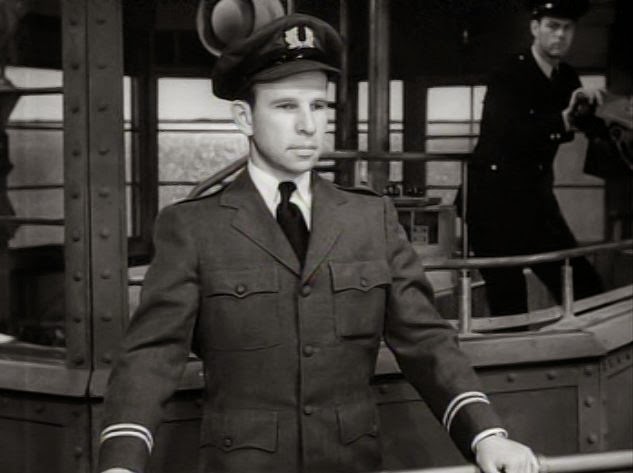
Upon first glance, Hume Cronyn seemed miscast as the ruthless prison guard in "Brute Force," which premiered on this day in 1947.

Physically unimposing as he was, though, Cronyn was the perfect choice. His performance effectively demonstrated how an apparently meek — but nevertheless narcissistic — individual can abuse even a dollop of power — and Cronyn's character had considerably more than a dollop of power. He was not above using anyone and anything to achieve his objectives, either.

I honestly felt that the character, with his sadistic personality, should have made the American Film Institute's list of the Top 50 movie villains. But it didn't.

Now, let me be clear. I don't have any issues with AFI's actual choices for its lists of villains and heroes. But the role was so unusual for Cronyn and he played it so well that I thought the performance at least deserved an honorable mention (although I don't think such a designation was available).

Anyway.

The story was essentially a retelling of the fabled irresistible force colliding with the immovable object. Burt Lancaster played an inmate who hated Cronyn and came up with an escape plan after having served a stretch in solitary confinement. It built up to a bloody finish, a riot when the escape plan didn't go very well.

It was good, but I'll be the first to say the movie had its weaknesses.

There were times when the story seemed a bit forced — like when the movie told the stories of the other inmates through flashbacks. To me, it seemed like a rather obvious tactic to introduce women into what was otherwise an all–male cast. And not just any women, either. These women were femme fatales, the ones who (directly or indirectly) were responsible for those men being on the inside while the women remained on the outside.

Clearly there were times when the movie was awash in stereotypes — at least those that existed in the '40s — and the references to World War II do make the story seem dated.

But for a movie that is 70 years old today, I think it has held up rather well.

"Brute Force" provides an unflinching, albeit melodramatic, glimpse into prison conditions for viewers today, but as I say, it is not without its shortcomings.

It really didn't have much to say that was new, even when it was in theaters. Prison movies weren't new when "Brute Force" was made, nor was the idea that conditions behind bars weren't good.

But it may have made that point better than any movie that preceded it.

Tuesday, June 27, 2017

Ooh, That Smell


"I'd hate to take a bite outta you. You're a cookie full of arsenic."

J.J. (Burt Lancaster)

I am a fan of black–and–white movies for many reasons, but one of the things I really like about them is they remove the distraction of color.

Don't get me wrong. Color movies have their place, and some stories simply could not be told without color. But the absence of color somehow allows more emphasis to be placed on the characters and their dialogue — and that is where I think "Sweet Smell of Success," which was first shown on this day in 1957, really came through for the audience.

It came through on several levels.

Frankly, I don't care how long you have been watching film noir movies or how many you have seen. You've never seen one with dialogue that crackled like this one did — and it seemed that everyone in the movie, from the stars to the bit players, got to deliver at least one snappy line. Clifford Odets and Ernest Lehman should have received an Oscar nomination for their writing. It's some of the best you'll ever experience (this is a lifetime of writing talking here).

They weren't the only ones who contributed to "Sweet Smell of Success," but no one received an Oscar nomination for work on that movie.

And that was a big mistake. Tony Curtis gave what many people regard as his greatest performance as Sidney the smarmy press agent. If he was outdone by anyone, it was Burt Lancaster who played J.J. the callous newspaper columnist who wanted to prevent his sister from marrying perhaps the only good guy in the movie. His lines in the movie were the most savage.

But Curtis had some pretty good — and pretty insightful — lines, too. At one point, he advised, "Don't do anything I wouldn't do!" then observed, "That gives you a lot of leeway."

I can understand why "Sweet Smell of Success" got no Oscar nominations. As I have mentioned on this blog before, the folks who vote on the Oscars seem to like to reward movies that promote the positive side of human nature — love, loyalty, honesty, integrity, that sort of thing. The Oscars rarely recognize movies that focus on the gritty reality of life with so much as a nomination. It is as if the voters don't even want to have the option of voting for such a movie, let alone rewarding it with a statuette.

Of course, there are exceptions to that, but it does seem to be an unwritten rule.

To maintain a sort of balance, the Oscars tend to avoid nominating comedies, which is why some of the greatest entertainers in movie history were never nominated for Academy Awards.

"Sweet Smell of Success" was hardly a comedy, but you really had to look hard to find a good guy in the story.

Tuesday, May 30, 2017

'O.K. Corral' Was Entertaining If Not Entirely Accurate


"All gunfighters are lonely. They live in fear. They die without a dime, a woman or a friend."

Wyatt Earp (Burt Lancaster)

I love to watch movies that are based on famous people or events from history — like John Sturges' "Gunfight at the O.K. Corral," which made its debut on this day in 1957.

But I seldom recommend such movies to people as reliable sources for, say, facts a student could use in a term paper.

For that kind of purpose, you're usually better off referring to books on the subject, and that is certainly the case here.

Not that the real gunfight at the O.K. Corral was lacking in drama, but, as is so often the case, the facts apparently weren't dramatic enough, which led to several historical inaccuracies.

None of those inaccuracies alone could change the outcome of the gunfight — but the cumulative effect was enough make you wonder who survived and, for that matter, who won the shootout.

Most of that would be speculation, but you would be right to wonder who was actually there. Johnny Ringo, a well–known outlaw played by John Ireland in the movie, wasn't there at all and shouldn't have been a character in the movie. Nevertheless he was.

Doc Holliday (Kirk Douglas) apparently was in Tombstone that day, but the movie suggested that he came there with Wyatt Earp (Burt Lancaster). That wasn't true. He showed up much later.

And, while the movie indicated that Earp saved Holliday's life, it was actually the other way around.

Jo Van Fleet and Rhonda Fleming played the female roles in the largely male ensemble. Van Fleet played Holliday's girl, and Fleming played Earp's love interest. As I understand it Van Fleet's character was, in real life, a prostitute and Holliday's common–law wife. I haven't been able to find out anything about Fleming's character, but I do know that Earp came to Tombstone with a common–law wife of his own. He had three during his lifetime and none had the name of Fleming's character in the movie.

These inaccuracies didn't prevent the movie from being a big box–office hit.

It was entertaining, and I suppose folks were willing to overlook some things.

Like the fact that the actual gunfight lasted just 30 seconds, three men were killed in mostly face–to–face encounters and only a few firearms were involved. In the movie the gunfight lasted five minutes, and there were considerably more fatalities shot from medium range with a large arsenal.

But, hey, if you're gonna have a movie with the word gunfight in the title, you've got to have a lot of guns and a lot of gunshots, right?

"Gunfight at the O.K. Corral" was nominated for two Oscars and lost both — Best Sound Recording and Best Film Editing.

By the way: Dennis Hopper, who was appearing in only his fourth movie, was born and raised in Dodge City, Kansas, which is where Wyatt Earp was sheriff a few years before the gunfight occurred.

Monday, April 21, 2014

Diamond Dreams


"If you build it, he will come."

The Voice in "Field of Dreams"

I know men of all ages who get emotional over the ending of "Field of Dreams." Even today, 25 years after its premiere — and after countless viewings.

I agree it's a good movie, but I guess I'm an exception because I have never become teary–eyed about it.

The performances are great. I especially liked Burt Lancaster, in one of his last movie appearances, as Doc Moonlight Graham.

While I'm on the subject, there really was a Moonlight Graham, and, apparently, relatively few liberties were taken with the facts of his life. The most noteworthy liberty was that the real Moonlight Graham made his only major–league appearance nearly two decades earlier than the one in the movie — and it came in the middle of the season rather than the final day of the season.

Moonlight Graham really did go into medicine, really did live in Chisholm, Minn., really did all those selfless things of which they spoke in the movie. I don't think the movie ever mentioned it, but Graham was born in North Carolina. Most viewers probably assumed he was a native of Minnesota.

So ...

Maybe Graham should have spoken in a more pronounced Southern accent when he was portrayed as a younger man, but Lancaster's accent was not a problem for me. After all, he was portraying Moonlight Graham after he had lived in Minnesota for half a century. His speech patterns had to have been affected by what he heard every day.

(I grew up in the South, but I have been told by many people that I don't have much of an accent. I'm really not sure how to account for that — except that my parents lived many places, including overseas, and I never really thought they had much of an accent, either, other than their use of the second–person y'all. I always assumed that was because of their exposure to other accents, and I picked up their speech patterns.)

In real life, Graham died in 1965. The shift in the timeline made it necessary for his death to be in 1972 in the movie.

Otherwise, it seems to have been true to the facts.

Doc Graham was a minor character in "Field of Dreams," though. Audiences discovered that the story really was about Kevin Costner's character, the one through whom the audience first heard the cryptic murmur, "If you build it, he will come."

It turned out to be about Costner and his father, but, for awhile there, most first–time viewers probably thought Doc Graham would be the mysterious he.

After all, Costner was the one who built the baseball field in the middle of his cornfield (and, really, I had to wonder just how many spouses would have been as easygoing about that as Amy Madigan). Costner went on an inexplicable trip to the East where he hijacked a reclusive writer (James Earl Jones) in an apparently vain attempt to make sense of the Voice's one–liners.

The hints that the perplexing comment would turn out to be about Costner and his relationship with his father were all around, and some viewers probably picked up on it, but I didn't.

So the finish came as a surprise to me — but I don't get all blubbery about it whenever I see it.

Maybe I should. After all, the finish is about the symbolic ritual of the son (Costner) playing catch with his father, the bonding experience between father and son. I think many men get emotional because it reminds them of their experiences of bonding with their own fathers.

Not me.

When I was a child, my father was a college professor, and he spent most of the daylight hours on campus. Usually, I was still in bed when he left in the morning, and I was back in bed when he came home at night. When he wasn't in the classroom, he was in his office or the library.

Anyway, we never played catch, as far as I can recall. Maybe once or twice, but it wasn't a big bonding experience. My father preferred to play chess.

Maybe if we had played catch more, the ending of "Field of Dreams" would have had more relevance for me.

But, you know, if bonding really is the point of "Field of Dreams," then it isn't just about a ritual, but it's also about the links that live on from one generation to the next.

Costner's character had a falling out with his father when he was a teenager, but they shared a love of baseball that survived his father's death.

My father and I bonded over other things.

He even taught me how to play chess.

Monday, August 05, 2013

The Not-So-Sunny Side of the Street


Private Prewitt (Montgomery Clift): A man don't go his own way, he's nothing.

Sgt. Warden (Burt Lancaster): Maybe back in the days of the pioneers a man could go his own way, but today you got to play ball.

If you want to see a faithful re–creation of the attack on Pearl Harbor, I recommend seeing "Tora! Tora! Tora!"

But if you want to see a well–acted drama set against the backdrop of Pearl Harbor, "From Here to Eternity" — which premiered 60 years ago today — is the clear choice.

There was a lot of hype for this movie, I've been told, and I can believe it. It was based on one of the best–selling novels of the previous decade, which, I must confess, I haven't read. I'm sure that, as is usually the case, the movie wasn't as good as the book that inspired it, but I haven't a clue where the movie came up short unless there were parts of the story that, given the times, could not be mentioned.

When I saw it — and that was several decades after it was released — I felt it delivered on every level. The acting was brilliant in a story that was ostensibly about war but really was about life and how unfair it can be.

The movie followed three American soldiers — played by Burt Lancaster, Montgomery Clift and Frank Sinatra — who were stationed at Pearl Harbor in the months leading up to the attack. Deborah Kerr and Donna Reed were the love interests.

Although separated by about 45 years, I thought "From Here to Eternity" was a lot like "Titanic" — the audience knew something big was going to happen, but it kind of got lost in the love story.

By the time the something big happened, it almost took the audience by surprise. That's an indication of superior filmmaking, I suppose.

Ironically, that was clearly the intention of 2001's "Pearl Harbor" — but it failed to get the audience to care about the love story.

"From Here to Eternity" didn't have that problem, especially with the principals, Lancaster and Kerr, who shared a passionate kiss on the beach in their iconic scene. Kerr's character was married, but audiences could forgive her that because she had been abused by her philandering husband, a thoroughly unlikeable sort played by Philip Ober (who may be best known for having been married to Vivian Vance at one time).

It was easy for audiences to not like him, and I have no doubt that was the plan. If the spouse is a reprehensible human being, it is easy to excuse the aggrieved spouse for behavior of which most people wouldn't approve. And most people probably would not approve of an extramarital affair.

Likewise, most people probably wouldn't condone prostitution, but Reed's character endeared herself to the audience with her selfless claim that she wanted to make enough money to go home to the mainland and buy a house for her mother.

Both Lancaster and Kerr were nominated for Oscars, but it was supporting performances by Sinatra as a soldier who is killed while in the stockade and Reed, whose performance as a prostitute can only be seen as completely against type, that earned Oscars for acting.

Sinatra, of course, was primarily a singer. While I haven't seen all of Reed's movie performances, her performance in "From Here to Eternity" may have been her most sincere and candid.

Director Fred Zinnemann won an Oscar as well, and the movie won Best Picture. Out of 13 nominations, "From Here to Eternity" took home eight awards.